China

See All Stories
China

China has been fundamental to Apple’s historical success, but is also arguably the greatest risk to the company’s future.

Why are most Apple products made in China?

Although everyone assumes Apple products are made in China because labor is cheap there, that’s only part of the story – and an increasingly small part, as the company’s assembly partners move toward more and more automated operations.

Steve Jobs originally transferred most Apple manufacturing to China because it was the only country in the world with a huge ready-made supply-chain network, and the ability to scale up production almost overnight. There are three main reasons China – and specifically the Shenzhen area – is such a powerful manufacturing center.

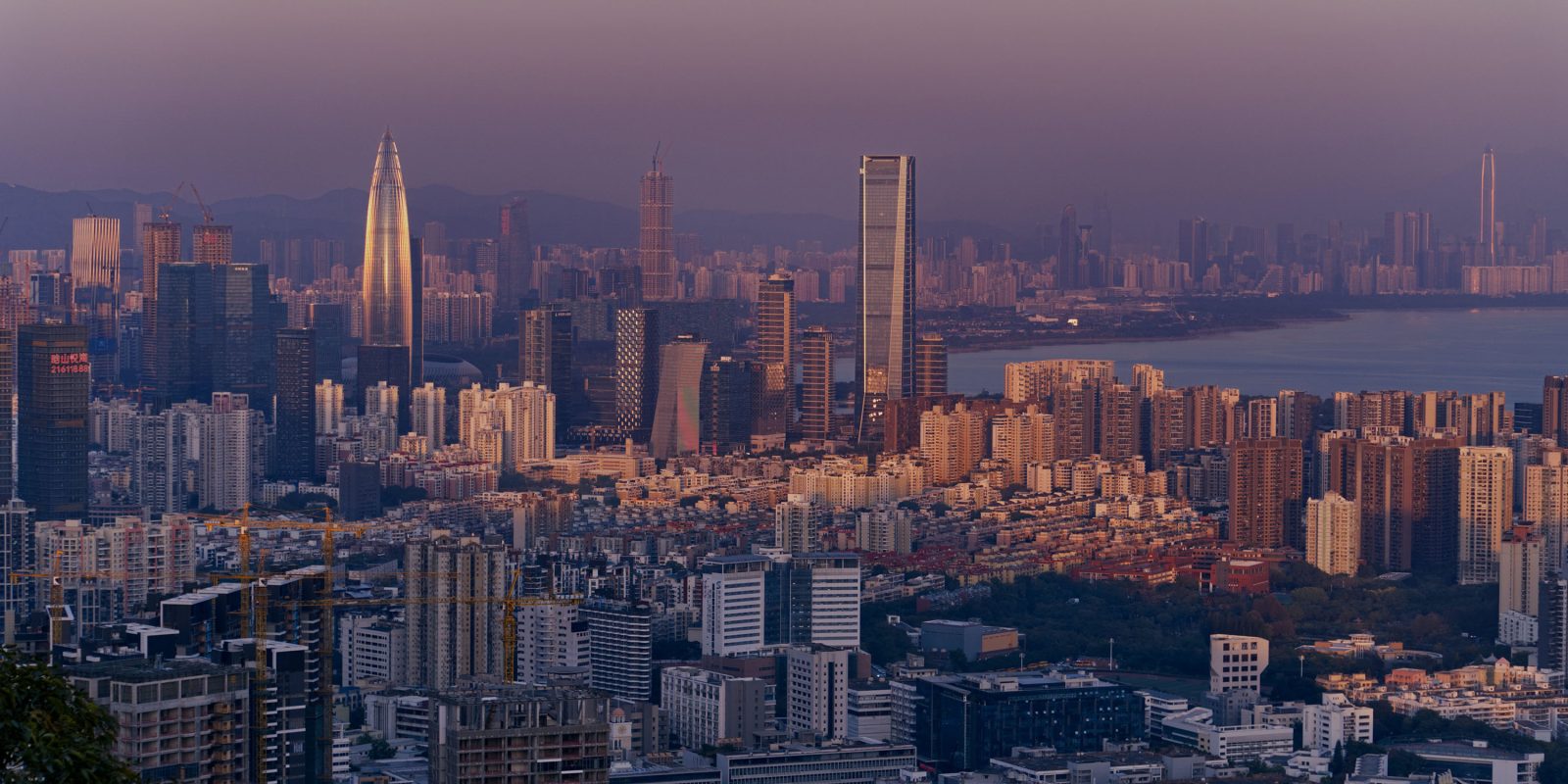
First, the city is strategically placed, serving as the gateway between mainland China and Hong Kong. It is one of the largest shipping centers in the world, with a massive container port.

Second, the Chinese government established Shenzhen as the first Special Economic Zone (SEZ) in the country. SEZs are designed to encourage enterprise through relaxed planning regulations and generous tax incentives – and crucially, to facilitate foreign investment in local companies. It is this, as much as its geographical advantages, which has enabled it to grow at such a pace.

Third, that SEZ was established way back in 1980, meaning that the city has had over 40 years to grow into the manufacturing center of the tech world. Apple relies on a huge network of suppliers and sub-contractors, some of which may make just a single tiny component. The majority of them are based in Shenzhen and its immediate surrounds, so the logistics of bringing everything together in one place for assembly are straightforward.

What are the risk factors with China?

Being over-dependent on China carries a number of risks.

First, there is the generic one: Being overly dependent on any one country is a strategic risk. For example, the COVID-19 pandemic originated there, and had a massive impact on manufacturing capacity. Anything from a natural disaster to political upheaval could disrupt operations within a single country, so it is always wise to have a diverse range of manufacturing centers around the world.

Second, the relationship between the US and China has often been fraught. The trade war started by the previous US administration was a particularly low point, but continued tensions mean that there is always a risk of disruptions to trade between the two countries.

Third, it is increasingly damaging to Apple’s reputation to be so closely associated with a country that has a worsening human rights record – especially when the iPhone maker has no choice but to comply with local laws, however much they may conflict with the company’s own values. Apple has been required to remove VPN and a variety of other apps from the Chinese App Store, allow the iCloud data of Chinese customers to be stored on government-controlled servers, and more. Additionally, there have been growing reports of forced labor in China, including within many different areas of Apple’s supply chain.

What is Apple doing about it?

Apple has been working for a long time on diversifying its manufacturing operations, and has in recent years accelerated the pace at which it is doing so.

As explained above, this is far from an easy undertaking, but Apple now has major manufacturing operations in India, Thailand, Malaysia, and the Philippines, among other countries.

In India in particular, we are seeing the very early stages of a complete supply-chain infrastructure as the government uses a mix of carrot and stick to encourage companies to manufacture more of their components within the country – namely, tariffs on imports of components and tax breaks for local production. COVID-19 lockdowns in China also saw Apple move some iPad production to Vietnam for the first time, but it’s clear that the risks of over-dependence on China have never been greater.

Chinese company that failed to ban Siri files lawsuit trying to stop iPhone production

Site default logo image

A Chinese company has filed a lawsuit as it seeks an injunction to stop iPhone production in China, including the upcoming iPhone 13.

Xiao-i (whose full name is Shanghai Zhizhen Network Technology Co) previously made an unsuccessful attempt to block sales of all devices with Siri in China, claiming that Apple’s intelligent assistant (IA) violated a “chat robot” patent the company owns …

Expand Expanding Close

Apple engraving service bans 1,000+ words in China – and one number

Site default logo image

The Apple engraving service – available as a free option when ordering one of six product categories direct from Apple – has been accused of political censorship in China, Hong Kong, and Taiwan.

Apple aims to ban offensive words and phrases, and in the US bans 170 words. In China, however, the number of banned words and phrases is more than a thousand, and includes many political references…

Expand Expanding Close

COVID-19 vaccines for Taiwan to be bought by Apple suppliers TSMC and Foxconn [U]

COVID-19 vaccines for Taiwan

Update: The vaccine purchase has now been made.

Apple suppliers TSMC and Foxconn are working on buying millions of doses of COVID-19 vaccines for Taiwan. The plan is for the two companies to buy the vaccines, then donate them to the government for distribution to the people of the island nation.

The indirect arrangement, where the government authorizes private companies to buy vaccines on behalf of the country, is designed to thwart Chinese interference …

Expand Expanding Close

Chinese app ban still very possible under Biden’s executive order

Chinese app ban

A Chinese app ban in the US is still very much on the cards, despite President Biden overturning the previous administration’s planned bans on WeChat and TikTok.

Biden replaced the specific executive orders with a more general one designed to protect the data of US citizens, and a report today says early indications point to some Chinese apps remaining at strong risk …

Expand Expanding Close

‘Cold tech war’ between US and China could still leave Apple in firing line – analyst

Cold tech war could still hurt AAPL

A “cold tech war” between the US and China could still leave Apple in the firing line, argues Wedbush, even after the Biden administration rolled back some of the Trump-era policies.

President Biden this week revoked the scheduled US bans on TikTok and WeChat, and has generally been taking a less aggressive stance with China, but there is still plenty of potential for trouble ahead …

Expand Expanding Close

Countries will battle for Apple’s business outside China – analyst

Site default logo image

We will see different countries around the world battle for Apple’s business throughout the 2020s, suggests a respected analyst, as the Cupertino company continues its efforts to reduce its manufacturing dependence on China.

The report notes that we currently see four variations of the familiar “Designed by Apple in California, Assembled in China” label…

Expand Expanding Close

Report: App Store includes apps from blacklisted Chinese group tied to Uyghur genocide

App Store

A new report from The Information this morning highlights that Apple is hosting a number of apps on the App Store made by a Chinese paramilitary group that’s been blacklisted by the US government. Apple says that it’s complying with US law but the news comes as the company is facing more pressure to cut any possible ties to abuse and genocide against the Uyghur Muslim people in the Xinjiang region.

Expand Expanding Close

Tim Cook to attend 2021 China Development Forum amid continued tension

apple music china

As Apple continues to navigate its tricky relationship with China, Tim Cook is set to attend this year’s China Development Forum (CDF) put on by the Chinese government. The 2021 CDF is expected to see its biggest ever foreign attendance hinting that despite political turbulence and some companies moving manufacturing out of the country, China remains a powerful hub for global business.

Expand Expanding Close

iPad production in India a step closer as incentives approved

iPad production in India a step closer

The possibility of iPad production in India got a step closer today, as the government approved a proposal to offer a billion dollars’ worth of incentives. The production-linked incentive (PLI) plan is specifically aimed at manufacturing tablets and computing equipment.

A previous report said that Apple was interested in using the incentives to begin iPad assembly there…

Expand Expanding Close

iPad assembly could start in India as government offers incentives

Site default logo image

Apple is reportedly in discussions about starting iPad assembly in India, alongside the iPhones it already makes there.

The Cupertino company had previously succeeded in lobbying the government for financial incentives for setting up and then boosting iPhone assembly in the country, and new incentives are now being offered for local assembly of tablets and laptops…

Expand Expanding Close