Mac

See All Stories

Apple’s Mac lineup consists of MacBook, MacBook Air, MacBook Pro, iMac, Mac Pro, and Mac Mini. The Mac runs macOS for its operating system.
Mac lineup

History

The Mac is Apple’s lineup of computers, and it can be considered the company’s oldest product. The name “Mac” comes from the original Macintosh, which was introduced in 1984 and is also considered the first personal computer for the masses to have a graphical user interface. The first Macintosh hit the stores on January 24, 1984, costing $2,945.

Among all these years, Apple has introduced many different Mac models, ranging from desktops to laptops to professional tower machines. The current lineup consists of the MacBook Air, MacBook Pro, Mac mini, iMac, and Mac Pro. However, there have been other Mac models were discontinued, such as the eMac, MacBook, and iMac Pro.

The history of modern Macs began in 1998, a year after Steve Jobs returned to Apple. Apple had dozens of Macintosh computers at that time, but Steve decided to rethink the entire lineup. In 1998, Apple announced the iMac G3, which ditched the floppy disk and serial ports in favor of USB connectors.
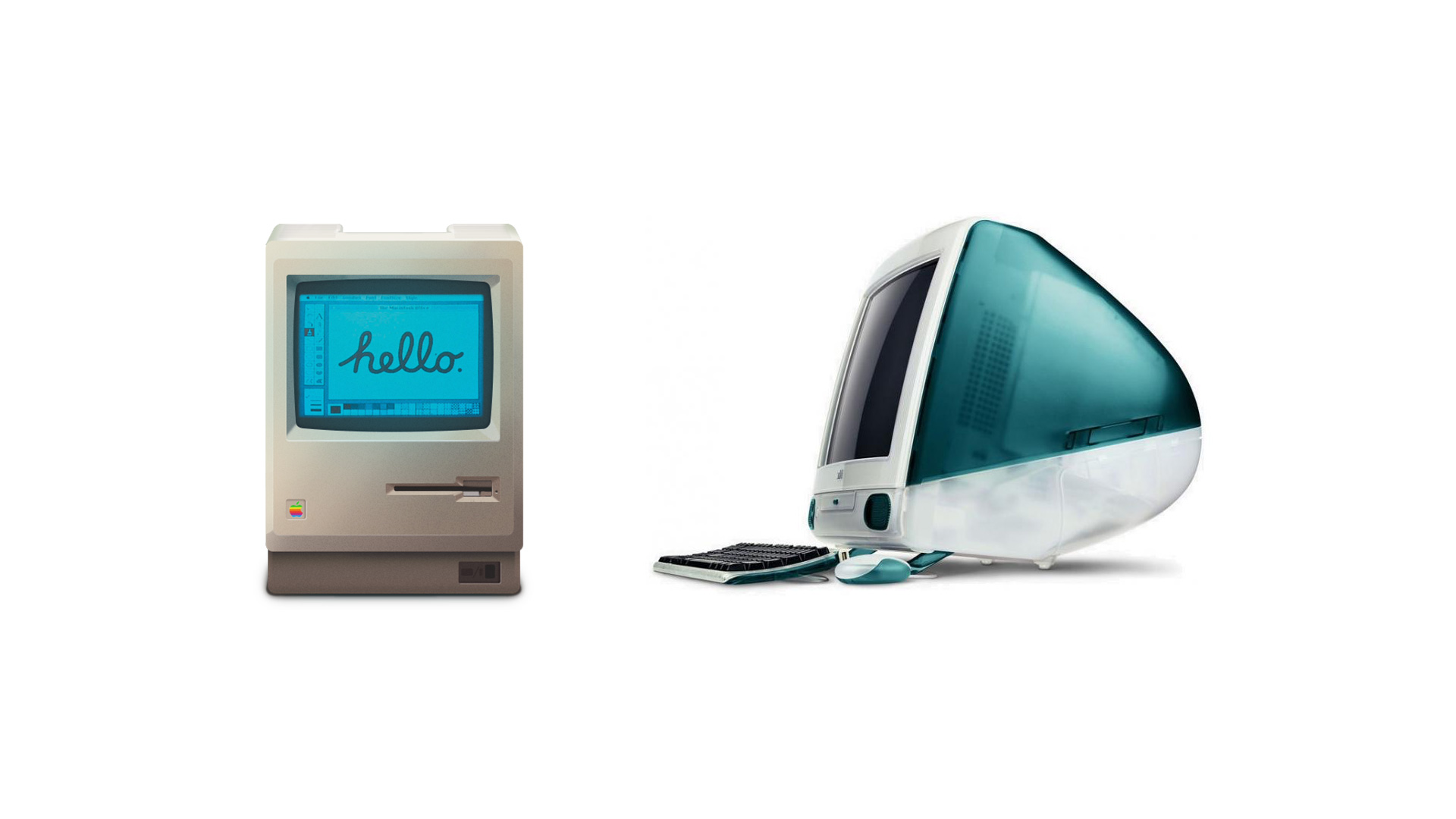
Macintosh and iMac G3.

Unlike the Macintosh, the first iMac was considered a huge success — not only for its technology, but also for its unique design with colorful translucent plastic. Apple quickly expanded the Mac lineup with other models, which included the iBook and PowerBook (which became the MacBook and MacBook Pro) and the PowerMac, which is now the Mac Pro.

macOS

What makes a Mac the Mac is the macOS operating system, which has also had a long history since the introduction of the first Macintosh. Initially called Mac OS, the operating system was rebuilt when Steve Jobs returned to Apple.

The first version of Mac OS X was released on March 24, 2001 with a new interface that is still present in some ways in current versions of macOS. Apple’s desktop operating system comes with many free applications such as Pages, Keynote, Numbers, iMovie, and GarageBand.

With macOS, users also have access to deep integrations with other Apple devices. For instance, you can answer calls and send SMS from your iPhone using your Mac. Handoff lets you switch from one device to the other and pick up where you left off. Apple Watch users can unlock their computer without entering a password, and you can even copy and paste between devices.
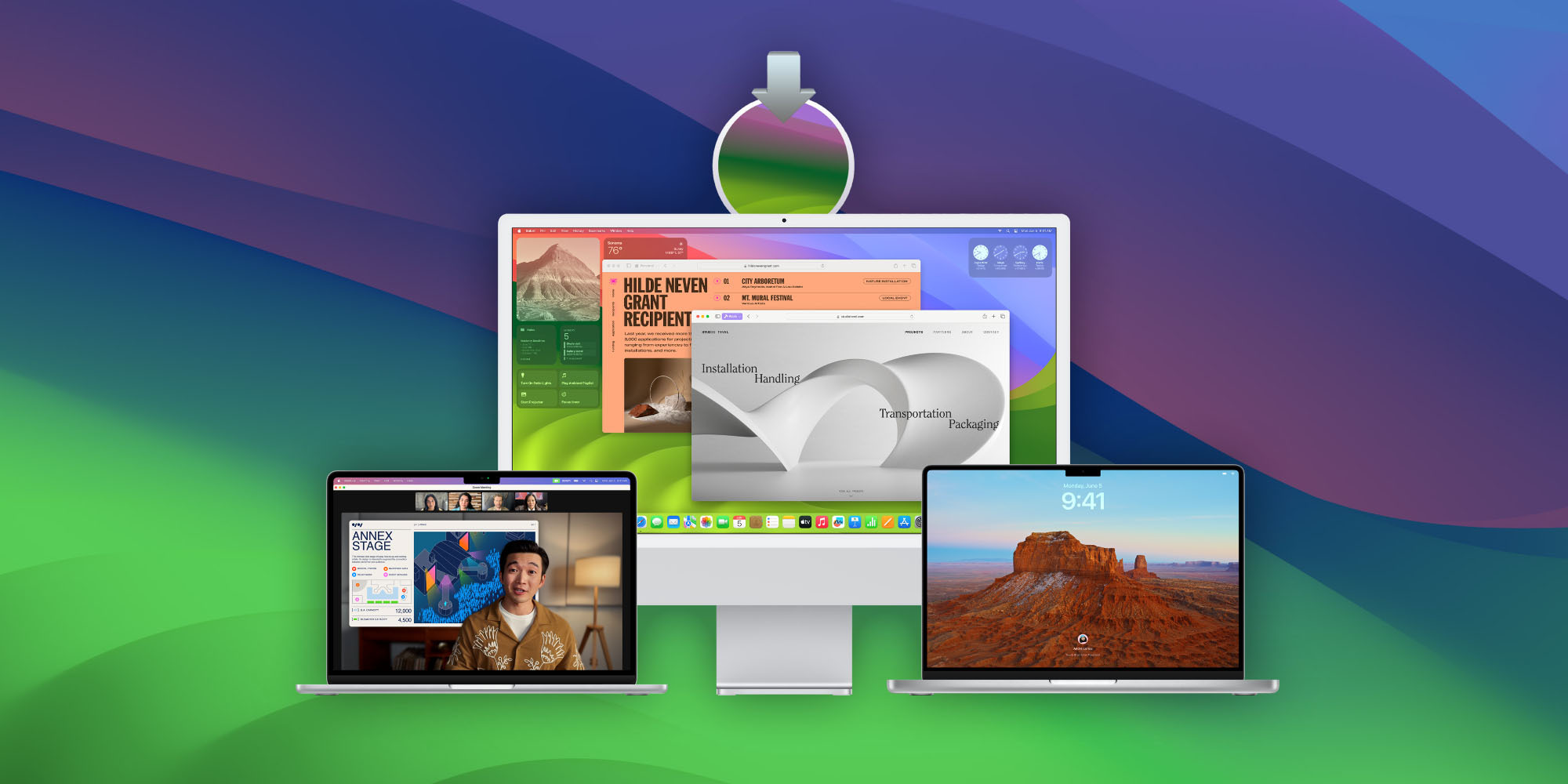
macOS Sonoma

Apple’s desktop operating system is also integrated with services offered by the company, such as iCloud, Apple Music, and Apple TV+.

The current version of macOS is Sonoma (version 14), which features new slow-motion screen savers, widgets on desktop, camera effects on FaceTime and other apps, web apps, passkey sharing, improved PDF support, and Game Mode. The update also comes with a new API that lets developers easily port Windows games to macOS.

Architecture Transitions

The Mac has had three major architecture transitions in its history. Apple’s first computers ran on Motorola processors, but the company decided to migrate to the new PowerPC platform in 1994. While this brought benefits at the time, the PowerPC processors were not delivering what Apple expected.

It was in 2005 that Apple confirmed the transition from PowerPC to Intel. Intel processors had become faster and more efficient than PowerPC, which enabled the development of new Mac computers that were more powerful and also more compact. Developers have been given access to a Developer Transition Kit running Mac OS X Tiger with Intel Pentium 4 to update their apps before the transition begins.
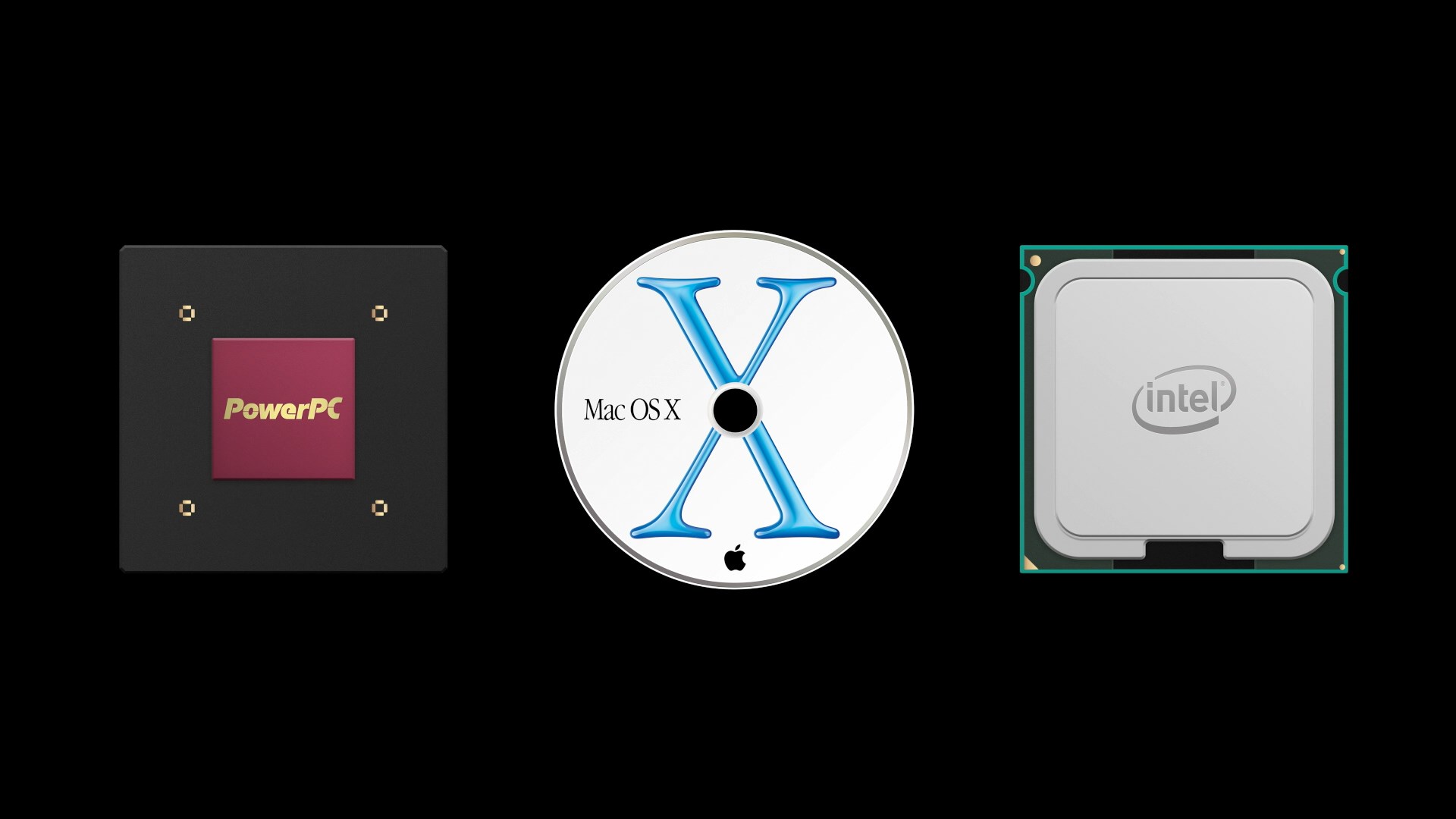
Power PC, Mac OS X, and Intel processor.

Apple said that the transition would begin in June 2006 and be finished by the end of 2007. However, the transition to Intel was fully completed in August 2006 when the company replaced the PowerMac with the new Intel Mac Pro.

As the years went by, Apple once again felt the need to have more powerful and efficient processors for its computers. This time, the company was already working on its own chips for the iPhone and iPad. In June 2020, Apple confirmed that it was changing the architecture of the Mac, now from Intel to ARM chips, which are called Apple Silicon.

Apple offered a Mac mini DTK running on the same A12Z Bionic chip as the 2020 iPad Pro. This way developers could once again update their apps ahead of the transition. In addition to being more powerful and energy efficient, the ARM architecture of Apple Silicon chips has enabled Macs to run iOS apps for the first time.
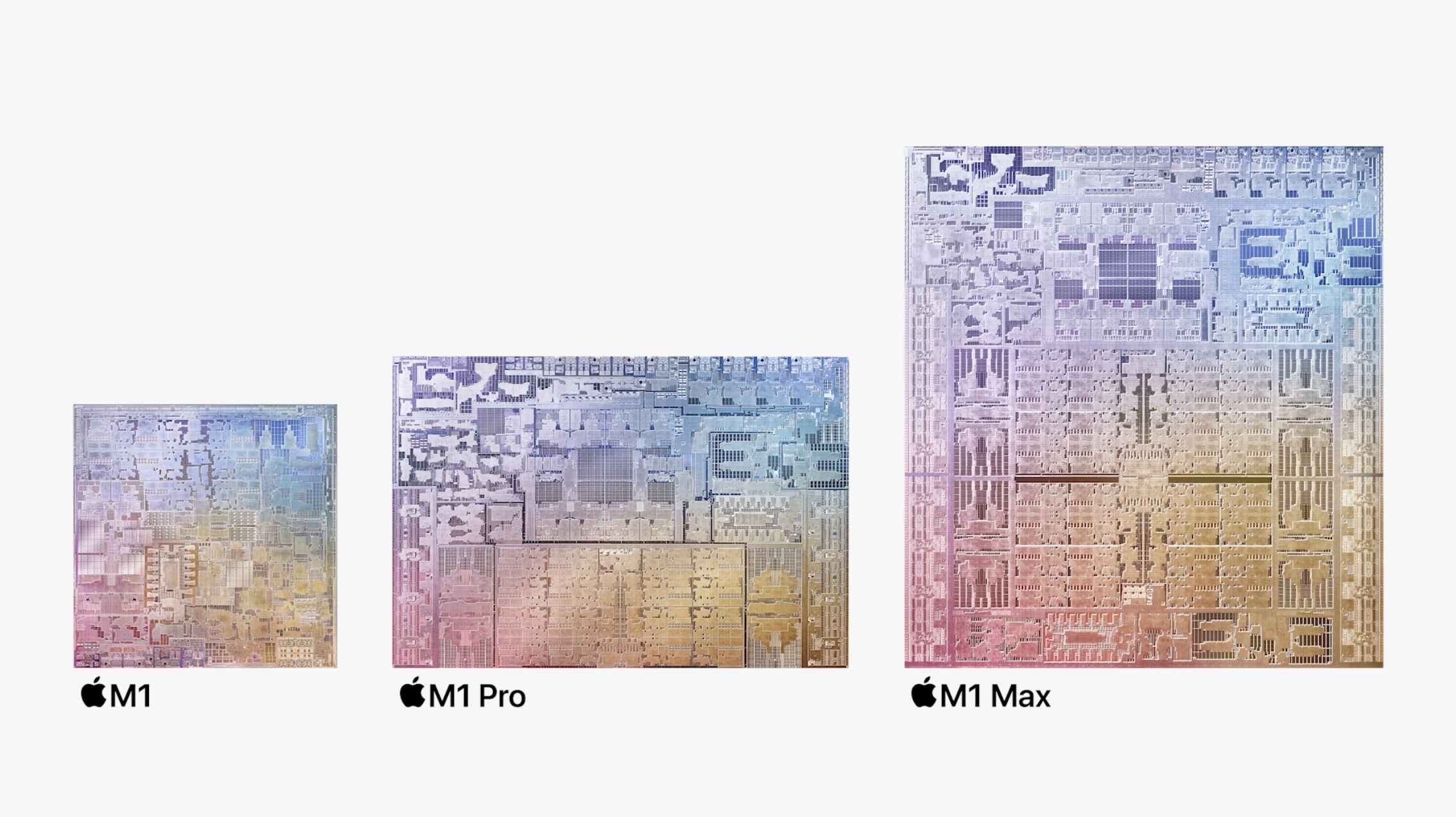
Apple M1 chip | Mac

The first Apple Silicon Macs were released in November 2020 with the M1 chip. The company later introduced more powerful variants of the M1 chip, called M1 Pro, M1 Max, and M1 Ultra. Macs with Apple Silicon have become known for being more powerful while consuming much less power, which has resulted in MacBooks with extended battery life.

In June 2022, Apple introduced the M2 chip, which is around 20% faster than the M1 and also supports more RAM. M2 also has more powerful variants: M2 Pro, M2 Max, and M2 Ultra.

Apple unveiled the M3, M3 Pro, and M3 Max chips in October 2023. The main highlight of this generation is the 3 nanometer technology, the same as the A17 Pro chip. The M3 family also features better GPUs with support for hardware-accelerated ray-tracing.

Current Mac lineup

Apple currently sells a variety of Mac computers, which includes MacBooks, Mac mini, iMac, and Mac Pro. While some of the Macs have already been updated with an Apple Silicon chip, others remain with Intel processors.

MacBook Air

The MacBook Air is Apple’s most affordable laptop and it has become popular for its light, compact design. The 2022 version is powered by the M2 chip and is offered with 8GB, 16GB, or 24GB of RAM. Plus, it has a new, edge-to edge 13.6-inch Retina display.

The laptop features Touch ID and has two Thunderbolt 3 compatible USB-C ports, a MagSafe connector for charging, and a headphone jack. Prices start at $1099 in the US. It’s offered in silver, space gray, starlight, and midnight.
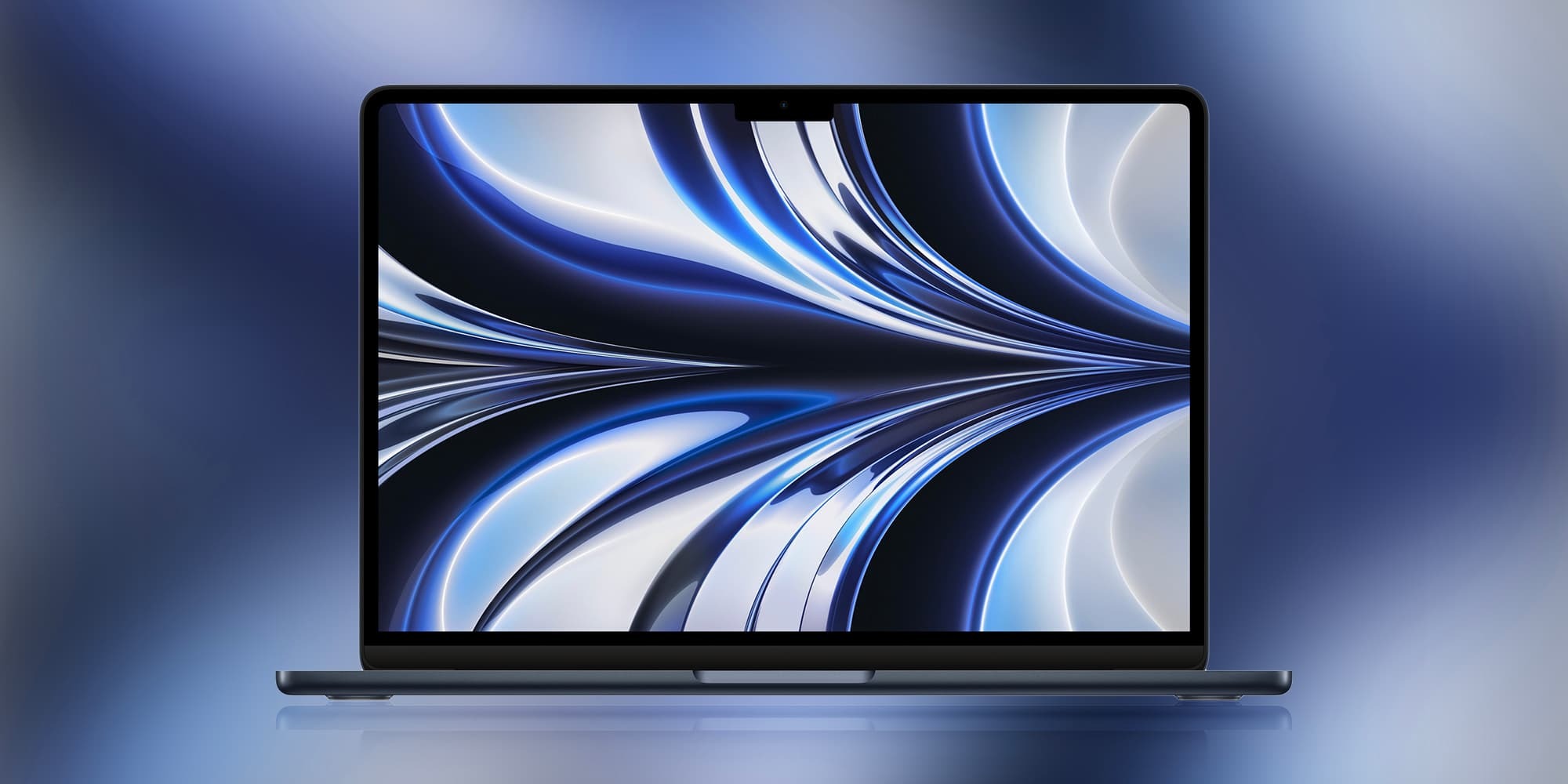
M2 MacBook Air.

A year later, Apple introduced the first 15-inch MacBook Air. It has essentially the same hardware as the smaller version with a similar design, but with a larger display. Prices start at $1299 in the US.Apple is still selling the M1 MacBook Air for prices starting at $999.

MacBook Pro

The 2023 MacBook Pro is available in multiple versions, and customers can choose between 14-inch and 16-inch screen sizes. For the first time, Apple has introduced a less expensive version of the 14-inch MacBook Pro with the base M3 chip. This version has the same design and display as the high-end versions, except that it only has two USB-C ports instead of three.
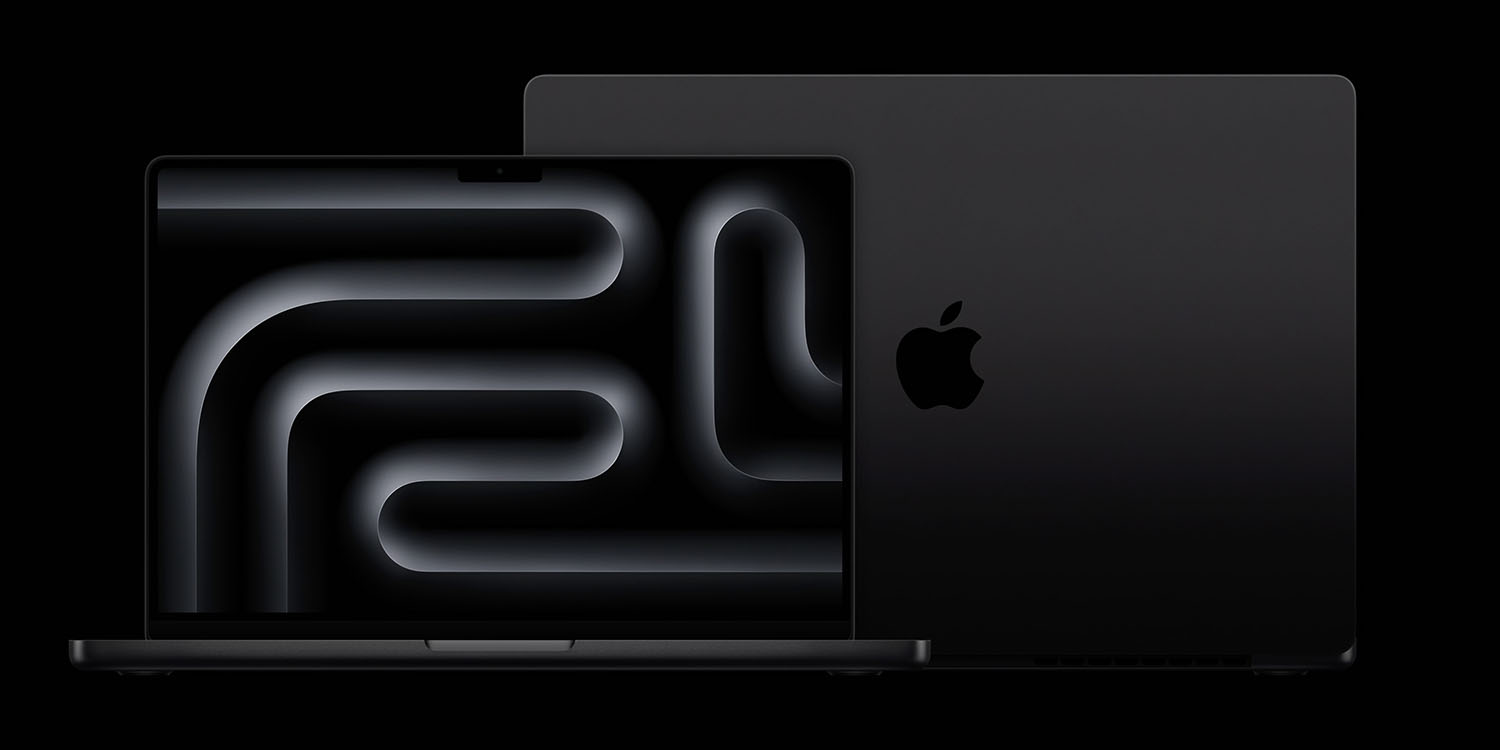
M3 MacBook Pro

The most expensive versions of the MacBook Pro are equipped with the more powerful M3 Pro and M3 Max chips. The laptop can be configured with up to 128GB of RAM and 8TB SSD. These versions also come in a new Space Black color.

Unlike the MacBook Air, the MacBook Pro comes with an HDMI port and an SD card reader. It also features MagSafe and Touch ID on the keyboard. Apple no longer sells MacBooks with the Touch Bar. Prices start at $1,599 in the US.

Mac mini

Mac mini is the cheapest Mac currently available since it’s basically a desktop without a built-in display or other peripherals. The base model with the M2 chip features one Ethernet port, two USB-C/Thunderbolt 4 ports, HDMI 2.0, two USB-A ports, and a headphone jack.

Apple sells a more powerful version of the Mac mini with the M2 Pro chip, which also comes with four USB-C ports instead of two. Mac mini can be configured with up to 32GB of RAM and up to 8TB of storage. Customers can also opt for a 10 Gigabit Ethernet port. The Apple Silicon Mac mini is only available in silver, while the now discontinued Intel model was available in space gray.
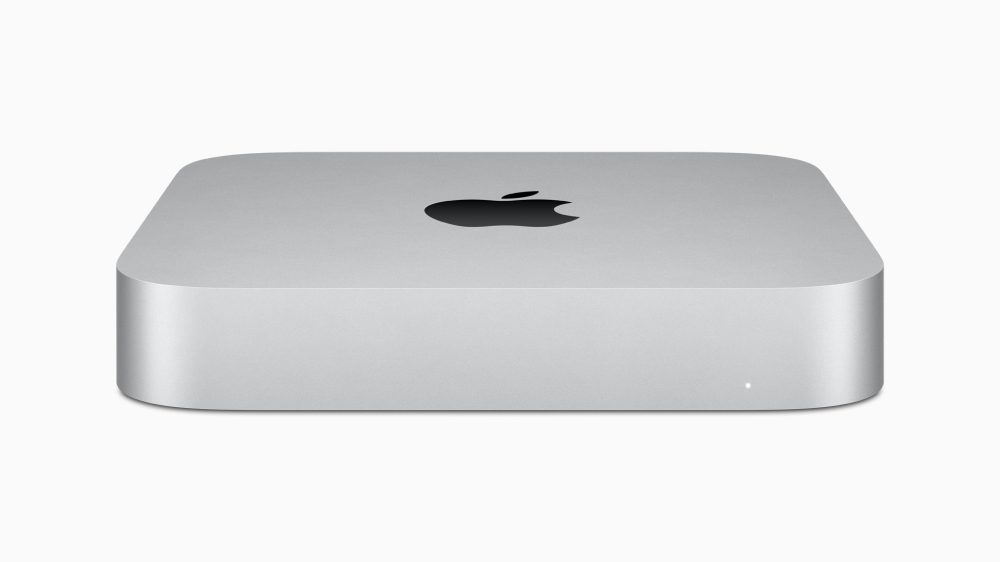
Apple Silicon Mac mini.

Prices for the Mac mini start at $599 in the US. Again, it’s worth noting that it doesn’t come with a keyboard or mouse in the box – you need to buy them separately or use your current ones.

Mac Studio

Mac Studio represents a new category between Mac mini and Mac Pro. It features a design based on the Mac mini, but with a taller body to support the more powerful hardware and also a better cooling system.

The new Mac Studio is targeted at professional users who work with demanding tasks such as video editing, 3D rendering, and machine learning. 

Embraced by creative pros everywhere, Mac Studio now delivers next-generation power in the form of the lightning-fast M2 Max and the boundary-breaking M2 Ultra. It packs outrageous performance and extensive connectivity in an unbelievably compact form, putting everything you need within easy reach and transforming any space into a studio.

By default, Mac Studio already comes with the M2 Max chip, 32GB of RAM, and 512GB SSD storage. A more expensive option lets users customize Mac Studio with M2 Ultra. While M2 Max has a 12-core CPU and a 30-core GPU, M2 Ultra doubles all of those specs. The new chip has a 24-core CPU and a 60-core GPU.

Mac Studio can also be configured with up to 192GB of RAM and 8TB of SSD storage. The machine offers up to six Thunderbolt ports, 10 Gigabit Ethernet, headphone jack, two USB-A ports, and one HDMI port.
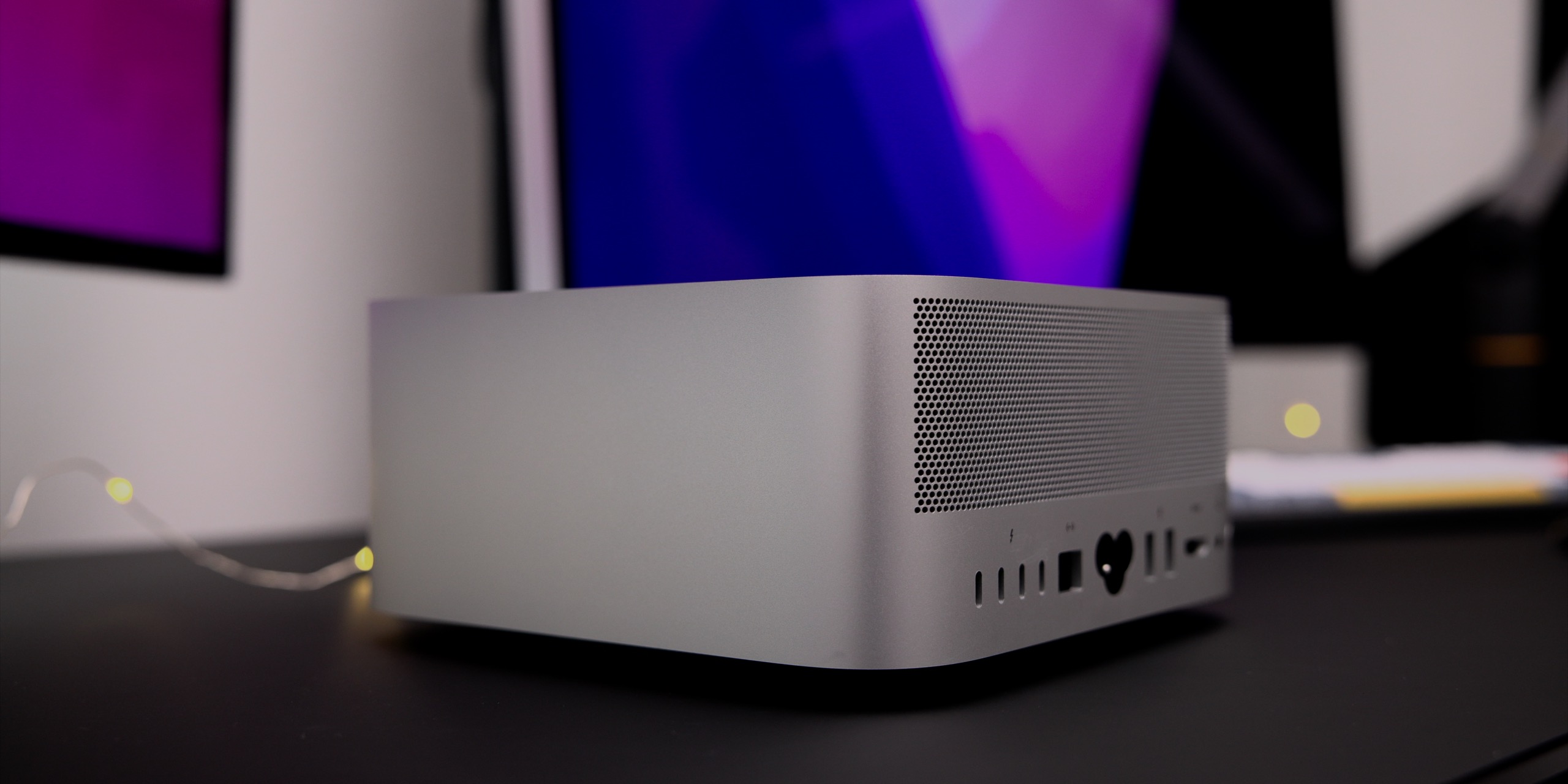
Mac Studio

Apple has been rumored to be working on new versions of this machine with the M3 Max and M3 Ultra chips. However, these versions may not be ready until 2025. Bloomberg’s Mark Gurman said in November last year that the M3 Ultra chip “hasn’t yet gone into broad testing” inside Apple.

In the US, prices for the Mac Studio with M2 Max chip start at $1999. The M2 Ultra chip version starts at $3999. Just like the Mac mini, Mac Studio doesn’t come with a keyboard and mouse in the box. You can find accessories for your Mac Studio here.

iMac

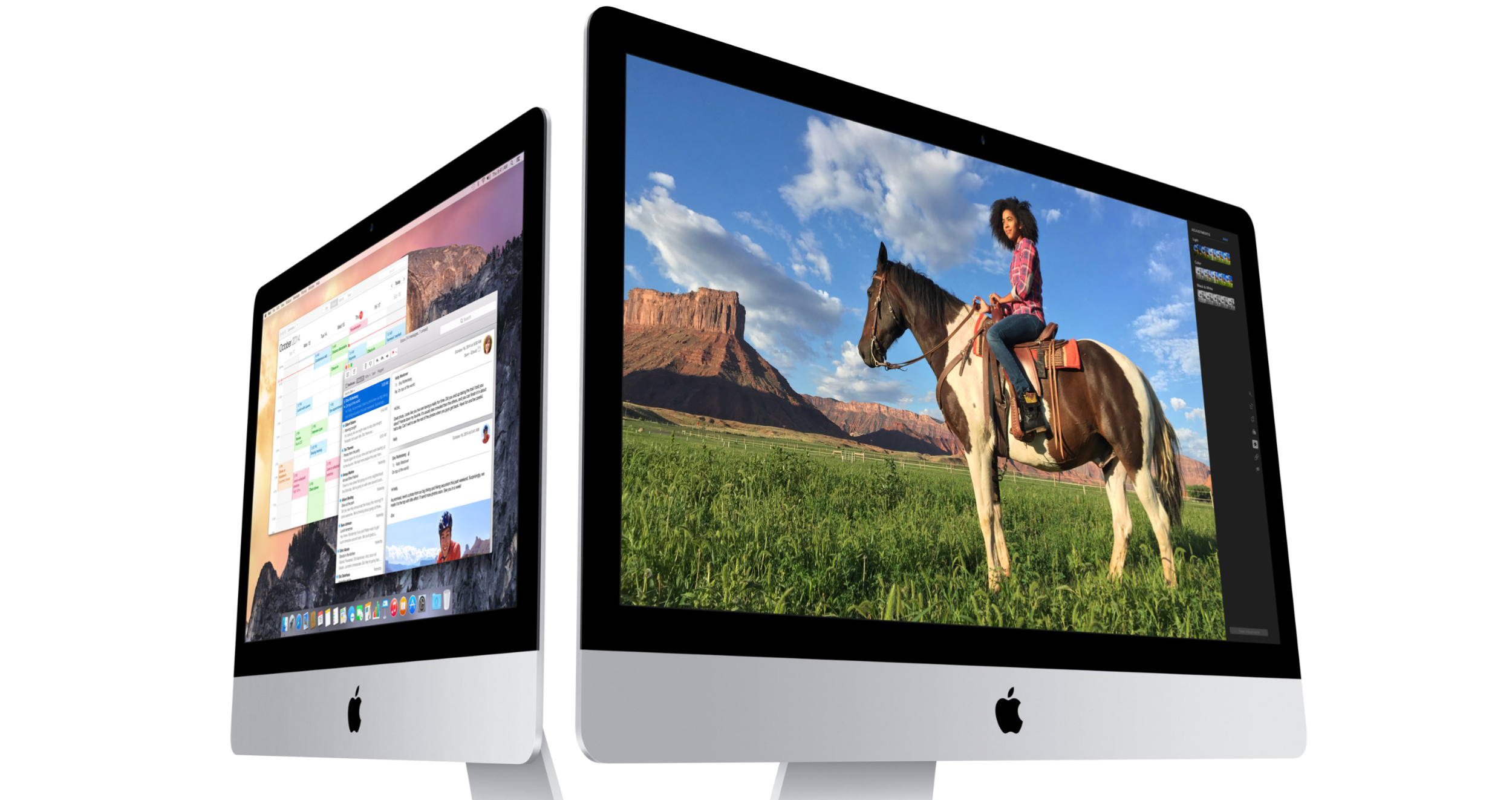
iMac is Apple’s most popular desktop computer with an all-in-one construction. It features a 4.5K display in its 24-inch version and a 5K display in the 27-inch version. At the same time, Apple still sells an entry-level iMac with a regular 1080p display.

The 24-inch iMac is the first to feature the M1 chip, the same as in the Mac mini, MacBook Air, and MacBook Pro. This allowed Apple to introduce a completely redesigned model with a slimmer design, which is also offered in seven new colors. Customers can customize the new 24-inch iMac with up to 16GB of RAM and 2TB of storage.
Site default logo image

The company ships the 24-inch iMac with Magic Mouse and Magic Keyboard, plus a Lightning cable for recharging accessories. Prices in the US start at $1299. Apple has discontinued its old 21.5-inch iMac and the 27-inch iMac 5K.

Mac Pro

Mac Pro is a computer built for professional users who depend on extremely powerful hardware. Available in tower and rack versions, it has a completely modular design. That means users can replace RAM, SSD, GPU, and other internal components.

By default, it features four USB-C/Thunderbolt 3 ports, two USB-A ports, and two 10Gb Ethernet ports. However, the ports can be expanded using the PCI Express slots. Apple also ships the computer with a Magic Mouse and Magic Keyboard, but it does not come with an external monitor included.

All models feature Intel Xeon W processors, which are the most powerful processors offered by Intel. Consumers can configure Mac Pro with up to 28-core processor, 1.5TB RAM, and 8TB of SSD storage. In addition to supporting multiple dedicated GPUs, Apple also offers the Afterburner card — which accelerates the decoding of ProRes videos.

The company recently updated the Mac Pro with new graphics card modules, which include Radeon Pro W6800X and Radeon Pro W6900X.

Site default logo image

Mac Pro prices start at $5999 in the US.

Rumors about upcoming Macs

Top stories about the Mac

iFixit tears into Apple’s battery-packed Magic Mouse 2, Keyboard, & Trackpad 2

Apple debuted new versions of its Mac peripherals on Tuesday with the Magic Mouse 2, Magic Keyboard, and Magic Trackpad 2, replacing the aging AA battery-powered predecessors with versions that use Lightning cables to recharge built-in batteries. We’ve already seen hands-on unboxings for anyone interested but not curious enough to dish out the $330 total for all the new Magic gear, and now iFixit has followed up with the usual teardown and repairability analysis for each new Apple accessory.
Expand
Expanding
Close

New 21.5-inch iMac least repairable yet due to lack of RAM, hard drive upgradability

iFixit has performed its ritual teardown of Apple’s newly refreshed 21.5-inch iMac, and while the machine might be one of Apple’s best yet for specs on the low-end desktop, it gets its worst score ever when it comes to repairability.

Earlier this week Apple officially launched the refreshed entry-level 21.5-inch iMac alongside a new Retina 4K 21.5-inch iMac after upgrading its 27-inch model with the new display tech and refreshed internals last year.

While the previous generation iMacs had many of the same issues resulting in a low repairability score, iFixit notes that the new iMac has a number of the same downsides and then some…
Expand
Expanding
Close

IBM cuts down IT support staff w/ Mac deployment, says 5% of Mac users call help desk vs 40% for PCs

Apple CEO Tim Cook with IBM CEO Ginni Rometty

Deploying Macs to employees has helped IBM significantly reduce its IT staff and cut down on time and costs, the company’s VP of Workplace-as-a-Service Fletcher Previn explained at a recent talk during the JAMF Nation User Conference (JNUC). Previn offered some insight into how offering Macs has improved efficiency for the company’s internal IT staff since IBM for the first time started offering its employees Macs as an official alternative to PCs back in May.
Expand
Expanding
Close

Adobe acknowledges ‘critical vulnerability’ with latest Flash Player version, promises fix next week [U: Fix available]

[Update 10/16: Somewhat sooner than expected, Adobe has released a new version of Flash available here.]

Here’s a heads-up to Mac users with Adobe Flash Player installed. Adobe has posted a security bulletin this week advising Mac, Windows, and Linux users of a known security issue with the latest version of the Flash Player plug-in, version 19.0.0.207 and earlier. In the security advisory, Adobe details that the ‘critical vulnerability’ in Flash Player could potentially cause system crashes and allow attackers “to take control of the affected system.”
Expand
Expanding
Close

Review: Sony’s MP-CL1 updates a proven HD pico projector with a thin, Apple-friendly shell

I knew Celluon had something special on its hands when I reviewed the $349 pocket-sized video projector PicoPro earlier this year: the Korean company known for laser-projecting keyboards released an iPhone 6 Plus-sized HD projector, capable of simulating a TV using lasers, a speaker, and a rechargeable battery. PicoPro’s projection system was MicroVision-developed and laser-sharp, requiring no manual focus knob — an advantage over rival projectors such as the otherwise more powerful AAXA P700 and ST200, which I subsequently reviewed and liked.

This week, Sony is entering the pico projector market with MP-CL1 ($350), which uses the same MicroVision laser projector found in PicoPro. Sporting the same 1920×720 resolution and putative 32-lumen brightness/80,000:1 contrast ratio as PicoPro, MP-CL1 promises to create a 40-inch TV image at 4-foot distances, an 80-inch image at 8-foot distances, or a (very dim) 120-inch image at 12-foot distances. Sony has pitched it as a “take it anywhere” big screen display for the iPad, iPhone, and PlayStation 4; it’s equally viable for Apple TVs and HDMI-ready Macs. So which is the better value: MP-CL1 or PicoPro?…


Expand
Expanding
Close

Apple announces new ResearchKit projects studying autism, epilepsy and melanoma

Apple has today announced an expansion of ResearchKit into studies for autism, epilepsy and melanoma. ResearchKit enables people to conduct distributed scientific research studies from an iPhone app, enabling higher participation rates than traditional medical research can provide. The new studies are being run by researchers in Duke University, Johns Hopkins and Oregon Health and Science University.

ResearchKit is open-source. In the same statement, Apple says that over 50 researchers have already contributed to the project.


Expand
Expanding
Close

Pixelmator for OS X updated with Photos app extension, Split View support and San Francisco UI

Following the corresponding update to Pixelmator for iOS 9, the company has released the latest version of Pixelmator for the Mac ($29.99) with full support for El Capitan. This includes compatibility with changes to the OS as well as an overhaul in the Pixelmator user interface to feature San Fransisco, Apple’s new system font. The update, version 3.4, also includes official full-screen Split View support on El Capitan, so users can dock Pixelmator next to any other app on the system filling the display.

Perhaps most interestingly, the app now includes a Photos.app editing extension …


Expand
Expanding
Close

Apple increases Mac prices in Malaysia, Norway, Brazil and New Zealand

Update: Apple has also increased the price of Macs in Australia by AUD $80-$200, depending on the model. Mexico and Thailand have seen similar price increases, as well.

The same week as it increased the price of apps in Australia, Indonesia and Sweden, Apple today has raised the prices of its Mac line in a handful of countries. The company has increased the prices of its MacBook, MacBook Air, MacBook Pro, Mac Pro, and Mac mini in Brazil, Norway, New Zealand, and Malaysia to account for the fluctuation of foreign currency against the United States dollar.


Expand
Expanding
Close

PSA: While Apple limits the new 27-inch iMac RAM to 32GB, you can double it to 64GB

With most Macs these days, soldered memory chips mean that whatever RAM you want, you have to buy it from Apple when you order the machine. But the new 27-inch iMac still uses plug-in RAM, so you’re free to add your own RAM after purchase. And while Apple limits you to a maximum of 32GB, OWC (just like in years past) has just announced that it will shortly offer upgrade kits for 48GB and 64GB RAM … 
Expand
Expanding
Close

Apple slims 1 TB Fusion Drive down to a measly 24 GB of flash storage

If you’re one of the many excited buyers chomping at the bit to get one of Apple’s latest-gen Retina iMacs, you might want to take a second to consider the specs on the new models. According to Apple’s website, the 1 TB Fusion Drives used in the new all-in-ones have seen a significant decrease in the amount of included flash storage.

How significant? The new drives ship with less than one-fifth of the previous flash storage.


Expand
Expanding
Close

Apple passes on “toxic” Quantum Dot displays, reaffirms Mac as “different on purpose” from iPad

As an aside to today’s release of new Retina iMacs, Apple granted an atypically personnel-driven set of interviews to Steven Levy of Backchannel. Levy spoke with Apple marketing chief Phil Schiller and several members of the company’s Input Design Lab, notably discussing several topics of interest to Mac and iPad users:
Expand
Expanding
Close

Opinion: Apple’s 4K iMac, Magic Keyboard, Mouse 2 + Trackpad 2 are pricey steps in the right direction

Apple fulfilled three of my “minor-level” Mac dreams today, announcing (very) long-awaited updates to its 2007-vintage Wireless Keyboard and 2010 Magic Trackpad — accessories I’ve used and mostly loved for years — and a non-trivial update to the Retina 5K iMac it released last year. It also unveiled a sequel to its 2009 Magic Mouse, and a Retina 4K version of the 21.5″ iMac. Yes, it’s easy to call these releases “inevitable” in the sense that we’ve known all of them were coming for a while now, but some of the details were surprising.

Who would have thought that the Magic Trackpad 2, for instance, would be Apple’s first Bluetooth 4-only Mac accessory? That the iOS Lightning connector would make its way into Mac accessories? Or that the Retina 5K iMac would receive a significant screen quality upgrade after only one year?

Each of these products reaffirms Apple’s commitment to a premium experience, and demonstrates that Steve Jobs’ theories about the inevitable march of progress remain part of the company’s DNA. Read on for my product-specific thoughts….


Expand
Expanding
Close

Apple finally granted 2007 patent on Touch ID sensor in Macs (with hilariously old image)

While Apple may have waited for the iPhone 5s before it introduced Touch ID, it’s been working on the technology since shortly after the launch of the original iPhone. A patent first filed in 2007 was finally granted today, and includes the use of a fingerprint sensor in laptops – though the drawing Apple used to illustrate the concept seemingly dates back even further than 2007!

A finger sensing apparatus may include a finger sensor including an integrated circuit (IC) substrate, an array of finger sensing elements on the IC substrate, and match circuitry on the IC substrate for performing final finger matching. […] FIG. 1 is a perspective view of an electronic device in the form of a laptop computer including a finger sensor and enhanced security in accordance with the present invention.

The patent also covers use in desktop computers, aka the iMac today, embedding the sensor into the keyboard … 
Expand
Expanding
Close

Apple launches new Retina 4K 21.5-inch iMac, all 27-inch iMacs now feature Retina 5K displays

Site default logo image

Apple has today announced updates to the entire iMac family. Most notably, the company has brought Retina to the 21.5 inch iMac range, with 4K resolution displays. Apple has also dropped the non-Retina 27 inch iMacs, so they feature 5K displays across the board. The new iMac displays include faster processors, upgraded graphics, improved wider color gamut and two Thunderbolt 2 ports. The new iMacs have launched alongside updates to the Magic Trackpad, Magic Mouse and keyboard.


Expand
Expanding
Close

Review: Macphun’s Creative Kit 2016 makes boring photos beautiful, for a modest price

Great photographers are made, not born, and even the best photographers have plenty of unimpressive shots in their collections. But in the age of digital photography, it’s possible to create a great photograph without being a great photographer. You can even accomplish this days after snapping your photo, so long as you have the right post-processing software and a little time to play around.

Macphun’s Creative Kit 2016 ($150) provides photographers of all skill levels with six different tools that make bland or imperfect photos look great. This year’s Creative Kit includes the Pro versions of Macphun’s Focus, FX Photo Studio, Intensify, Noiseless, Snapheal, and Tonality, each renamed “CK” and expanded with extra features. All six of the apps are designed to be super easy to use, yielding great results even without diving into the manual controls, though there are rewards for tweaking their settings. Better yet, the standalone apps now work as plug-ins for OS X Photos, Aperture, Photoshop, and Lightroom, and can easily be used in combination with one another for even more powerful editing…


Expand
Expanding
Close

Mac sales slowest in two years, say researchers, but still well ahead of the rest of the PC industry

While research firms IDC and Gartner disagree on whether Mac sales are falling or rising, they do agree on two things: Q3 Mac sales were at their most sluggish for two years, but still well ahead of the rest of the PC industry.

Ahead of new retina 4K iMac and likley accessories launch next week, IDC estimated that Apple sold 5.3M Macs in Q3 2015, a year-on-year fall of 3.4%. Gartner instead estimated 5.6M sales, representing a 1.5% increase. Both firms did, however, agree on two pieces of good news for Apple … 
Expand
Expanding
Close

OS X code reveals new Apple Magic Keyboard, Magic Mouse 2 & Magic Trackpad 2

Apple looks to be preparing updated versions of its keyboard, trackpad, and mouse accessories for near-term release. Code freshly discovered in the latest OS X 10.11.1 beta references next-generation versions of the products, as first spotted by Consomac. We’ve confirmed the references to new Apple peripherals are not present on the current OS X release, version 10.11.0, and first appear in OS X 10.11.1, currently in beta.
Expand
Expanding
Close

Bowers & Wilkins debuts Zeppelin Wireless, adding Bluetooth and power to iconic Apple speaker

Bowers & Wilkins, maker of the iconic Zeppelin speaker and its AirPlay sequel Zeppelin Air, today announced an upgraded model with even more horsepower and features: Zeppelin Wireless ($700). The original $600 Zeppelin redefined “high-end iPod speakers” at a time when Bose and Klipsch had established a $300 to $400 price ceiling, successfully upping the ante in both sound quality and industrial design.

Zeppelin Wireless retains B&W’s classic elongated football shape and five-speaker concept, but now relies entirely on wireless streaming for audio, boasting Bluetooth aptX, AirPlay, and Spotify Connect support. Backed by 150 Watts of amplifier power, a new twice-as-powerful digital signal processor upsamples all inputs to 24-bit/192kHz resolution, promising to deliver greater accuracy, lower noise, and enhanced dynamic range through an audiophile-quality DAC. The speakers and enclosure have been upgraded, as well…


Expand
Expanding
Close

Twelve South’s new BookArc for MacBook sports chamfered edges, fits all current MacBooks

Twelve South’s family of BookArc stands for MacBooks are perhaps its best-known products, having debuted alongside the company back in 2009. Today, BookArc received a substantial redesign in the form of BookArc for MacBook ($50), which now is sized to properly support every current-generation MacBook, MacBook Air, and MacBook Pro from 11.6″ to 15″. Interchangeable silicone inserts promise that the new BookArc “will be the perfect home for your current (and future) MacBook for years to come.”

The new BookArc is made from bead-blasted silver aluminum that matches the looks of most MacBooks, with a polished chamfered edge mimicking the design cue Apple introduced in iPhones, iPads, and iPods. While the “arc” shape remains the same as before, cradling the bottom of your MacBook, the cable pass-throughs have been shrunk and flattened. BookArc for MacBook is available now, and the wooden version BookArc Mod will continue to be sold for a $10 premium, while the MacBook Air-specific BookArc sells for $10 less.

Updated: We’ve just added hands-on impressions below…


Expand
Expanding
Close

Apple planning to launch new 4K 21.5-inch iMac next week, iPad Pro in early November

With September’s iPhone release in the rearview and the iPad Pro set for an early November launch, Apple is ready to add some new Mac hardware into its fall product line. Apple is currently planning to announce new 21.5-inch iMacs with 4K screens next week, according to multiple reliable sources. While the new computers are likely ready to begin showing up in stores as soon as Tuesday, October 13th, Apple will ramp up larger quantities for November, according to the sources, so finding one early on may be a slight challenge.


Expand
Expanding
Close

Microsoft challenges Apple w/ Surface Pro 4 iPad Pro competitor, Surface Book laptop aimed at MacBook Pro, more

Microsoft comparing its new Surface Book laptop/tablet combo with Apple’s MacBook Pro

At Microsoft’s event today it unveiled a huge array of ambitious and interesting tech which should be enough to make Apple stand up and take notice. The once-giant of the consumer electronics world has had to reinvent itself over the past couple of years, and judging from today’s event, it’s doing enough to get people interested again at the very least. At best, it could transform the way we see technology and computing.
Expand
Expanding
Close