MacBook Pro: The biggest and baddest Mac laptops

See All Stories

Apple's premium laptop comes in 13- and 16-inch screen sizes. Each model includes 2-4 USB-C ports for charging, accessories, and data transfer. Higher-end models also include the Touch Bar.
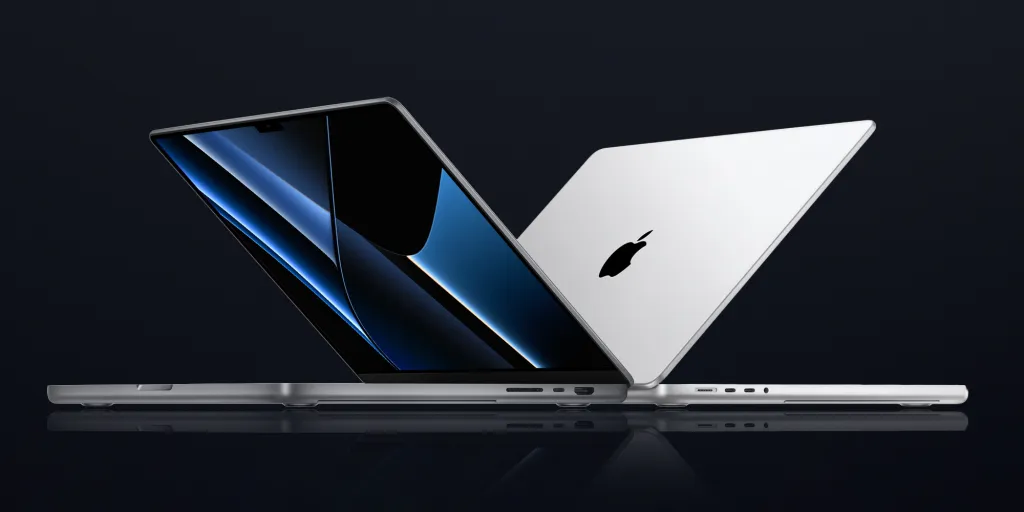
2021 MacBook Pro

MacBook Pro has been the product name for Apple’s high-end laptop since early 2006 when the transition to Intel processors began. Now, that Pro naming has carried forth as Apple has moved to its own silicon. The latest fourth and fifth-generation Pro Apple notebooks bring dramatically more power with lower heat generation and better battery life thanks to the ARM-based Apple silicon. Keep reading for a brief history of the line and a breakdown of the current lineup.

MacBook Pro history

The first generation MacBook Pro followed in the style of the PowerBook G4 that came before it, but used Intel processors rather than PowerPC chips.

The second generation of the MacBook Pro was the first to really separate itself from the products before, with a unibody enclosure. The third-generation MacBook Pro introduced the retina display as well as MagSafe 2.

Perhaps the most controversial version of the MacBook Pro is the fourth generation. While the third generation received some backlash for the removal of ethernet and the optical drive, the fourth generation was a complete rethinking of the device peripherals. No more MagSafe, no more USB-A ports, and only the 13-inch model kept the function keys. Instead, this redesigned MacBook Pro opted for all Thunderbolt 3 ports and headphone jack. In place of function keys, the MacBook Pro gained an OLED Touch Bar. In late-2020, Apple introduced the M1 chip and updated the 13-inch MacBook Pro. The ARM-based processor brought down power consumption and increased performance.

In October of 2021, Apple introduced the fifth-generation MacBook Pro with not one but two updated versions of the M1 chip, the M1 Pro and M1 Max. The move walked back some of the decisions from the previous generation, adding back an HDMI Port, MagSafe charger, and SD card reader while removing the Touch Bar.

The 2020 13-Inch MacBook Pro

In late 2020, Apple introduced the 13-inch M1 MacBook Pro as the latest update to the fourth-generation MacBook. The MacBook features the same look as previous MacBooks, but like the MacBook Air and Mac Mini, switched to Apple silicon.

Apple’s M1 chip brought ARM architecture to the MacBook line, and this was the first MacBook without an Intel processor.

The M1 chip is a unified design with an 8-core CPU and an 8-core CPU. The processor integrated memory on board, limiting the device to either 8GB or 16GB of unified memory. The 13-inch M1 MacBook Pro is configurable with between 256GB and 2TB of storage and features a Magic Keyboard, rather than the problematic butterfly keyboard.

13-inch MacBook Pro specs

Base Configuration$1,299.00

  • Apple M1 chip with 8‑core CPU, 8‑core GPU, and 16‑core Neural Engine
  • 8GB unified memory
  • 256GB SSD storage
  • 13-inch Retina display with True Tone
  • Backlit Magic Keyboard – US English
  • Touch Bar and Touch ID
  • Two Thunderbolt / USB 4 ports

Max Configuration$2,299.00

  • Apple M1 chip with 8‑core CPU, 8‑core GPU, and 16‑core Neural Engine
  • 16GB unified memory
  • 2TB SSD storage
  • 13-inch Retina display with True Tone
  • Backlit Magic Keyboard – US English
  • Touch Bar and Touch ID
  • Two Thunderbolt / USB 4 ports

13-inch MacBook Pro pricing

The price for the 13-inch M1 MacBook Pro starts at $1,299. Upgrading this base configuration to 16GB of memory adds $200 to the price. Likewise, each step above 256GB of storage – 512GB, 1TB, and 2TB – will add $200 to the price. A fully specced out 13-inch MacBook Pro will run you $2,299.

You can configure your own 13-inch MacBook Pro on Apple’s website.

Current 14-inch and 16-inch MacBook Pro

In October 2021, Apple brought a brand new design to the MacBook Pro line. Apple increased the screen size on the 13-inch, making it a 14-inch, and shrunk the bezels on the 16-inch. This fifth-generation notebook addressed many complaints of the last generation. MagSafe returned, in the form of an improved MagSafe 3, while the MacBook also regained an HDMI port and an SD-card slot.

Also gone is the Touch Bar. Instead, the standard row of function keys return. The latest MacBooks also bring a ProMotion display that was first introduced on the iPad Pro, with a variable refresh rate and mini-LED backlight.

The 2021 MacBooks aren’t without a controversial feature, as while the display has been made larger there is now a large notch for the 1080P FaceTime camera. While FaceID would have been a nice addition in exchange for this small chunk of the screen, there are some reasons this is not totally practical.

14-inch MacBook Pro specs

Base Configuration$1,999.00

  • Apple M1 Pro with 8-core CPU, 14-core GPU, 16-core Neural Engine
  • 16GB unified memory
  • 512GB SSD storage
  • 67W USB-C Power Adapter
  • 14-inch Liquid Retina XDR display
  • Three Thunderbolt 4 ports, HDMI port, SDXC card slot, MagSafe 3 port
  • Backlit Magic Keyboard with Touch ID – US English

Maximum Configuration$5,899.00

  • Apple M1 Max with 10-core CPU, 32-core GPU, 16-core Neural Engine
  • 64GB unified memory
  • 8TB SSD storage
  • 96W USB-C Power Adapter
  • 14-inch Liquid Retina XDR display
  • Three Thunderbolt 4 ports, HDMI port, SDXC card slot, MagSafe 3 port
  • Backlit Magic Keyboard with Touch ID – US English

14-inch MacBook Pro pricing

The 14-inch MacBook Pro starts at $1,999. The base model includes 16GB of memory, 512GB of storage, and an M1 Pro processor with an 8-core CPU and 14-core GPU. There are multiple versions of the M1 Pro processor available, while jumping to an M1 Max processor will cost $500 more, and requires you to jump up to 32GB of memory – a $400 upgrade. Going with the M1 Max processor means you can configure up to the full 64GB of memory, an $800 upgrade.

You can configure up to 8TB of storage in the 2021 14-inch MacBook Pro. Upgrade costs are as follows:

  • 1TB SSD Storage – $200
  • 2TB SSD Storage – $600
  • 4TB SSD Storage – $1,200
  • 8TB SSD Storage – $2,400

You can configure your own 14-inch MacBook Pro on Apple’s website.

16-inch MacBook Pro specs

Base Configuration$2,499.00

  • Apple M1 Pro with 10-core CPU, 16-core GPU, 16-core Neural Engine
  • 16GB unified memory
  • 512GB SSD storage
  • 16-inch Liquid Retina XDR display
  • Three Thunderbolt 4 ports, HDMI port, SDXC card slot, MagSafe 3 port
  • 140W USB-C Power Adapter
  • Backlit Magic Keyboard with Touch ID – US English

Maximum Configuration$6,099.00

  • Apple M1 Max with 10-core CPU, 32-core GPU, 16-core Neural Engine
  • 64GB unified memory
  • 8TB SSD storage
  • 16-inch Liquid Retina XDR display
  • Three Thunderbolt 4 ports, HDMI port, SDXC card slot, MagSafe 3 port
  • 140W USB-C Power Adapter
  • Backlit Magic Keyboard with Touch ID – US English

16-inch MacBook Pro pricing

The 16-inch MacBook Pro starts at $2,499. There is only one M1 Pro processor available on the 16-inch MacBook, and that’s the highest version 10-core CPU, 16-core GPU version of the M1 Pro processor that is a $300 upgrade on the 14-inch MacBook Pro. Of course, you can also step up to the M1 Max processor with either a 24-core or 32-core GPU, a $200 and $400 upgrade respectively (which also requires the $400 upgrade to 32GB of memory). The memory and storage options are all the same as the 14-inch MacBook Pro.

You can configure your own 16-inch MacBook Pro on Apple’s website.

Differences between 13-inch,14-inch, and 16-inch models

The 2021 MacBook Pro lineup is a refreshing change. The return of ports and physical keys make the laptops more versatile, while additions like an XDR display and hardware acceleration for ProRes improves the experience but is harder to quantify for the average user.

13-inch14-inch16-inch
ProcessorM1M1 Pro / M1 MaxM1 Pro / M1 Max
Memory8GB / 16GB16GB / 32GB / 64GB16GB / 32GB / 64GB
Storage512GB, 1TB, 2TB512GB, 1TB, 2TB, 4TB, 8TB512GB, 1TB, 2TB, 4TB, 8TB
Screen2560×1600 pixels 3024×1964 pixels; ProMotion3456×2234 pixels; ProMotion
Weight3.0 pounds (1.4 kg)3.5 pounds (1.6 kg)M1 Pro: 4.7 pounds (2.1 kg)
M1 Max: 4.8 pounds (2.2 kg)
Size (Width x Depth)11.97 x 8.36 inches (30.41 x 21.24 cm)12.31 x 8.71 inches (31.26 x 22.12 cm)14.01 x 9.77 inches (35.57 x 24.81 cm)
Height0.61 inch (1.56 cm)0.61 inch (1.55 cm)0.66 inch (1.68 cm)
Base Price$1,299.00$1,999.00$2,499.00

The $1,999 starting price for Apple latest computer is a harder pill to swallow than the $1,300 13-inch Pro from last year. For an average user, the superb M1 MacBook Air will likely suffice (and that sub-$1,000 price is hard to pass up).

But the 2021 14-inch and 16-inch MacBook Pro are exactly what they need to be, a return to function-over-form that will truly meet the needs of professional users.


Apple features artwork to celebrate the Chinese New Year with wallpapers for Mac, iPhone, and iPad

Site default logo image

There seems to be no limits to what artists are able to create with Apple’s products. From Disney animators sketching classic characters, to an illustrator using an iPad Pro to design the New Yorker’s latest cover. In today’s latest artistic drive, Apple has partnered with five young Chinese artists to reinvent classic Nianhua folk art.


Expand
Expanding
Close

Henge Docks becomes authorized Apple reseller to offer MacBooks & accessories bundled w/ its docking stations

Site default logo image

Accessory maker Henge Docks, best known for its docking stations made for MacBooks, announced today that it has signed up to be an official Apple reseller allowing it to offer Apple’s MacBooks and accessories bundled with its companion products.

In order to do this, Henge Docks has partnered with Apple through the company’s Authorized Business Solution Provider (ABSP) program.


Expand
Expanding
Close

ViewSonic announces three new external displays at CES, including a curved 37-inch 4K model with USB-C

Site default logo image

ViewSonic has announced three new high-end displays for 2017 including a 31-inch 4K with ‘frameless’ design and a 37-inch curved 4K model. It is also launching a cheaper 27-inch QHD display. Two of the new monitors feature USB-C connectivity which means a single cable acts as the display connector, provides power and some I/O thanks to the integrated USB hub.

The displays seem well positioned as professional monitors for Apple customers with the new USB-C only MacBook Pro. The good looks come at a price though: the 4K models cost upwards of $1300. ViewSonic says the new displays will be available in June …


Expand
Expanding
Close

Panasonic’s upcoming LUMIX GH5 camera will allow direct connections to the MacBook Pro via USB-C

Site default logo image

Panasonic’s recently-announced GH5 mirrorless camera checks off a lot of boxes: internal 10-bit 4:2:2 recording, dual SD Card slots, 4K @ 60p, in body 5-axis image stabilization, and much more. The camera, which is now available for preorder on B&H or Amazon, is a ridiculously-impressive unit that we can’t wait to get our hands on.

And one of the camera’s more unheralded new features is something that will appeal majorly to MacBook owners. Instead of a slow USB 2.0 connection via a USB mini port, Panasonic is including USB 3.1 gen 1 via a USB Type-C port.
Expand
Expanding
Close

Speck announces transparent, impact-resistant cases for MacBook Pro and iPhone 6/6s/7

Site default logo image

Speck is known for its transparent cases which protect MacBook models against scrapes and scratches without hiding them from sight, but they’ve so far done nothing to guard against impact damage from knocks and falls. All this is set to change, says the company, with its new Presido Clear range of cases, which protect against falls of up to four feet.

Presidio Clear for MacBook is made with Impactium Clear, a dynamic transparent material that absorbs and disperses shock upon impact and protects MacBooks from drops up to 4 feet. Impactium Clear is co-molded into a raised edge around the perimeter of the case that also provides a secure, no-slip grip, so you’re less likely to drop your device. The case’s dual-layer, two-piece design easily clips onto the MacBook.

The first model available will be for the 13-inch MacBook Pro


Expand
Expanding
Close

CalDigit announces new Thunderbolt 3 USB-C dock with I/O expansion ports and full 85W power for charging new MacBook Pro

Site default logo image

Joining the crowd of Thunderbolt 3 products announced at CES 2017, CalDigit has announced a new generation of its Thunderbolt 3 USB-C dock designed for the new MacBook Pro. As well as a range of I/O ports (for 5K displays, dual 4K displays, eSATA and more) the TS3 Dock will feature 85 W power — this means it can fully charge the new MacBook Pro whilst in use.

The TS3 is the successor to CalDigit’s existing Thunderbolt 2 Dock. The new dock is available to preorder now with availability for ‘Q1 2017’ …


Expand
Expanding
Close

Hands-on: Glyph’s Atom RAID SSD brings super-fast external storage to the new MacBook Pro

Site default logo image

If you’re a new MacBook Pro owner, then perhaps you’ve considered using external storage to increase storage capacity. After all, the MacBook Pro is limited by relatively small internal storage drives, although you can now go up to 2TB (at a $1,200-$1,400 premium) with 15-inch build-to-order options.

That said, I think most professional creatives will be interested in adopting some form of external storage to use with the new MacBook Pro. Of course, there are tons of external drive options on the market, ranging from standard hard drives, to solid state drives. Even if these drives feature USB-A connectors, they can be quickly adapted to work with USB-C.

But the Atom SSD line from Glyph is an extremely attractive choice for new MacBook Pro owners. Not only does it feature excellent build quality and out-of-the-box USB-C to USB-C connectivity, it also takes advantage of USB 3.1 gen 2, which not many external drives can lay claim to at this point.

We previously went hands-on with the standard 1TB Atom SSD, but I recently got my hands on the RAID version, which truly takes advantage of the speeds afforded by the 2016 MacBook Pro. Have a look at our hands-on video walkthrough for the details.
Expand
Expanding
Close

Comment: OWC’s ‘DEC’ attachment highlights the portability progress Apple has made with the MacBook Pro

Site default logo image

Amid protests from some professional users of the MacBook Pro that they need the ports Apple dropped from the 2016 models, OWC has announced a solution in the form of a tailor-made accessory called the DEC.

Attaching to the underside of the 2016 MacBook Pro, and said to exactly match both the footprint and the aluminum finish of the machine itself, the DEC adds 4TB of storage, an SD card slot, a Gigabit Ethernet port and an unspecified number of USB-A ports.

One thing really stands out about the DEC …


Expand
Expanding
Close

OWC reveals new ‘DEC’ attachment for 2016 MacBook Pro, brings 4TB of storage & additional ports

Site default logo image

Popular aftermarket part and component supplier OWC has taken the wraps off of a new accessory that brings both more storage and additional connectivity to the new 2016 MacBook Pro. Called the OWC DEC, the attachment brings 4TB of storage, an SD card slot, USB Type-A, and a Gigabit Ethernet port to the new MacBook Pros…


Expand
Expanding
Close

Opinion: Why the LG 5K UltraFine isn’t the MacBook Pro display I’m looking for

Site default logo image

9to5Mac’s Jeff Benjamin unboxes the LG 5K UltraFine for a hands-on …

When I decided the time had come to spend a lot of money on a shiny new MacBook Pro, I was tempted to get all the expense out of the way at once and upgrade displays at the same time. The problem is finding someone to take my money …

I currently use an Apple Thunderbolt Display in my home office, and with the simple addition of a Thunderbolt 2 to 3 adapter was able to continue doing so. It’s a great display for its time, but is showing its age a little. The screen is non-Retina and doesn’t compete with the brightness and color range of the 2016 MacBook Pro. The bezels also look rather large by today’s standards.

The display Apple would like me to buy as a replacement is the LG 5K UltraFine, but I have to say that it’s not really grabbing me …


Expand
Expanding
Close

Dell unveils new 27-inch Ultrathin monitor with USB-C support, coming in March for $700

Site default logo image

Apple worked with LG on the company’s new UltraFine 5K display, but that’s not stopping other companies from showing off their own standalone USB-C displays. As CES 2017 kicks off this week in Las Vegas, we’re sure to see quite a few companies take the wraps off of new displays, but Dell is getting a head start with its new 27-inch Ultrathin display…


Expand
Expanding
Close

LG UltraFine 5K FAQ: Everything you’ll want to know about the best MacBook Pro display

Site default logo image

LG’s UltraFine 5K Displays are slowly making their way into the hands of customers, and as such, there are still quite a few lingering questions about the units. We’ve already posted an in-depth hands-on video walkthrough, but in this post we’ll answer some of the most frequently asked questions that we’ve encountered thus far.
Expand
Expanding
Close

This week’s top stories: iPhone 8 roundup, AirPods a ‘runaway success’, New Year Apple Watch Challenge & Apple in 2017 on our 100th Happy Hour podcast

Site default logo image

9to5mac-top-stories-2

In this week’s top stories: Our iPhone 8 rumor roundup, Tim Cook says AirPods are a runaway success, Apple’s ‘New Year’ Apple Watch Activity Challenge, and Zac and Benjamin discuss what’s next from Apple in this week’s 100th episode of 9to5Mac’s Happy Hour podcast.


Expand
Expanding
Close

Hands-on: LG Apple-endorsed 5K Display – an UltraFine choice for MacBook Pro owners? [Video]

Site default logo image

The LG UltraFine 5K Display is Apple’s answer to MacBook Pro customers who wish to connect their notebooks to an external display with a single cable. After reportedly getting out of the standalone monitor business, LG’s offerings, which are available in 4K and 5K varieties, might be the next best option.

The fact that you can connect a single Thunderbolt 3 cable from your MacBook to the LG UltraFine 5K Display is quite compelling. Not only will this provide display output, but it will also deliver the necessary power (up to 85W) to keep your MacBook Pro — 13- or 15-inch variety — charged.

We recently got our hands on the LG UltraFine 5K Display. Is it a good choice for MacBook Pro owners? Watch our hands-on video walkthrough inside to learn more.
Expand
Expanding
Close

Consumer Reports responds to MacBook Pro battery test controversy, stands by its findings

Site default logo image

Consumer Reports has responded to our comment piece on its surprising battery test results for the 2016 MacBook Pro, stating that it stands by its findings.

I observed that the high-end numbers seemed hard to believe, hitting almost double the battery-life claimed by Apple, and I wondered whether some flaw in the test regimen had led to erroneous results. I emailed the organization suggesting that it might like to repeat the tests, but Consumer Reports’ director of electronics testing Maria Rerecich has replied saying that she sees no need to do so …


Expand
Expanding
Close

Lenovo unveils upcoming ThinkPad Thunderbolt 3 Dock with 5 USB ports, HDMI & VGA, more

Site default logo image

Lenovo has unveiled three new upcoming USB-C and Thunderbolt 3 accessories coming early next year including the ThinkPad Thunderbolt 3 Dock. Apple’s new MacBook Pro relies on USB-C and Thunderbolt 3 for all I/O, and Lenovo’s upcoming Thunderbolt 3 Dock is joining a still small market of similar accessories.


Expand
Expanding
Close

Apple working with Consumer Reports to understand MacBook Pro battery results and 1st ‘do not recommend’ rating

Site default logo image

Consumer Reports yesterday dropped a bombshell on Apple, making the new MacBook Pro the first MacBook ever to not receive the publication’s recommendation. As for its reasoning, Consumer Reports explained that the inconsistent, yet sometimes impressive, battery life was too big of an issue to overlook.

Now, Apple Marketing executive Phil Schiller says that the company is working with Consumer Reports to “understand” the tests.

Working with CR to understand their battery tests. Results do not match our extensive lab tests or field data

That’s what’s so ironic about this: Consumer Reports reported a three and a half hour test on the MacBook Pro, which if you’ve used one like me, know is completely possible with some serious CPU-intensive tasks. But then again tested in the 18-19+ hour range which is totally unbelievable, even if just the screen was on. So if anything, this test is in Apple’s favor.


Expand
Expanding
Close

Comment: There’s something really odd about Consumer Reports’ MacBook Pro battery test results

Site default logo image

Consumer Reports said yesterday that the 2016 MacBook Pro was the first ever Apple laptop that the organization couldn’t recommend, due to battery-life issues.

That in itself didn’t strike me as too odd. Different users have definitely been reporting very variable results in times of battery life, and some of them have been well below half the ten hours that Apple claims. Our video rundown showed as much and our poll found that the largest group of readers was reporting five hours or less.

Given that Consumer Reports was seeing as little as 3.75 hours in its own tests, that would be good enough reason to withhold a recommendation. But it was the high-end results the organization reported that puzzle me …


Expand
Expanding
Close

Hands-on: Glyph’s Atom SSD is a good choice for MacBook and MacBook Pro-owning creatives [Video]

Site default logo image

As a full time Final Cut Pro X user, I’m always on the lookout for things that can make my editing workflow easier. One such product that fits that description is the Atom SSD from Glyph.

The USB-C-enabled 1TB Atom SSD lends ample storage space to the MacBook Pro in a small, portable form factor. More importantly, the unit is plenty fast for transferring the large files that are common to video editing workflows.

Thanks to its portable size and fast transfer rates, it’s a solid way to add additional storage to the 12-inch MacBook or the MacBook Pro, especially while away from your home or office. Have a look at our hands-on video walkthrough as we take the Atom SSD for a spin.


Expand
Expanding
Close

The 2016 MacBook Pro is the first MacBook to not receive a recommendation from Consumer Reports

Site default logo image

Apple’s long-awaited MacBook Pro refresh has been met with some criticism thus far, primarily due to battery life concerns. Now, however, Consumer Reports is out with its look at the new MacBook Pro laptops, and it’s not good.

Consumer Reports says that the 2016 MacBook Pro is the first MacBook not to receive recommended ratings from the organization.


Expand
Expanding
Close

Poll: How big a deal has it been adapting to all-USB-C ports on the new MacBook Pro?

Site default logo image

Apple’s decision to go all-in on USB-C ports on the new MacBook Pro has of course generated a great deal of debate. In a poll we ran almost two months ago, a slim majority of you felt that the decision was a positive one, but the votes were very close.

Now that many of us have been using our shiny new machines for some time, and had the chance to adjust to working with the new ports, I thought it would be interesting to see how easy or difficult an adjustment it has been …


Expand
Expanding
Close