Steve Jobs

See All Stories

The foundation of Apple

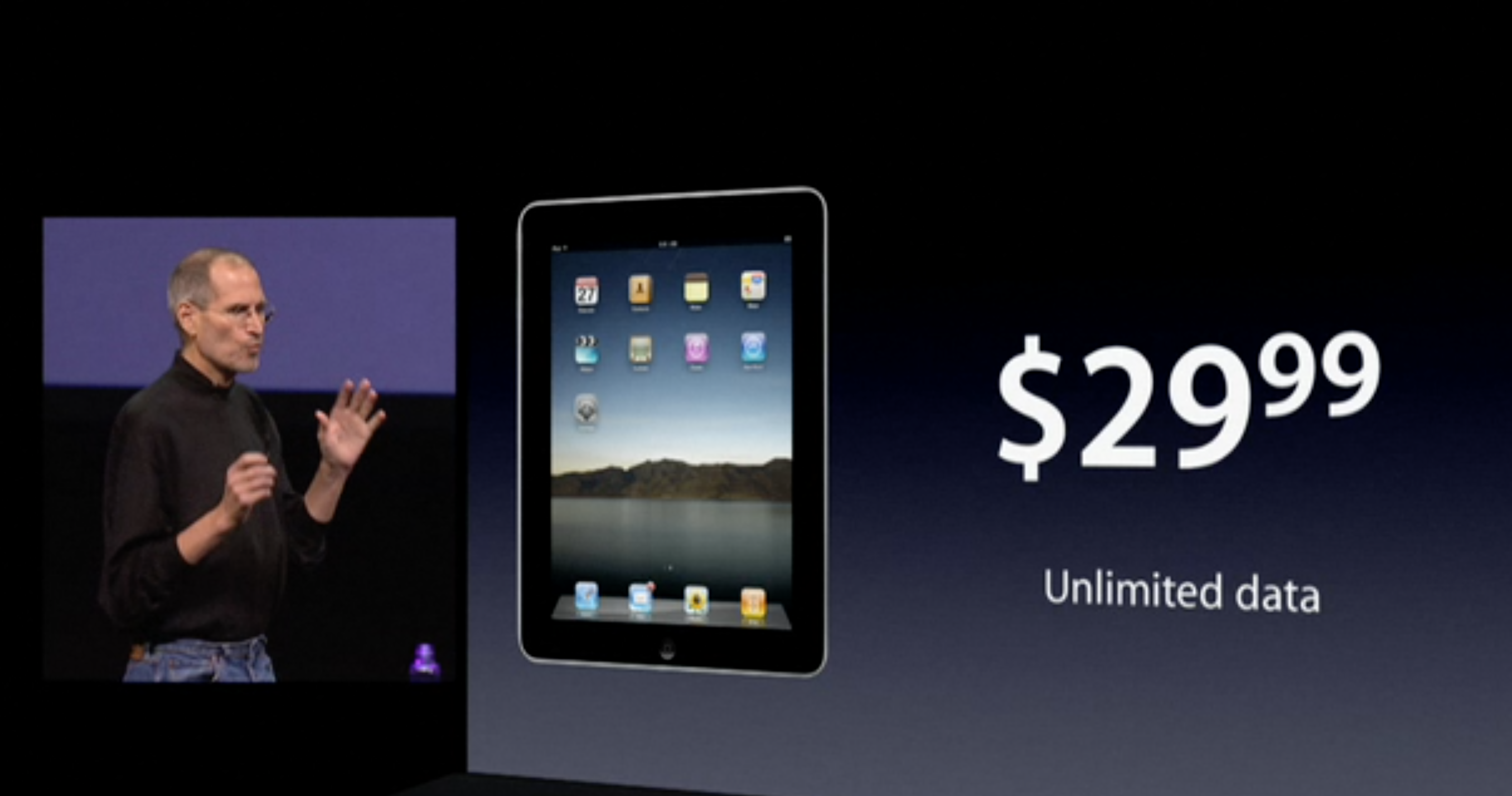
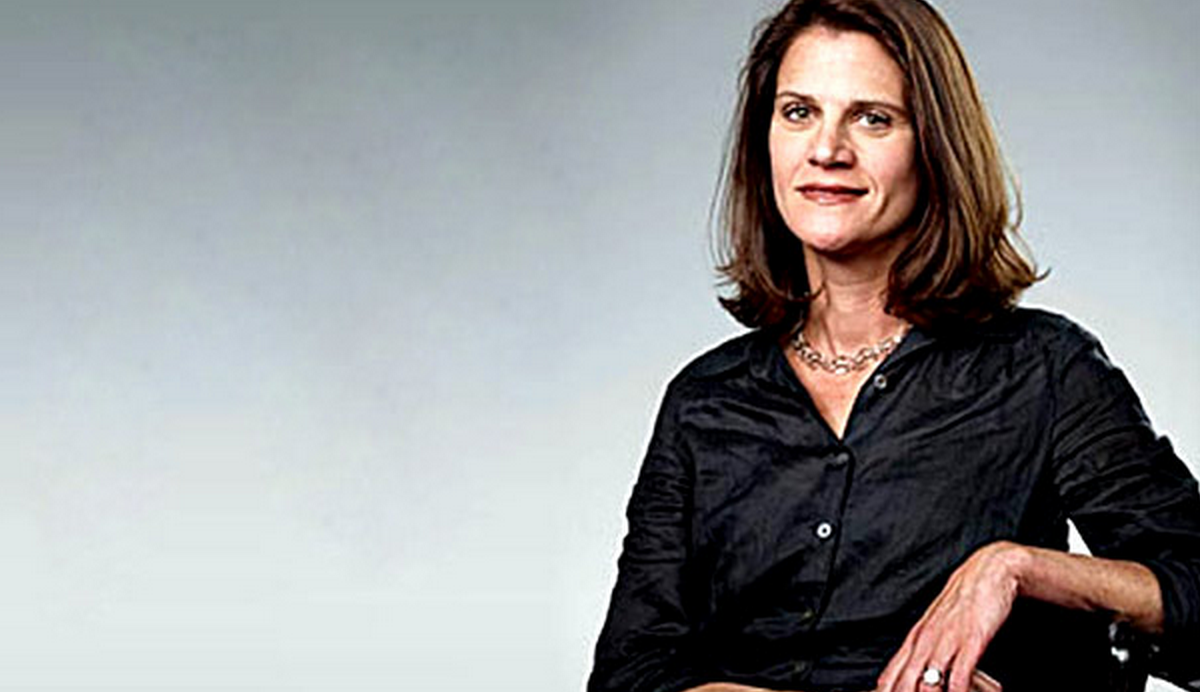
Steve Jobs was the co-founder and CEO of Apple. He also founded NeXT and was the majority shareholder of Pixar, both of which he was also CEO. Jobs is known as an icon of creativity and entrepreneurship. The prolific author Walter Isaacson released Jobs’ biography in October of 2011. Isaacson describes his major accomplishment as being a “creative entrepreneur whose passion for perfection and ferocious drive revolutionized six industries: personal computers, animated movies, music, phones, tablet computing, and digital publishing.”
Jobs attended Reed College for a short period of time before dropping out in 1972. However, he continued to dabble with classes unofficially and came across a calligraphy course instructed by Robert Palladino. This course ended up being highly influential for Jobs as he attributed it to bringing multiple typefaces to the Mac.

Steve Jobs founded Apple with Steve Wozniak and Ronald Wayne in 1976. After a drawn out power struggle Jobs was pushed out of Apple in 1985. He then founded NeXT in 1985 and also funded the move of Lucasfilm’s Graphics Group to become its own corporation, which became Pixar in 1986. Just over a decade later in 1997, Jobs returned to Apple as they acquired NeXT. His return marked the beginning of a new era of success. He took over as CEO in July of 1997 and continued on until handing the position to Tim Cook on August 24, 2011 after increasing health problems. Jobs passed away on October 5, 2011.

Isaacson describes his major accomplishment as being a “creative entrepreneur whose passion for perfection and ferocious drive revolutionized six industries: personal computers, animated movies, music, phones, tablet computing, and digital publishing.”

Site default logo image

Google now flags Flash content in search results on iOS/Android devices, saving clicks

If you’ve ever been frustrated by visiting a website on your iPhone or iPad and finding it won’t work because it uses Flash, you’ll welcome the latest Google initiative: it is now flagging Flash content in its search results, warning that the site may not work on your device.

Starting today, we will indicate to searchers when our algorithms detect pages that may not work on their devices. For example, Adobe Flash is not supported on iOS devices or on Android versions 4.1 and higher, and a page whose contents are mostly Flash may be noted

As Google notes, Android has now also abandoned Flash support due to the same reliability, security and performance concerns that Steve Jobs expressed in his famous open letter to Adobe back in 2010. Adobe has been forced to issue a succession of security updates to Flash, the most recent being two emergency updates earlier this year.

Google says it hopes the move, coupled to Web Fundamentals and Web Starter Kit initiatives for developers will encourage the use of HTML5 in place of Flash.

Ad agency execs believe Beats can spruce up Apple’s ads as German World Cup team gets gold headphones

Site default logo image

Apple agreed to acquire Beats for several reasons: for the streaming music service, for the headphones, for the speakers, and to bring Dr. Dre and Jimmy Iovine into the Cupertino fold. But the New York Post believes that Apple is seeking help from the Beats team for another important area of the Apple business: advertising. It’s no secret in the technology and advertising world that Apple could not be anymore displeased with the services as of late from longtime ad partner TBWA, and unnamed ad agency executives are said to believe that the Beats team could improve Apple’s ads:


Expand
Expanding
Close

Site default logo image

‘Apple of China’ brand Xiaomi pips iPhone in latest Chinese app usage stats

Android may have the raw numbers, but iPhone users have always been the ones to make the most use of their phones – from web browsing through enterprise to paid apps. Mobile analytics company Flurry reports that one Android brand has finally caught up – but only in China.

Over the past 6 years, the average Apple iPhone consumer has spent more time in apps than consumers of every Android device we track- by a wide margin. This year, it looks like the story is about to change. In an analysis we conducted on a random sample of 23,000 devices in China throughout January 2014, we found that Xiaomi is now in the lead as far as time-spent in apps is concerned.

It’s no coincidence that the brand is Xiaomi. The company, and its CEO, has blatantly copied Apple’s marketing approach in every way from product launches right the way down to the Steve Jobs style clothing of the company’s founder. The company even recently announced an iPad mini clone known as the Mi Pad.

Xiaomi’s antics have so far been ignored by Apple, which has been focusing on developing good relationships with China, but given the company’s ambitious international expansion plans, there may come a time when Apple has to take a harder line.

(via TNW)

Tim Cook ‘actively’ seeking to add new directors to Board

Site default logo image

The Wall Street Journal today published a brief profile on Apple CEO Tim Cook as the Cupertino-based company continues to be shaped in the image of Cook rather than co-founder Steve Jobs. The profile has some interested tidbits, but it is otherwise light on new information aside from information regarding Cook’s plan for the Apple Board of Directors. According to the report, Cook is “actively” looking to add fresh faces to the Board:


Expand
Expanding
Close

Site default logo image

Google’s co-founders on how the company differs from Apple

[youtube=https://www.youtube.com/watch?v=Wdnp_7atZ0M&start=1500]

In a ‘fireside chat’ with leading venture capitalist Vinod Khosla, Google co-founders Larry Page and Sergey Brin discuss everything from the moment they nearly sold the company to why they are cautious about moving into health technology. One interesting angle for Apple fans was how the two contrasted their approach to that of Apple.

Brin, who runs Google X, said that the experimental wing of the company was about making a number of bets and hoping that some of them paid off.

From my perspective – running Google X – that’s my job, is to invest in a number of opportunities, each one of which may be a big bet. […]

If you look at the self-driving cars, for example, I hope that that could really transform transportation around the world [but] it’s got many technical and policy risks. But if you are willing to make a number of bets like that, you’ve got to hope that some of them will pay off.

Page contrasted this approach with Apple, which focuses on a very small number of products.

I would always have this debate, actually, with Steve Jobs. He’d be like, ‘You guys are doing too much stuff.’ And I’d be like, ‘Yeah that’s true.’ And he was right, in some sense. But I think the answer to that – which I only came to recently, as we were talking about this stuff – is that if you’re doing things that are highly interrelated […] at some point, they have to get integrated.

Another difference between the two companies, say Page and Brin, is in their view of technology in the health sector. Apple’s long-awaited iWatch is of course believed to be equipped with multiple health and fitness sensors, and the Health app is a key feature of iOS 8. Google says that while it does have some health-related ambitions – such as glucose-reading contact lenses – it views the field with considerable caution.

Generally, health is just so heavily regulated. It’s just a painful business to be in. It’s just not necessarily how I want to spend my time. Even though we do have some health projects, and we’ll be doing that to a certain extent. But I think the regulatory burden in the U.S. is so high that think it would dissuade a lot of entrepreneurs.

You can watch the complete interview in the video above.

Video shows how 4.7-inch iPhone 6 screen will feel in the hand

Site default logo image

[youtube=https://www.youtube.com/watch?v=TrM1u_gu49A]

We showed you photos a few days ago of what is claimed to be the display covers for the 4.7-inch iPhone 6, which appeared to have slightly curved edges. Chinese site iFanr (via NWE) has now posted a video of the same part, giving a sense of how the larger phone will feel in the hand compared to the iPhone 5s … 
Expand
Expanding
Close

Jony Ive and Bono discuss Steve Jobs, Apple, and Product Red at Cannes Lions Festival (Video)

Site default logo image

Jony Ive presenting Bono with Cannes LionHeart Award

Apple’s SVP of Design Jony Ive joined U2 pop star and activist Bono in a joint interview over the weekend at the Cannes Lions Festival to discuss Product Red and Apple’s partnership as we previously mentioned. Product Red, of course, partners with brands to raise money to fund AID/HIV programs in Africa, and Apple has long supported the effort with a number of Red-branded products including iPhone and iPad cases as well as iPods and iPod touches.

As part of the festival, Jony Ive presented Bono with the first Cannes LionHeart Award to honor his work with Product Red as you can see above. During the discussion segment of their appearance, Bono shared his account of working with Steve Jobs when establishing the Product Red partnership with Apple and Jobs’ desire to control the Product Red branding right down to the parentheses in the Product Red logo…
Expand
Expanding
Close

Jony Ive on new materials, software design, Tim Cook’s leadership

Site default logo image

Following a few quotes from a Jony Ive interview with The New York Times appearing in a longer piece about Tim Cook over the weekend, the publication has now published a longer transcript from the interview. In the interview, Ive was asked about working with Cook, how things have changed post Steve Jobs, and he also gave some insight into his daily work routine.  We meet on average three times a week. Sometimes those meetings are over in his space, sometimes here in the design studio. We all see the same physical object. Something happens between what we objectively see and what we perceive it to be.”

Ive described his new role leading software design at the company as “some leadership and direction in terms of user interface – a subset of software,” and most interestingly seemed to hint at using new materials for products that the company hasn’t worked with before. Naturally, Ive would have loved to say more but couldn’t: I would love to talk about future stuff – they’re materials we haven’t worked in before. I’ve been working on this stuff for a few years now. Tim is fundamentally involved in pushing into these new areas and into these materials.”
Expand
Expanding
Close

Site default logo image

Ive says ‘I don’t think anything changed’ in new report on Cook’s leadership

The New York Times has published a new report that largely reaffirms what countless observers have said before. In comparison to Jobs, Cook is less connected to the “minutiae” of product development, instead preferring to delegate to his other executives to lead design. This does not mean Cook is not involved at all. Interestingly, the profile says Cook himself pushed the iPad mini project to release.

Mr. Cook “thought the world would love a smaller and less expensive tablet,” said Robert A. Iger, the chief executive of Disney and a member of Apple’s board. It was a product that Mr. Jobs thought did not have a market, he said.


Expand
Expanding
Close

Foundation walls start to take shape around Campus 2 project as Apple permanently closes Pruneridge Ave.

Site default logo image

The first walls around Apple’s Campus 2 have begun to take shape, as noted by KCBS reporter Ron Cervi, in a tweet today. Previously, more photos from KCBS showed the site’s considerable excavation under way, and earlier photos from March detailed the demolition work of the former HP campus on the site, which was almost complete at that time.


Expand
Expanding
Close

Site default logo image

WSJ profile describes obsessive Dr. Dre as ‘cultural barometer of what is cool’ like Apple founder Steve Jobs

In a profile of one of Apple’s newest employees, The Wall Street Journal has described hip-hop artist Dr. Dre of Beats Electronics as obsessive in a Steve Jobs kind of way while maintaining a clear instinct for what customers want without relying on market research.

But behind the scenes, Dr. Dre—whose real name is Andre Young —has quietly played an equally powerful role developing and protecting the Beats brand, eschewing market research for gut instinct at every turn. Though his main obsession is perfecting the sound of the company’s signature high-end headphones, the 49-year-old fitness-obsessed music producer weighs in decisively on everything from TV ads and font styles to the wordiness of descriptions on the Beats Music streaming service.

As one colleague says, Dr. Dre serves as Beats’ “cultural barometer” of what is cool.

But Dr. Dre’s process is mysterious, colleagues say: His assessments are usually immediate, personal and articulated sparely. He often dismisses ideas such as posing for clichéd photos in a recording studio as too “corny” or “cheesy.” Or he’ll wave them off with a terse “I’m not feeling that.”

[…]

That could portend friction at his new employer, Apple, which agreed to buy Beats for $3 billion last month. But like Dr. Dre, Apple has also boasted about not doing market research. The company’s late founder, Steve Jobs, made no secret of his belief that consumers don’t really know what they want until someone else shows it to them. Colleagues predict that at Apple Dr. Dre could also cede some decision-making power and become more accommodating.

Dr. Dre has resisted much of the limelight since the Beats acquisition by Apple was announced leaving many of the interviews and spin to his Beats co-founder Jimmy Iovine and Apple’s Eddy Cue. The WSJ noted he declined to be interviewed for the above profile, and that decided exclusivity, too, is reminiscent of Jobs.

Dr. Dre did participate in a WWDC demo earlier this week, though, accepting a phone call from Apple’s SVP of Software Engineering Craig Federighi. Even that bit has parallels with the Steve Jobs days at Apple as Dr. Dre previously cameoed in a demo with the Apple founder.

Opinion: Has Apple finally promoted iCloud from a hobby to a serious service?

Site default logo image

I wrote a piece last month arguing that it was time for Apple to up its iCloud game, showing that the company is serious about cloud storage by focusing more on fast, reliable syncing, and by matching the functionality, storage capacities, and pricing of Google Drive.

In the WWDC keynote, Apple did exactly that. MobileMe may not, in Steve Jobs’ words, have been Apple’s finest hour, but it did at least include iDisk – an online drive we could access directly to store anything we liked – not just documents created in Apple’s own apps. It’s been a long time coming, but iDisk is finally back in the form of iCloud Drive.

The new iCloud pricing, too, looks set to be exactly what I asked for – comparable to Google Drive… 
Expand
Expanding
Close

Site default logo image

Katie Cotton finishes up at Apple just ahead of WWDC

Following up on their earlier report, Re/code is reporting that Katie Cotton’s last day at Apple is today. Cotton has been Apple’s PR chief and Vice President of Corporate Communications since the return of Steve Jobs in the 1990s. Her departure comes just days ahead of Apple’s developer conference, but you can bet Cotton was heavily involved in decisions surrounding the event. Kara Swisher has a great tribute to Cotton’s career that is well worth a read. 


Expand
Expanding
Close

Cue praises Beats curated playlists and headphones; Iovine disses Apple’s EarPods

Site default logo image

(Image via Re/code)

It’s typical in any acquisition for both parties to sing the praises of their new partner, and Eddy Cue was certainly playing his part at Re/code’s Code Conference, saying that Beats’ curated playlists were a key strength and would help music grow again. As Mark Gurman reported in his live blog coverage at Code Conference:

Cue said Apple bought Beats because “music is dying. It hasn’t been growing.” He said combining the two companies will help it grow again […]

Cue said what makes Beats good is that it provides users with curated playlists.

He said: “When you bring what Beats has got and what we’ve got it’s not two plus two is four. It’s something much more than that” …


Expand
Expanding
Close

Site default logo image

Think Different ad man recalls the truth behind Steve Jobs narrating The Crazy Ones ad: “a horrible idea”

[youtube=”https://www.youtube.com/watch?v=-z4NS2zdrZc”]

If you watched the movie Jobs, you may recall Steve recording the words to the “Here’s to the crazy ones” ad, looking at the camera and asking “Is that ok?”. The reality, says Ken Segall, the creative director behind Apple’s famous Think Different campaign, was rather different. Speaking in an interview with MacWorld, he said:

Imagine you’re in this lonely, empty auditorium, he’s just finished that reading, and the words are just ringing in the air, and then their was a great pause, and he said: ‘That’s it, I’m out of here. This is a horrible idea,’ and he stormed off.

While Jobs loved the words, he thought it was a terrible idea to narrate them personally – he thought everyone would think him an egomaniac and they wouldn’t hear the message. Segall says that things didn’t begin well.

He was late and he said ‘I’m really busy today I don’t have time for this, I don’t like the idea, but I’ll give you one read and then I’m out of here’. So he did it.

In the end, Jobs got his way: the ad that was actually aired was narrated by Richard Dreyfuss – but it was the Jobs version that went viral after the death of Apple’s co-founder.

Via Fortune

Judge allows lawsuit by former Apple employee claiming Steve Jobs promised job security

Site default logo image

We’ve written about former Apple employee Wayne Goodrich before. Back in 2012 he launched a lawsuit against Apple claiming that co-founder Steve Jobs told him in 2005 he’d be guaranteed a job for life at the company. That was after being fired by Apple a year after Jobs’ death despite his guarantee of job security. Now, Goodrich, who was an executive producer of public presentations and with Apple for almost 20 years, has been given the go ahead for the lawsuit by a judge in Santa Clara (via BizJournals):
Expand
Expanding
Close

Apple in talks with Samsung to settle all future patent disputes out of court

Site default logo image

Korea Times (via Fortune) is reporting that Apple and Samsung are in talks designed to settle all future patent disputes out of court. FOSS Patents’ Florian Mueller believes that a settlement will be reached “very soon.”

“Things should come to an end during the summer. Apple doesn’t have an endgame strategy. Its agreement with Google shows that its management is looking for a face-saving exit strategy from Steve Jobs’ thermonuclear ambitions,” Mueller said …


Expand
Expanding
Close

13th anniversary of first Apple Store: risky gamble to most profitable retail space in the world

Site default logo image

[youtube=https://www.youtube.com/watch?v=Ce02galgfRo]

Today marks the 13th anniversary of Apple’s retail stores, the first ever store having opened at 10am on 19th May 2001 at Tysons Corner Center in McLean, Virginia. The video above shows Steve Jobs giving a preview of the store six days before it opened, and below the fold you can see an animated GIF of the growth of the U.S. stores since then.

Amazing as it seems today, the move was considered at the time to be a risky gamble, with critics arguing that they couldn’t possibly make money. Businessweek ran a story entitled Sorry Steve, Here’s Why Apple Stores Won’t Work and TheStreet.com agreed in a piece headlined Apple’s Scraping the Bottom of the Barrel … 
Expand
Expanding
Close

Site default logo image

Fancy a piece of Apple history? Apple’s original rainbow logo signs being auctioned

Apple’s rainbow logo was the symbol of the company from 1977 to 1998, and two of the signs that originally adorned the company’s Cupertino HQ are now being auctioned by Bonhams. They were given to an unnamed “longstanding Apple employee” when they were removed from the building.

The larger of the two signs measures 49×46 inches and is made from 1.5-inch thick foam with vinyl stripes. The smaller version is 36x33x6 inches, made from metal-backed fiberglass, again with vinyl colors.

Although generally thought of as the original Apple logo, the very first version was in fact an intricate drawing of Isaac Newton sitting under a tree with an Apple above his head.

The famous rainbow design was created a year later by Rob Janoff, who says on his website that it was the only logo concept shown to Steve Jobs, and was created in two weeks. The colors were designed to make Apple products look user-friendly, to make them attractive to school-children and to emphasize the Apple II’s unique color display.

Apple briefly switched to a translucent blue logo in 1998 before adopting a monochrome one later the same year, a white aqua version in 2001 and a Chrome variant in 2007.

Site default logo image

How blatant? Xiaomi announces ‘Mi Pad’ iPad mini clone [Video]

[youtube=https://www.youtube.com/watch?v=lVp34KQbAqk]

Chinese smartphone maker Xiaomi, the company which specialises in imitating Apple’s marketing for its Android handsets, has launched its first tablet, reports Reuters – and it’s an iPad mini clone. The company has even named it the Mi Pad.

The Mi Pad is essentially a colorful plastic version of the iPad mini with Retina display design, and even has an identical screen resolution of 2048×1536. The tablet has a 2.2GHz Nvidia K1 processor, 2GB RAM and a choice of 16GB or 64GB storage. A heavily-forked version of Android attempts to complete the iPad emulation with an iOS-like look to it.

Xiaomi started life making low-cost, low-spec Android handsets for the Chinese market, but has gradually upped its game to higher-end phones. Last August, Google’s former VP of Hugo Barra joined the company in August of last year (amidst a certain amount of gossip).

Xiaomi has long blatantly copied Apple’s marketing approach, down to its CEO Lei Jun copying Steve Jobs’ trademark blue jeans and black turtleneck shirt at Apple-like product launches.

The $240 Mi Pad will initially be sold only in China, but it’s believed the company plans to expand later into other developing markets, with India, Brazil and Mexico among those suggested. The Mi Pad is said to begin “public testing” in June. No date has yet been given for it to go on public sale.

Site default logo image

Apple improves refund turnaround times for returns to less than a week

A retail research firm is reporting that Apple has improved its return systems for customers, via Reuters. Customers can now get a refund in a less than a week, whereas it used to take about ten days.

The report says Apple has transitioned to a new expedited shipping service, which ships returned products back to Apple within three days. In turn, this means customers get their money back faster. The new delivery method was first spotted during the holiday period and now seems to be a permanent measure.

Reuters positions the change as a way to lift online sales. This seems a little farfetched, and is unlikely to significantly affect purchasing decisions, but it will no doubt be appreciated by Apple’s customer base. Perhaps, it will help customer satisfaction slightly, Tim Cook’s favorite statistic.

Apple and Beats not such strange bedfellows, argues Bloomberg

Site default logo image

Steve Jobs and Jimmy Iovine in 2008 (Photo: Jeffrey Mayer/WireImage via Getty Images)

A Bloomberg analysis of the presumed acquisition of Beats Electronics by Apple says that while the two companies may have very different cultures, the partnership is not so strange as it might first appear.

“These aren’t strange bedfellows at all,” said Peter Csathy, chief executive officer of entertainment law firm Manatt Digital Media Ventures. “Steve Jobs really drove the relationship with the music industry. The executives at Apple and Beats know each other very well, and there’s a comfort level there” …


Expand
Expanding
Close