AAPL Company

See All Stories

Breaking news from Cupertino. We’ll give you the latest from Apple headquarters and decipher fact from fiction from the rumor mill.
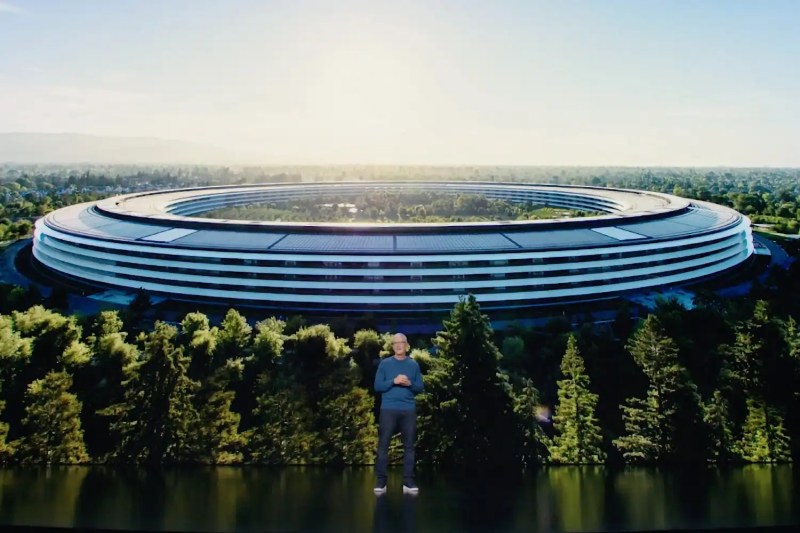
Apple Park Tim Cook AAPL

AAPL is a California-based computer company that became the most successful smartphone company in the world.

AAPL defined by Apple

Here’s how Apple defines itself:

Apple revolutionized personal technology with the introduction of the Macintosh in 1984. Today, Apple leads the world in innovation with iPhone, iPad, Mac, Apple Watch, and Apple TV. Apple’s five software platforms — iOS, iPadOS, macOS, watchOS, and tvOS — provide seamless experiences across all Apple devices and empower people with breakthrough services including the App Store, Apple Music, Apple Pay, and iCloud. Apple’s more than 100,000 employees are dedicated to making the best products on earth, and to leaving the world better than we found it.

Key AAPL history

From Apple I to iMac

Apple was founded in 1976 by Steve Jobs (Steve), Steve Wozniak (Woz), and (briefly) Ronald Wayne as a business partnership: Apple Computer Company. The following year it became Apple Computer, Inc. The company’s first product was the Apple I, a personal computer hand-built by Woz and sold in part-completed kit form. The Apple II and Apple III followed.

The modern Apple as we know it today began in 1983, with the launch of the first personal computer with a graphical user interface, the Lisa. Way too expensive to succeed, it was replaced by the Macintosh in 1984, launched with the single showing of a Ridley Scott commercial during the Super Bowl. The Macintosh transformed the world’s understanding of what a computer was, and would eventually lead to Microsoft adopting the GUI approach.

Steve Jobs and then Apple-CEO John Scully fell out in 1985, when Steve wanted to focus on the Macintosh while Scully wanted to put more attention on the Apple II, which was still selling well. That led to Steve being forced out of the company and going off to form NeXT.

Apple focused on selling Macintosh models at the highest possible margins, but would eventually fall foul of a mix of unsustainable pricing in the face of competition from Windows machines, and an overly complex product lineup. By 1996, the company was in trouble, and in 1997 Steve was brought back, along with the NeXT operating system, which would eventually form the basis of Mac OS X.

Steve simplified the Mac lineup and had industrial designer Jony Ive work on a whole new look for a consumer desktop Mac, the colorful iMac. The iMac, like the original Macintosh, again changed the world’s understanding of what a computer was, and who should want one.

From Apple Computer, Inc. to Apple, Inc.

In 2001, Apple launched the iPod. Although this wasn’t the first mp3 player, it was massively better than anything on the market at the time, and succeeded in turning a geeky piece of technology into a consumer electronics product with mass-market appeal.

The success of the iPod paved the way into other mobile devices. Apple was working on what would eventually become the iPad, when Steve realized that this was the basis of a smartphone. He diverted the team’s work into this, to launch the iPhone in 2007. The iPad launched later, in 2010.

The iPhone was yet another transformational product. While most other smartphones of the time were clunky devices with a keyboard and stylus, the iPhone was a sleek-looking device operated with a finger, and so simple that no user guide was needed. It was with the launch of the iPhone that Apple Computer, Inc. was renamed to Apple, Inc.

From Intel to Apple Silicon

While the iPhone, iPad, Apple Watch, and more are made with Apple-designed processors, the Mac lineup has historically relied on third-party companies for its CPUs. Over the years, Macs progressed from Motorola 680000 series chips through PowerPC to Intel.

In 2020, Apple began a two-year transition to the final stage in that journey, with Macs too finally getting Apple-designed chips. The first such is the M1 chip, used in the latest Mac mini, MacBook Air, and 13-inch MacBook Pro. Other Apple Silicon Macs followed.

AAPL today

Apple is one of the largest companies in the world. It was the first publicly traded company to hit a trillion-dollar valuation in 2018, $2 trillion in 2020, and $3T in 2022.

The company’s product lineup includes five different Mac families (MacBook Air, MacBook Pro, iMac, Mac Pro, and Mac mini); four iPad ranges (iPad mini, iPad, iPad Air, iPad Pro); four iPhone 12 models (12, 12 mini, 12 Pro, 12 Pro Max); three main Apple Watch models (SE, Series 3, Series 6); as well as other products, including Apple TV, AirPods, and HomePod mini.

In addition to hardware sales, Apple derives a growing proportion of its income from Services, including the App Store, iCloud, Apple Music, and Apple Pay.

Egypt PM pushes Apple to establish a ‘hub’ in the country and help with education reform

Last month, regulators in Egypt gave Apple 60 days to address “unfair restrictions” over high iPhone prices in the country. In an interview with CNBC today, Egypt Prime Minister Mostafa Madbouly said that he is pushing Apple to establish a “hub” in the country and work on education reform, despite the ongoing iPhone pricing controversy.


Expand
Expanding
Close

Apple report explains how climate change could benefit the company as well as hurt it

Apple climate change

An Apple report on the business impact of climate change shows how extreme weather conditions could have benefits for the company as well as downsides.

The report was published by the Carbon Disclosure Project (CDP), a non-profit which aims to encourage companies to make the right choices about their environmental impact. Its reports collate company responses to questions about their policies, targets and performance – but the most interesting section is on the ‘risks and opportunities’ …


Expand
Expanding
Close

Apple forced to retract press release about iPhone sales in Germany amid Qualcomm suit

Last month, Qualcomm won a victory in Germany with a suit that claimed Apple infringed on its modem patents. The ruling was set to affect iPhone 7 and 8, with Apple appealing the decision. In the meantime, Apple said it would stop selling the iPhone 7 and 8 in the country, but it interpreted the ruling so that third-parties could continue selling the devices. However, Apple has been issuing a press release in Germany that says it would be able to sell all iPhones in the country (via Bloomberg) and has now been ordered to stop using that part of the statement.


Expand
Expanding
Close

Complaint made to European privacy watchdog that Apple doesn’t fully comply with GDPR

Apple GDPR

A complaint has been made to a European privacy watchdog that Apple does not fully comply with its GDPR obligations.

The General Data Protection Regulation requires companies to supply, on request, a copy of all the data they hold on you. Having tested this with ten users, an Austrian non-profit organization said that Apple failed to supply a complete set of data …


Expand
Expanding
Close

TSMC expects biggest revenue drop in a decade as falling iPhone demand bites

TSMC power outage

Taiwan Semiconductor Manufacturing Co (TSMC) has forecast its biggest quarterly revenue drop in a decade as it warns of the impact of falling demand for smartphones. TSMC is the sole supplier for the A-Series chips used in current iPhones, and this is expected to remain unchanged this year.

The market has responded nervously …


Expand
Expanding
Close

Chief economist says AAPL share price predicts a trade recession in China

trade recession

The chief economist of a bank has pointed to a strong correlation between AAPL’s share price and China’s export trade – and says that this suggests that a trade recession in China is ‘likely.’

AAPL’s share price fell 9% in one day following its Q4 guidance warning, with most analysts significantly cutting their target prices for the stock. The stock has lost around a third of its value since the October peak …


Expand
Expanding
Close

Apple says Qualcomm refused to sell modems for iPhone XS and XR, citing legal battle

As Apple and Qualcomm’s FTC trial continues today, we’re learning more details about the quarrels between the two companies. As reported by CNET, one of the more interesting tidbits from Apple’s COO Jeff Williams was that the company wanted to put Qualcomm’s 4G chips in the iPhone XS, XS Max, and XR, but Qualcomm refused to sell them to Apple.


Expand
Expanding
Close

Qualcomm vs FTC trial: Apple recalls iPad mini 2 negotiations, Qualcomm defends double-dipping licensing as best for everyone

Qualcomm Apple

As part of the Qualcomm and Federal Trade Commission trial this week, Qualcomm CEO Steve Mollenkopf continued to defend his company’s business practices. As reported by CNET, Mollenkopf said the practices are what’s best for the whole industry, while Apple continues to claim the tactics are monopolistic.


Expand
Expanding
Close

There’s mixed news on Apple’s plan to grow its Services business, say commentators

Apple Services revenue

Apple is making some big changes as it seeks to focus more on Services revenue at a time when it’s struggling to grow its hardware business. The company has set itself a goal of generating $50B per year from Services by 2020.

How successful it will be in using Services to replace lost hardware revenue is the key question, and commentators are pointing to a mix of good and bad news …


Expand
Expanding
Close

HSBC cuts AAPL target for a second time, questioning the future of iPhone pricing

iPhone pricing

Analysts last week slashed their AAPL target prices following Apple’s announcement that it would dramatically miss its own guidance for the holiday quarter, in what one of them called ‘Apple’s darkest day in the iPhone era.’ iPhone pricing has come under the microscope as many suggest this is a key factor in lengthening upgrade cycles.

HSBC had already cut its own target for the stock, and switched its rating from Buy to Hold, but has now announced a second drop to its target price …


Expand
Expanding
Close

Opinion: Apple’s recent surprise decisions reflect its long-term transformation strategy

Apple Services

Apple made two surprise announcements recently: one before the holidays, the other afterwards. Both point to the full extent of the company’s plans to transform itself into a very different company.

The first announcement was that Apple Music would, for the first time, be fully supported on third-party speakers. Although available as an app on Android phones, the only speaker on which Apple’s streaming music service was natively available was its own HomePod …


Expand
Expanding
Close