AAPL Company

See All Stories

Breaking news from Cupertino. We’ll give you the latest from Apple headquarters and decipher fact from fiction from the rumor mill.
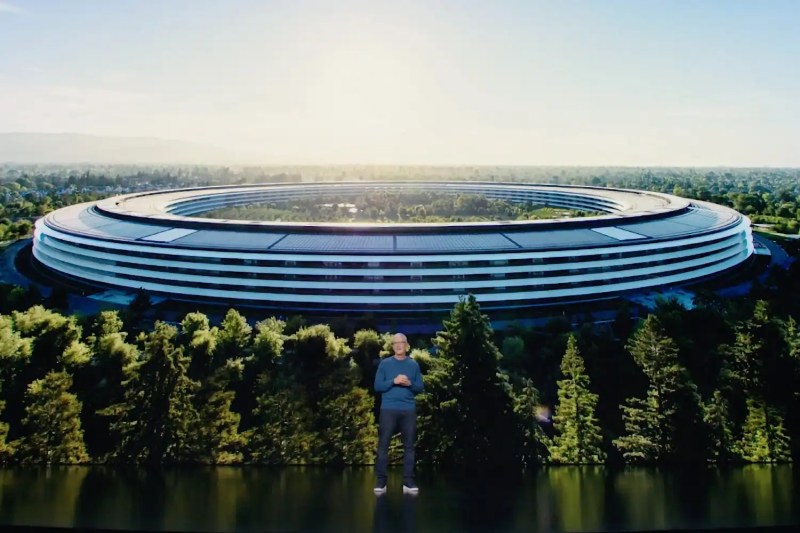
Apple Park Tim Cook AAPL

AAPL is a California-based computer company that became the most successful smartphone company in the world.

AAPL defined by Apple

Here’s how Apple defines itself:

Apple revolutionized personal technology with the introduction of the Macintosh in 1984. Today, Apple leads the world in innovation with iPhone, iPad, Mac, Apple Watch, and Apple TV. Apple’s five software platforms — iOS, iPadOS, macOS, watchOS, and tvOS — provide seamless experiences across all Apple devices and empower people with breakthrough services including the App Store, Apple Music, Apple Pay, and iCloud. Apple’s more than 100,000 employees are dedicated to making the best products on earth, and to leaving the world better than we found it.

Key AAPL history

From Apple I to iMac

Apple was founded in 1976 by Steve Jobs (Steve), Steve Wozniak (Woz), and (briefly) Ronald Wayne as a business partnership: Apple Computer Company. The following year it became Apple Computer, Inc. The company’s first product was the Apple I, a personal computer hand-built by Woz and sold in part-completed kit form. The Apple II and Apple III followed.

The modern Apple as we know it today began in 1983, with the launch of the first personal computer with a graphical user interface, the Lisa. Way too expensive to succeed, it was replaced by the Macintosh in 1984, launched with the single showing of a Ridley Scott commercial during the Super Bowl. The Macintosh transformed the world’s understanding of what a computer was, and would eventually lead to Microsoft adopting the GUI approach.

Steve Jobs and then Apple-CEO John Scully fell out in 1985, when Steve wanted to focus on the Macintosh while Scully wanted to put more attention on the Apple II, which was still selling well. That led to Steve being forced out of the company and going off to form NeXT.

Apple focused on selling Macintosh models at the highest possible margins, but would eventually fall foul of a mix of unsustainable pricing in the face of competition from Windows machines, and an overly complex product lineup. By 1996, the company was in trouble, and in 1997 Steve was brought back, along with the NeXT operating system, which would eventually form the basis of Mac OS X.

Steve simplified the Mac lineup and had industrial designer Jony Ive work on a whole new look for a consumer desktop Mac, the colorful iMac. The iMac, like the original Macintosh, again changed the world’s understanding of what a computer was, and who should want one.

From Apple Computer, Inc. to Apple, Inc.

In 2001, Apple launched the iPod. Although this wasn’t the first mp3 player, it was massively better than anything on the market at the time, and succeeded in turning a geeky piece of technology into a consumer electronics product with mass-market appeal.

The success of the iPod paved the way into other mobile devices. Apple was working on what would eventually become the iPad, when Steve realized that this was the basis of a smartphone. He diverted the team’s work into this, to launch the iPhone in 2007. The iPad launched later, in 2010.

The iPhone was yet another transformational product. While most other smartphones of the time were clunky devices with a keyboard and stylus, the iPhone was a sleek-looking device operated with a finger, and so simple that no user guide was needed. It was with the launch of the iPhone that Apple Computer, Inc. was renamed to Apple, Inc.

From Intel to Apple Silicon

While the iPhone, iPad, Apple Watch, and more are made with Apple-designed processors, the Mac lineup has historically relied on third-party companies for its CPUs. Over the years, Macs progressed from Motorola 680000 series chips through PowerPC to Intel.

In 2020, Apple began a two-year transition to the final stage in that journey, with Macs too finally getting Apple-designed chips. The first such is the M1 chip, used in the latest Mac mini, MacBook Air, and 13-inch MacBook Pro. Other Apple Silicon Macs followed.

AAPL today

Apple is one of the largest companies in the world. It was the first publicly traded company to hit a trillion-dollar valuation in 2018, $2 trillion in 2020, and $3T in 2022.

The company’s product lineup includes five different Mac families (MacBook Air, MacBook Pro, iMac, Mac Pro, and Mac mini); four iPad ranges (iPad mini, iPad, iPad Air, iPad Pro); four iPhone 12 models (12, 12 mini, 12 Pro, 12 Pro Max); three main Apple Watch models (SE, Series 3, Series 6); as well as other products, including Apple TV, AirPods, and HomePod mini.

In addition to hardware sales, Apple derives a growing proportion of its income from Services, including the App Store, iCloud, Apple Music, and Apple Pay.

IDC figures put iPhone growth into perspective as smartphone shipments fall 2.9%

The good news announced in Apple’s Q2 earnings report may have focused more on revenue and profit than growing iPhone sales, but the company did still achieve year-on-year growth of 3%.

The latest numbers from IDC on global smartphone shipments put that achievement into perspective, drawing comparisons with Samsung and others …


Expand
Expanding
Close

Apple and other tech companies swat down new proposals to create secure backdoors in encrypted services

Reform Government Surveillance is a coalition of major tech companies that looks to guide legislation for how the government can surveil individuals and access their information. Apple joined RGS back in 2013 and the coalition has recently issued a statement as talks have begun again about US officials pushing for a mandate to make tech companies build backdoors into their devices and services.


Expand
Expanding
Close

Opinion: Earnings show that the iPhone X was a huge success, even if Apple hoped for more

Prior to yesterday’s AAPL earnings report, all the speculation about iPhone sales was doom-and-gloom. Although analysts were predicting that Apple would hit its guidance – and it would have been a dramatic shock if it had failed to do so – anyone reading the reports could be forgiven for thinking iPhone sales were tanking.

In particular, it appeared that the iPhone X was very far from the success that analysts had earlier predicted.

The early talk was of a new ‘supercycle’ – that the radical new design of the iPhone X would lead to the same kind of dramatic boost to sales we saw when Apple made its move into larger-screened phones with the iPhone 6. But that idea didn’t last long, as subsequent reports suggesting that Apple was now halving its sales expectations for the quarter …


Expand
Expanding
Close

BBC claims Apple using non-existent warranty clause to refuse iPhone battery replacements [U]

iPhone battery

A BBC TV show dealing with consumer protection issues will claim this evening that Apple is using a clause in its terms & conditions to refuse its cut-price battery replacement service for older iPhones. The clause says that any other damage to the phone must be repaired first, at full rate, before it will replace batteries.

The problem, says the BBC Watchdog program in a show to be aired this evening, is that this clause doesn’t appear to exist …


Expand
Expanding
Close

AAPL up 5% following earnings as investors respond to Q3 guidance and optimism over 2018 iPhones

AAPL saw its stock price climb steadily yesterday in the run-up to the company’s announcement of its Q2 earnings (calendar Q1), and once the numbers were known the price jumped sharply in pre-market trading to hit $174.21 at the time of writing. That’s up more than 5% on yesterday morning’s opening price.

While Apple’s Q2 earnings were almost bang in the middle of both the company’s guidance and analyst expectations, investors appear buoyed by three factors …


Expand
Expanding
Close

Apple announces Q2 2018 revenue of $61.1b: 52.2m iPhones, 9.1m iPads, 4.07m Macs

Happy Apple Earnings Day! Apple has just announced its Q2 2018 results with $61.1 billion in revenue and $13.8 billion in profit earned from selling 52.2 million iPhones, 9.1 million iPads, and 4.07 million Macs. Apple had offered revenue guidance between $60 billion and $62 billion.

That compares to $52.9b in revenue, $11.03 billion profit, 50.7 million iPhones, 8.92 million iPads, and 4.19 million Macs sold the same quarter a year ago; and  $88.3 billion in revenue, $20.1 billion in profit, 77.3 million iPhones, 13.2 million iPads, and 5.1 million Macs sold during the previous quarter.

Apple projects revenue between $51.5 billion and $53.5 billion for 2018 Q3. Full press release after the break, and stick around for our earnings call live blog at the top of the hour:


Expand
Expanding
Close

Expectations of soft iPhone sales put increased focus on AAPL’s $50B target for Services

The consensus prediction for Apple’s Q2 earnings call later today is that the company will reveal iPhone sales some way below earlier analyst expectations. While analysts expect Apple to hit guidance, which would see revenue almost $8B up year-on-year, talk of the iPhone X driving an iPhone 6-like ‘supercycle’ has disappeared.

Assuming that turns out to be the case, it will put increased focus on the company’s revenue from Services …


Expand
Expanding
Close

AAPL earnings: analysts expect iPhone sales to be up 2%, iPhone revenue up 13%

With AAPL share price falling 9% over the past couple of weeks, and talk about investor panic, you might think the sky was falling on iPhone sales. Some firms are even cutting their price target for AAPL in response. Yet that doesn’t seem to be the case.

The Wall Street consensus estimates for the iPhone appears to be that last quarter’s sales will be up 2%, and that revenue will be up by 13%, with more to come …


Expand
Expanding
Close

Comment: Apple’s decision to discontinue AirPort products is the wrong decision at the wrong time

Apple’s announcement that it is discontinuing its AirPort product line wasn’t exactly a surprise. As we noted earlier, Bloomberg reported back in 2016 that Apple had disbanded the team responsible for its wireless routers, and we first spotted the company selling third-party ones.

But while it isn’t a surprise, I do think it’s the wrong decision – and a particularly ill-timed one …


Expand
Expanding
Close

Xiaomi overtakes Apple in China, Apple relegated to ‘Others,’ Samsung sales halved

UBS predicted earlier this month that Apple would continue to see declining sales in China as competition from local vendors increases, and the latest data from Canalys suggests that this is exactly what’s happened.

The company reports that local brand Xiaomi overtook Apple to take fourth place in the first quarter of this year …


Expand
Expanding
Close

Comment: Assessing which tech company does most good for society is no easy feat

A survey reported over the weekend said that Apple lags behind Amazon and Google in having the most positive impact on society.

The original report was rather light on detail – it seems the survey didn’t ask people the reasons for their choices. That’s problematic because I suspect most people answered from their own selfish viewpoint rather than from a societal perspective …


Expand
Expanding
Close

Apple will start paying $15 billion to Irish escrow account from May as legal battle over back taxes continues

In August 2016, the EU ordered Ireland to collect 13 billion euros (around $15 billion) in back taxes from Apple citing illegal tax benefits from 2003 to 2014. Both Ireland and Apple have rejected the judgement and are appealing the decision in a court battle that will last years.

For the time being, the money will be left in an escrow account. It was announced today that Apple will start paying into that account from next month. This will be the largest ever tax recovery of its kind, if the ruling holds up as lawful.


Expand
Expanding
Close