China

See All Stories
China

China has been fundamental to Apple’s historical success, but is also arguably the greatest risk to the company’s future.

Why are most Apple products made in China?

Although everyone assumes Apple products are made in China because labor is cheap there, that’s only part of the story – and an increasingly small part, as the company’s assembly partners move toward more and more automated operations.

Steve Jobs originally transferred most Apple manufacturing to China because it was the only country in the world with a huge ready-made supply-chain network, and the ability to scale up production almost overnight. There are three main reasons China – and specifically the Shenzhen area – is such a powerful manufacturing center.

First, the city is strategically placed, serving as the gateway between mainland China and Hong Kong. It is one of the largest shipping centers in the world, with a massive container port.

Second, the Chinese government established Shenzhen as the first Special Economic Zone (SEZ) in the country. SEZs are designed to encourage enterprise through relaxed planning regulations and generous tax incentives – and crucially, to facilitate foreign investment in local companies. It is this, as much as its geographical advantages, which has enabled it to grow at such a pace.

Third, that SEZ was established way back in 1980, meaning that the city has had over 40 years to grow into the manufacturing center of the tech world. Apple relies on a huge network of suppliers and sub-contractors, some of which may make just a single tiny component. The majority of them are based in Shenzhen and its immediate surrounds, so the logistics of bringing everything together in one place for assembly are straightforward.

What are the risk factors with China?

Being over-dependent on China carries a number of risks.

First, there is the generic one: Being overly dependent on any one country is a strategic risk. For example, the COVID-19 pandemic originated there, and had a massive impact on manufacturing capacity. Anything from a natural disaster to political upheaval could disrupt operations within a single country, so it is always wise to have a diverse range of manufacturing centers around the world.

Second, the relationship between the US and China has often been fraught. The trade war started by the previous US administration was a particularly low point, but continued tensions mean that there is always a risk of disruptions to trade between the two countries.

Third, it is increasingly damaging to Apple’s reputation to be so closely associated with a country that has a worsening human rights record – especially when the iPhone maker has no choice but to comply with local laws, however much they may conflict with the company’s own values. Apple has been required to remove VPN and a variety of other apps from the Chinese App Store, allow the iCloud data of Chinese customers to be stored on government-controlled servers, and more. Additionally, there have been growing reports of forced labor in China, including within many different areas of Apple’s supply chain.

What is Apple doing about it?

Apple has been working for a long time on diversifying its manufacturing operations, and has in recent years accelerated the pace at which it is doing so.

As explained above, this is far from an easy undertaking, but Apple now has major manufacturing operations in India, Thailand, Malaysia, and the Philippines, among other countries.

In India in particular, we are seeing the very early stages of a complete supply-chain infrastructure as the government uses a mix of carrot and stick to encourage companies to manufacture more of their components within the country – namely, tariffs on imports of components and tax breaks for local production. COVID-19 lockdowns in China also saw Apple move some iPad production to Vietnam for the first time, but it’s clear that the risks of over-dependence on China have never been greater.


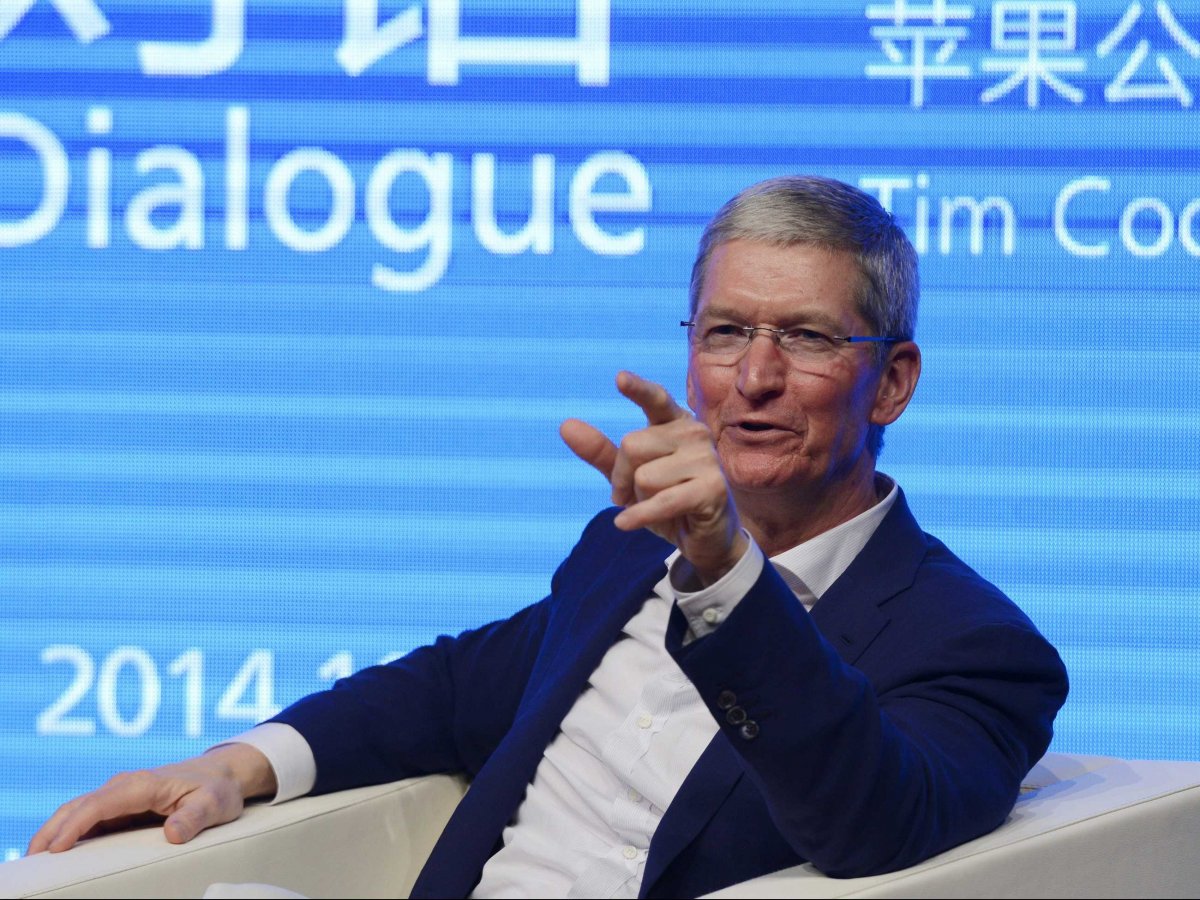
Tim Cook demoed Apple Watch for Chinese officials on recent US visit

Site default logo image

Tim Cook shows China’s top internet regulator Lu Wei the Apple Watch

Apple CEO Tim Cook alongside Facebook’s Mark Zuckerberg, Amazon’s Jeff Bezos and other tech executives recently met with China’s Cyberspace Administration ministerLu Wei while the government official was in the US, according to a report from China’s government-run china.com.cn (via Bloomberg).
Expand
Expanding
Close

Apple planning to support 500 Apple resellers in India, focusing on iOS devices – report

Site default logo image

An Apple Premium Reseller store in India

Times of India has put numbers on its earlier claim that Apple was planning to open a collection of iOS-centric stores in India. It now says that Apple plans to support 500 new resellers in the country as part of a major expansion program into smaller towns and cities, where Samsung currently dominates.

Apple reportedly sold a million iPhones in India in the 12 months to September 2014, helped in part by a cheaper 8GB version of the iPhone 5c, and is said to expect sales to treble in the following 12 months following the rollout of the iPhone 6 in October … 
Expand
Expanding
Close

Chinese smartphone maker claims Apple copied iPhone 6 design

Site default logo image

Chinese smartphone maker Digione is claiming Apple’s iPhone 6 and 6 Plus copy the design of its own smartphone line.

Macworld reports that the company published a letter online yesterday that was originally sent to Apple back in September in order to make them aware that the latest iPhones might infringe on a patent it was granted in July by China’s State Intellectual Property Office.
Expand
Expanding
Close

Apple will soon let third-party products use its Lightning port, opening up new possibilities for accessories

Site default logo image

Last week at Apple’s yearly briefing for accessory makers in its Made-for-iPhone/iPad (MFi) licensing program, the company unveiled new Lightning connectors and specs for Lightning receptacles that will soon be available for implementation in MFi accessories. The new Lightning receptacle, scheduled to start shipping next year, will allow accessory makers to build new types of accessories that include a port for Apple’s proprietary Lightning connector previously reserved for its own iOS devices (pictured above).
Expand
Expanding
Close

China UnionPay debit and credit cards now accepted as payment method for Apple’s Chinese App Store

Site default logo image

China UnionPay is the largest bank card provider in the region, but the App Store has not supported the payment method up to now. Apple has announced that this inconvenience has now been resolved with customers in China now able to link their Apple ID with debit or credit cards from UnionPay.

The addition should help expand the reach of the App Store to even more customers, allowing Apple to bolster its number credit cards on file ahead of an Apple Pay launch in the country. Code references have already been found that show the iPhone 6 NFC element is ready to support China UnionPay purchases.


Expand
Expanding
Close

US-China trade deal set to reduce manufacturing costs for Apple, aims to cut prices for consumers

Site default logo image

President Obama and President Xi Jinping in Beijing (photo: Agence France-Presse/Getty Images)

A trade agreement reached between the U.S. and China looks set to reduce Apple’s manufacturing costs by removing import tariffs on components imported into the country.

Apple uses components from a number of countries around the world, notably Korea and Japan, which are imported into China for the assembly of iPhones, iPads and Macs. China currently imposes import tariffs on these components. The new deal would allow companies like Apple, Microsoft and HP to bring components into China free from these charges … 
Expand
Expanding
Close

Possible Apple-Alibaba partnership could lead to greatly accelerated rollout of Apple Pay in China

Site default logo image

The potential partnership between Apple and Chinese ecommerce giant Alibaba could facilitate a far more rapid rollout of Apple Pay in the country than if Apple goes it alone, suggests a piece in the WSJ. Tim Cook first revealed that he was in talks with the company at the WSJ Digital conference last month.

One possible scenario is for Alibaba’s financial affiliate, which owns the Alipay electronic-payment business in China, to provide back-end services for Apple’s Apple Pay payment system, allowing iPhone users to pay with Apple Pay using the money from their Alipay accounts, Mr. Tsai said.

Such an arrangement would be significant for two reasons … 
Expand
Expanding
Close

Apple blocks WireLurker malware apps from opening, but needs to do more, argues security researcher

Site default logo image

Apple has now blocked the launching of Mac apps infected with WireLurker malware, after earlier revoking security certificates to prevent them being installed on new devices. WireLurker was capable of infecting non-jailbroken iOS devices when connected to a Mac running one of the compromised apps. Over 400 Mac apps in a third-party Chinese app store were affected.

In a written statement, an Apple spokesperson said:

We are aware of malicious software available from a download site aimed at users in China, and we’ve blocked the identified apps to prevent them from launching. As always, we recommend that users download and install software from trusted sources.

However, a security researcher says that it would be easy for other attackers to exploit the exact same weakness … 
Expand
Expanding
Close

Apple plans Apple University in China, bringing Jobs’ vision to Asia

Site default logo image

Tim Cook speaking at a conference in China

Apple is seeking to cement its business position in China for the long-term with an expansion of its Cupertino-based Apple University program to the region, according to a person with knowledge of the plans. Apple Vice President and Dean of Apple University Joel Podolny is currently interviewing candidates for a new Dean of Apple University position for China, according to the source.

Started in 2008, Apple University is an extensive and growing program within corporate Apple that trains mid-level employees and managers on the decisions made by Steve Jobs and other key executives throughout the company’s resurgence. Jobs created the program alongside former Yale School of Business Dean Podolny in order to keep the culture of Apple alive well beyond the lifetime of executives key to Apple’s early success.

The expansion of Apple University to China will mark a key step in Apple’s history as a global company. It will be the first time Apple has fully expanded the exclusive program to another region, indicating that it wants to extend its presence in China beyond mostly just sales and operations, like it has done in the United States. Apple has previously offered a minimal amount of courses in other regions and has flown-in professors. With many Apple suppliers headquartered in China, it is likely that a notable portion of the Apple University classes in China will be geared toward product engineering and manufacturing matters…


Expand
Expanding
Close

Tim Cook talks Apple Pay, Apple Watch and security on final day in China

Site default logo image

On the final day of Tim Cook’s four-day visit to China, he told state news agency Xinhuanet that Apple Pay was top of the list of things the company wanted to take to China.

“China is a really key market for us,” said the CEO. “Everything we do, we are going to work it here. Apple Pay is on the top of the list.”

Cook said that Apple would be working to understand the steps needed to bring the new service to China before meeting with local carriers, banks and merchants …

Expand
Expanding
Close

Foxconn hoping to make future iPhone screens, get more of the Apple pie

Site default logo image

iPhone assembler Foxconn is apparently hoping to move beyond its relatively low-margin work into more profitable high-end component manufacturing in order to take a bigger slice of revenue from Apple, reports the WSJ.

Apple Inc.’s major assembler Foxconn is in preliminary discussions with a provincial government in northern China for an investment in a new factory that would make high-end screens for iPhones and other mobile devices, people familiar with the talks say.

Foxconn already manufactures some iPhone components, but currently only low-margin ones like metal casings and cables … 
Expand
Expanding
Close

Apple to grow retail stores in China from 15 to 40 within two years, says Cook

Site default logo image

Tim Cook noted during Monday’s earnings call that Apple was “investing like crazy” in China, but he took the opportunity of his current visit to the country to put a specific number on the company’s retail expansion plans: it will open 25 new Apple Stores in Greater China within the next two years. Greater China includes both Hong Kong and Taiwan.

Speaking to local media, Cook also said that China would in time become Apple’s biggest market, reports the WSJ … 
Expand
Expanding
Close

Tim Cook meets with Chinese vice premier in Beijing following iCloud phishing attack

Site default logo image

Two days after evidence emerged of a phishing attack on iCloud, allegedly due to the Chinese government firewall redirecting traffic to a fake login page, the Chinese state news agency Xinhuanet is reporting a meeting in Beijing between Tim Cook and Chinese vice premier Ma Kai.

Chinese Vice Premier Ma Kai and Apple Inc. CEO Tim Cook on Wednesday exchanged views on protection of users’ information during their meeting in Zhongnanhai, the central authority’s seat. They also exchanged views on strengthening cooperation in information and communication fields.

The Chinese government censors access to the Internet by deploying a country-wide firewall which blocks certain sites and which can redirect traffic from sites the government dislikes to officially-sanctioned ones …

Expand
Expanding
Close

“iPad has a great future,” said Cook: long-term more important than “90-day clicks”

Site default logo image

While yesterday’s iPad numbers don’t look great – down 12.5% year-on-year, the third successive quarter in which sales have fallen – Tim Cook remains upbeat about the product, stating that it “has a great future” and that its long-term prospects are more important than “individual 90-day clicks.”

Quartz‘s Dan Frommer pulled together some of the things Cook has to say about the device, and while you’d clearly expect Apple’s CEO to put the best possible spin on things, he makes some reasonable arguments … 
Expand
Expanding
Close

AAPL will announce record quarter, predict analysts, with earnings up 11.9%

Site default logo image

Analysts are predicting that Apple (AAPL) will announce record sales and earnings in today’s fiscal Q4 (calendar Q3) earnings call, reports Fortune.

I’ve got the collected fiscal Q4 estimates of 33 Apple analysts — 21 professionals and 12 amateurs. They are all to a man (and one woman) predicting record Q4 sales and earnings (up 7.1% and 11.9%, respectively).

The analysts also expect earnings per share to be up 12% year-on-year, to $1.32 … 
Expand
Expanding
Close

Apple rolls out iPhone 6/Plus to 36 more countries this month

Site default logo image

Apple has announced that it will be rolling out the iPhone 6 and 6 Plus to an additional 36 countries this month, bringing the total number of markets to 69. The latest rollout will begin with India and Monaco alongside China on Friday.

Apple today announced that iPhone 6 and iPhone 6 Plus, the biggest advancements in iPhone history, will arrive in 36 additional countries and territories across Europe, Asia, the Middle East, Latin America and Africa by the end of October. iPhone 6 and iPhone 6 Plus will be available in a total of 69 countries and territories by the end of the month and are on track to be available in more than 115 countries by the end of the year, making this the fastest iPhone rollout ever … 


Expand
Expanding
Close

Apple Watch set to appear on the cover of Vogue China’s November issue

Site default logo image

Apple’s upcoming wearable will appear on the cover of Vogue China’s November issue according to Business of Fashion. Several styles of the device will be worn by supermodel Liu Wen. This comes just a few weeks after Apple’s one-day-only special showing of the Apple Watch during Paris Fashion Week, proving that the company is taking a much more direct approach to the fashion world.

Vogue China EiC Angelica Cheung reportedly met with Tim Cook and Jony Ive prior to the official reveal of the watch to learn about the process behind its design. When asked about why Vogue China was chosen as the first magazine to feature the device, she responded in part by stating:


Expand
Expanding
Close

Site default logo image

2 million reservations in 6 hours: China shows strong early demand for iPhone 6 and iPhone 6 Plus


According to AppleInsider, Chinese carriers have recorded more than 2 million reservations of the iPhone 6 and iPhone 6 Plus in the first six hours of opening. Although official preorders start on October 10th, carriers are already offering presale signups.

By contrast, Apple announced preorders of 5 million units across a 24 hour period for nine countries, including the United States and the United Kingdom. Although reservations don’t translate directly into formal orders, it is still a good showing and a great indicator that Chinese iPhone sales will continue to boost Apple’s bottom line.


Expand
Expanding
Close

iPhone 6 finally approved for sale in China following regulatory hangups (U: Pre-orders start Oct. 10, available Oct. 17)

Site default logo image

Earlier this month it was discovered that the iPhone 6 and 6 Plus would be delayed in China due to regulatory hold ups when Chinese authorities decided that they were not pleased with the current state of security on iOS. According to Bloomberg, Apple has cleared the last hurdle and received the licenses necessary to run the device on Chinese cellular networks.

Apple reportedly agreed to make undisclosed changes to the privacy settings on the device to appease the regulators. Yesterday we reported that Apple was apparently preparing for a Chinese launch on October 10th, but that date has not yet been confirmed. Update: Apple has announced through a press release that the phones will be available for sale in China on October 17th with pre-orders starting on the 10th.

Apple also released a beta version of iOS 8.1 today, which may or may not include the updated privacy settings necessary to get approval from the Chinese government.


Expand
Expanding
Close

Apple seemingly preparing for China iPhone 6 launch on October 10th

Site default logo image

A supposed screenshot of a notice (via TechWeb) sent to Apple retail employees suggests that Apple is readying a China iPhone 6 (and 6 Plus) launch for October 10th. As stated on the Chinese site (translated):

It is important that the person broke new iPhone prototype store shelves will be put on Oct. 7, and should be officially on sale in October 10. A few days ago the Ministry of Industry Minister Miao Wei once said in an interview, iPhone 6 and iPhone 6 Plus has entered the final stage of the audit, which means the phones will soon be landing in mainland China.

This is shortly after China’s national week-long holiday. Independently, the Chinese press have also reported the same October 10th date for the iPhone 6 debut. Last week, regulators stated that the phone was nearing final approval, causing black market iPhone 6 prices to plummet.


Expand
Expanding
Close

Black market iPhone 6 prices fall as Chinese regulators say final approvals are coming soon

Site default logo image

iPhone smuggling into China is nothing new, but this year it has perhaps been even more of a problem as Apple awaits regulatory approvals to begin selling its new iPhone models in the country. The good news is that a report from CNBC notes that regulators in the country said today that final reviews of licenses for the new iPhones would be “completed soon”. 
Expand
Expanding
Close

The seamy underbelly of Apple Store lines in New York City on iPhone launch days [video]

Site default logo image

[youtube=https://www.youtube.com/watch?v=Ef_BznBwktw]

Casey Neistat’s latest video isn’t really news to anyone nor does it appear that Apple can or will do anything about the problem but perhaps this years delayed launch in China has exacerbated it even more.  What can Apple do in this situation?

Another video of the 5th Avenue line below:


Expand
Expanding
Close