Mac

See All Stories

Apple’s Mac lineup consists of MacBook, MacBook Air, MacBook Pro, iMac, Mac Pro, and Mac Mini. The Mac runs macOS for its operating system.
Mac lineup

History

The Mac is Apple’s lineup of computers, and it can be considered the company’s oldest product. The name “Mac” comes from the original Macintosh, which was introduced in 1984 and is also considered the first personal computer for the masses to have a graphical user interface. The first Macintosh hit the stores on January 24, 1984, costing $2,945.

Among all these years, Apple has introduced many different Mac models, ranging from desktops to laptops to professional tower machines. The current lineup consists of the MacBook Air, MacBook Pro, Mac mini, iMac, and Mac Pro. However, there have been other Mac models were discontinued, such as the eMac, MacBook, and iMac Pro.

The history of modern Macs began in 1998, a year after Steve Jobs returned to Apple. Apple had dozens of Macintosh computers at that time, but Steve decided to rethink the entire lineup. In 1998, Apple announced the iMac G3, which ditched the floppy disk and serial ports in favor of USB connectors.
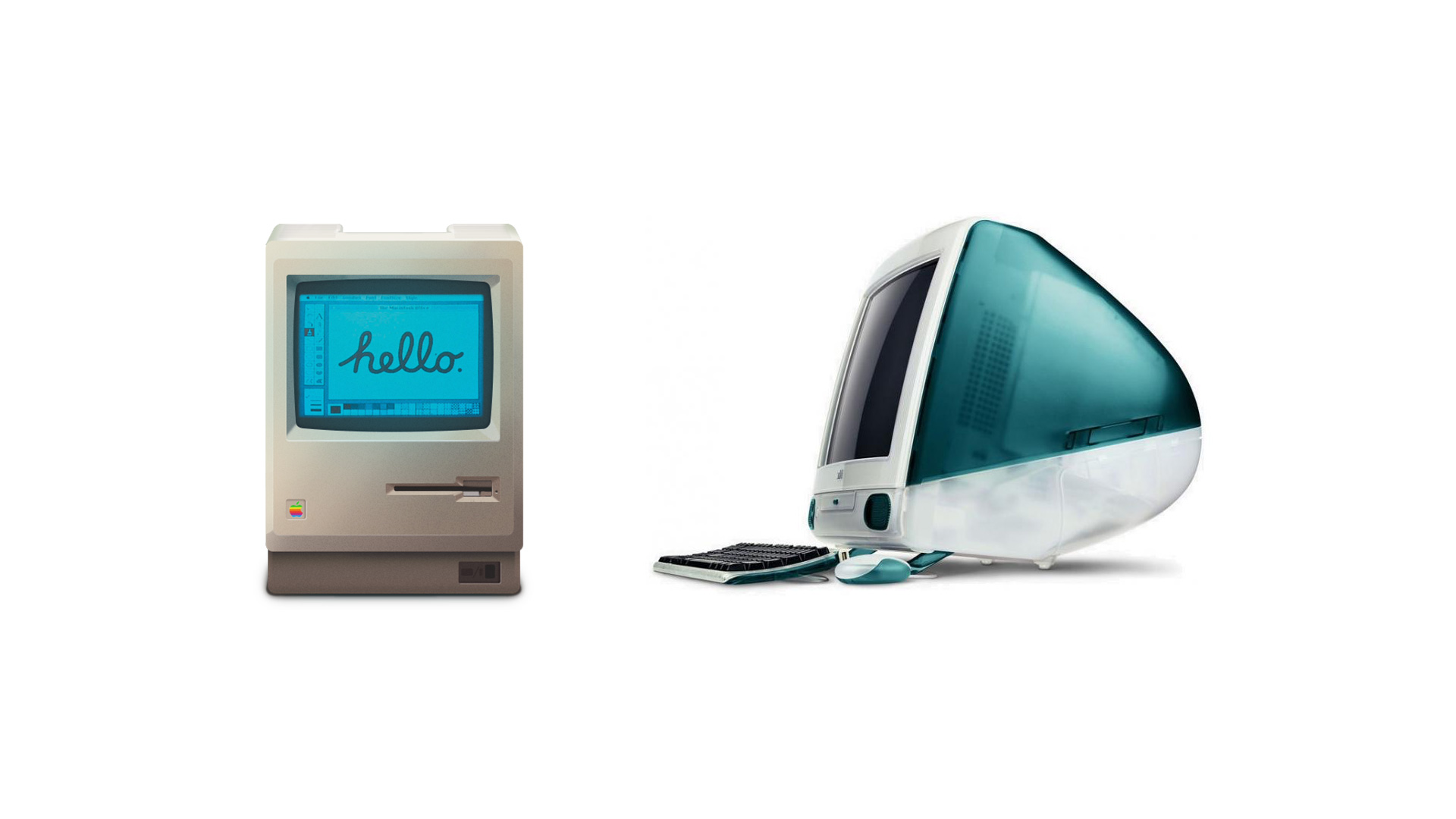
Macintosh and iMac G3.

Unlike the Macintosh, the first iMac was considered a huge success — not only for its technology, but also for its unique design with colorful translucent plastic. Apple quickly expanded the Mac lineup with other models, which included the iBook and PowerBook (which became the MacBook and MacBook Pro) and the PowerMac, which is now the Mac Pro.

macOS

What makes a Mac the Mac is the macOS operating system, which has also had a long history since the introduction of the first Macintosh. Initially called Mac OS, the operating system was rebuilt when Steve Jobs returned to Apple.

The first version of Mac OS X was released on March 24, 2001 with a new interface that is still present in some ways in current versions of macOS. Apple’s desktop operating system comes with many free applications such as Pages, Keynote, Numbers, iMovie, and GarageBand.

With macOS, users also have access to deep integrations with other Apple devices. For instance, you can answer calls and send SMS from your iPhone using your Mac. Handoff lets you switch from one device to the other and pick up where you left off. Apple Watch users can unlock their computer without entering a password, and you can even copy and paste between devices.
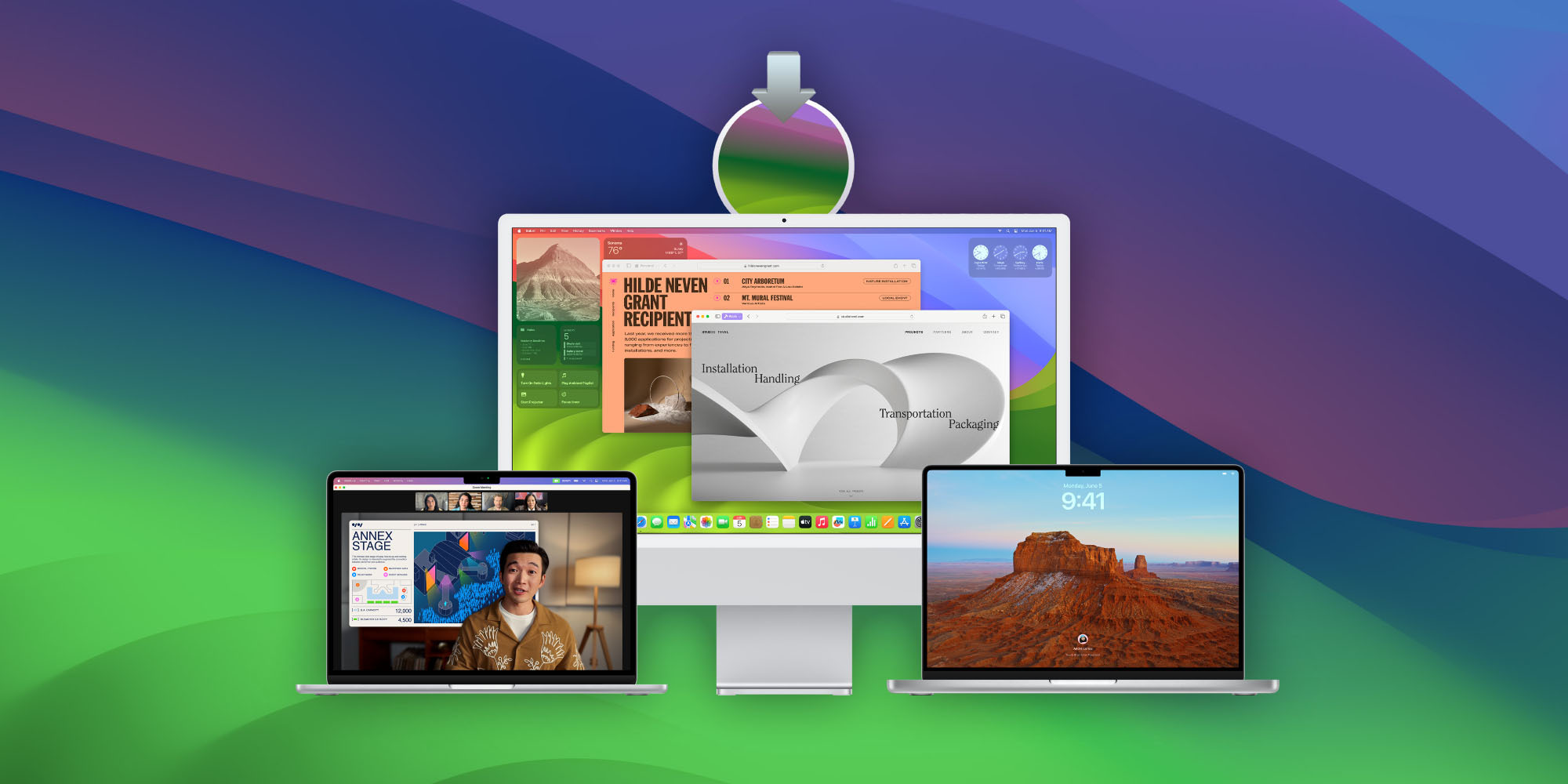
macOS Sonoma

Apple’s desktop operating system is also integrated with services offered by the company, such as iCloud, Apple Music, and Apple TV+.

The current version of macOS is Sonoma (version 14), which features new slow-motion screen savers, widgets on desktop, camera effects on FaceTime and other apps, web apps, passkey sharing, improved PDF support, and Game Mode. The update also comes with a new API that lets developers easily port Windows games to macOS.

Architecture Transitions

The Mac has had three major architecture transitions in its history. Apple’s first computers ran on Motorola processors, but the company decided to migrate to the new PowerPC platform in 1994. While this brought benefits at the time, the PowerPC processors were not delivering what Apple expected.

It was in 2005 that Apple confirmed the transition from PowerPC to Intel. Intel processors had become faster and more efficient than PowerPC, which enabled the development of new Mac computers that were more powerful and also more compact. Developers have been given access to a Developer Transition Kit running Mac OS X Tiger with Intel Pentium 4 to update their apps before the transition begins.
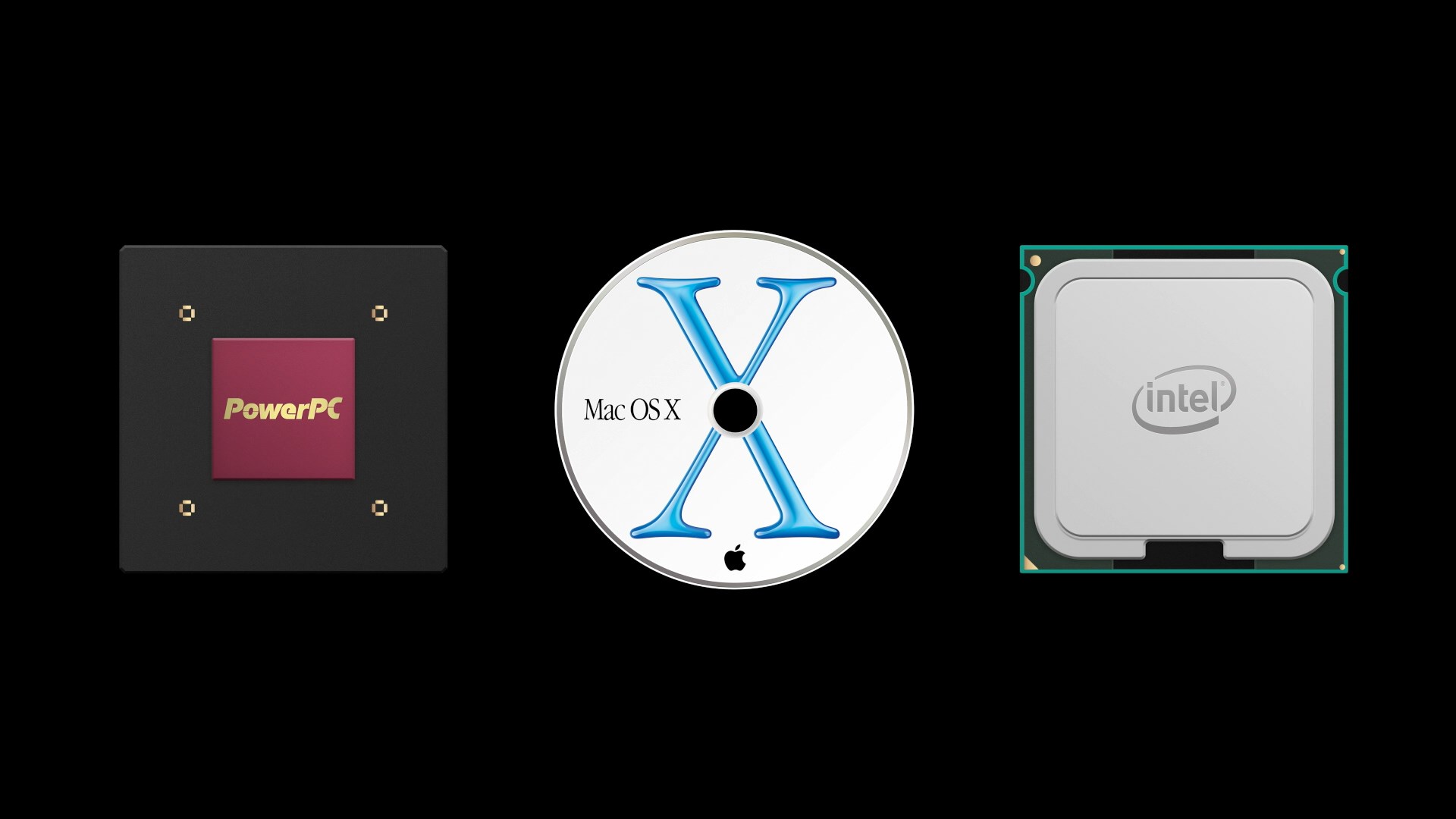
Power PC, Mac OS X, and Intel processor.

Apple said that the transition would begin in June 2006 and be finished by the end of 2007. However, the transition to Intel was fully completed in August 2006 when the company replaced the PowerMac with the new Intel Mac Pro.

As the years went by, Apple once again felt the need to have more powerful and efficient processors for its computers. This time, the company was already working on its own chips for the iPhone and iPad. In June 2020, Apple confirmed that it was changing the architecture of the Mac, now from Intel to ARM chips, which are called Apple Silicon.

Apple offered a Mac mini DTK running on the same A12Z Bionic chip as the 2020 iPad Pro. This way developers could once again update their apps ahead of the transition. In addition to being more powerful and energy efficient, the ARM architecture of Apple Silicon chips has enabled Macs to run iOS apps for the first time.
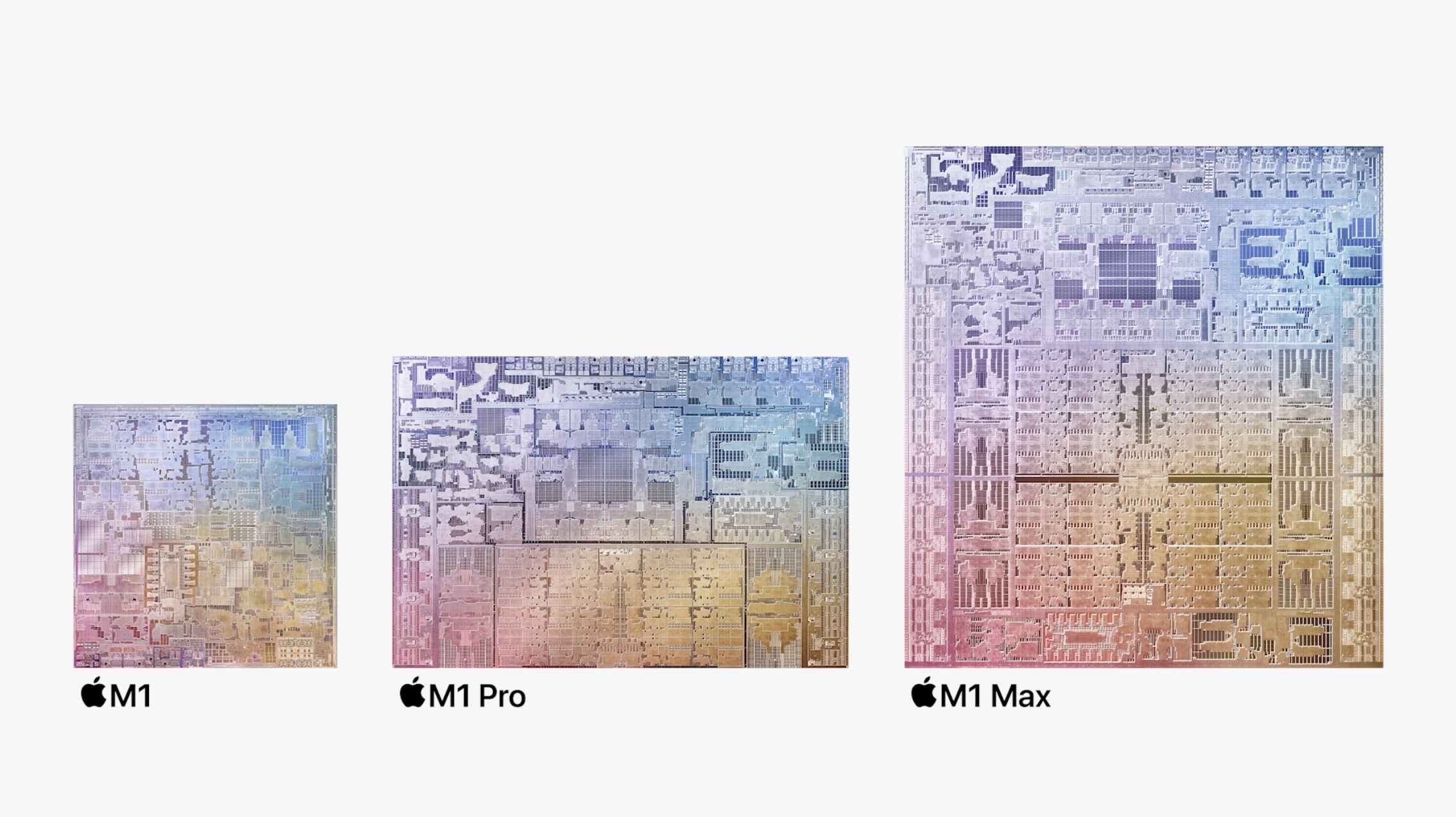
Apple M1 chip | Mac

The first Apple Silicon Macs were released in November 2020 with the M1 chip. The company later introduced more powerful variants of the M1 chip, called M1 Pro, M1 Max, and M1 Ultra. Macs with Apple Silicon have become known for being more powerful while consuming much less power, which has resulted in MacBooks with extended battery life.

In June 2022, Apple introduced the M2 chip, which is around 20% faster than the M1 and also supports more RAM. M2 also has more powerful variants: M2 Pro, M2 Max, and M2 Ultra.

Apple unveiled the M3, M3 Pro, and M3 Max chips in October 2023. The main highlight of this generation is the 3 nanometer technology, the same as the A17 Pro chip. The M3 family also features better GPUs with support for hardware-accelerated ray-tracing.

Current Mac lineup

Apple currently sells a variety of Mac computers, which includes MacBooks, Mac mini, iMac, and Mac Pro. While some of the Macs have already been updated with an Apple Silicon chip, others remain with Intel processors.

MacBook Air

The MacBook Air is Apple’s most affordable laptop and it has become popular for its light, compact design. The 2022 version is powered by the M2 chip and is offered with 8GB, 16GB, or 24GB of RAM. Plus, it has a new, edge-to edge 13.6-inch Retina display.

The laptop features Touch ID and has two Thunderbolt 3 compatible USB-C ports, a MagSafe connector for charging, and a headphone jack. Prices start at $1099 in the US. It’s offered in silver, space gray, starlight, and midnight.
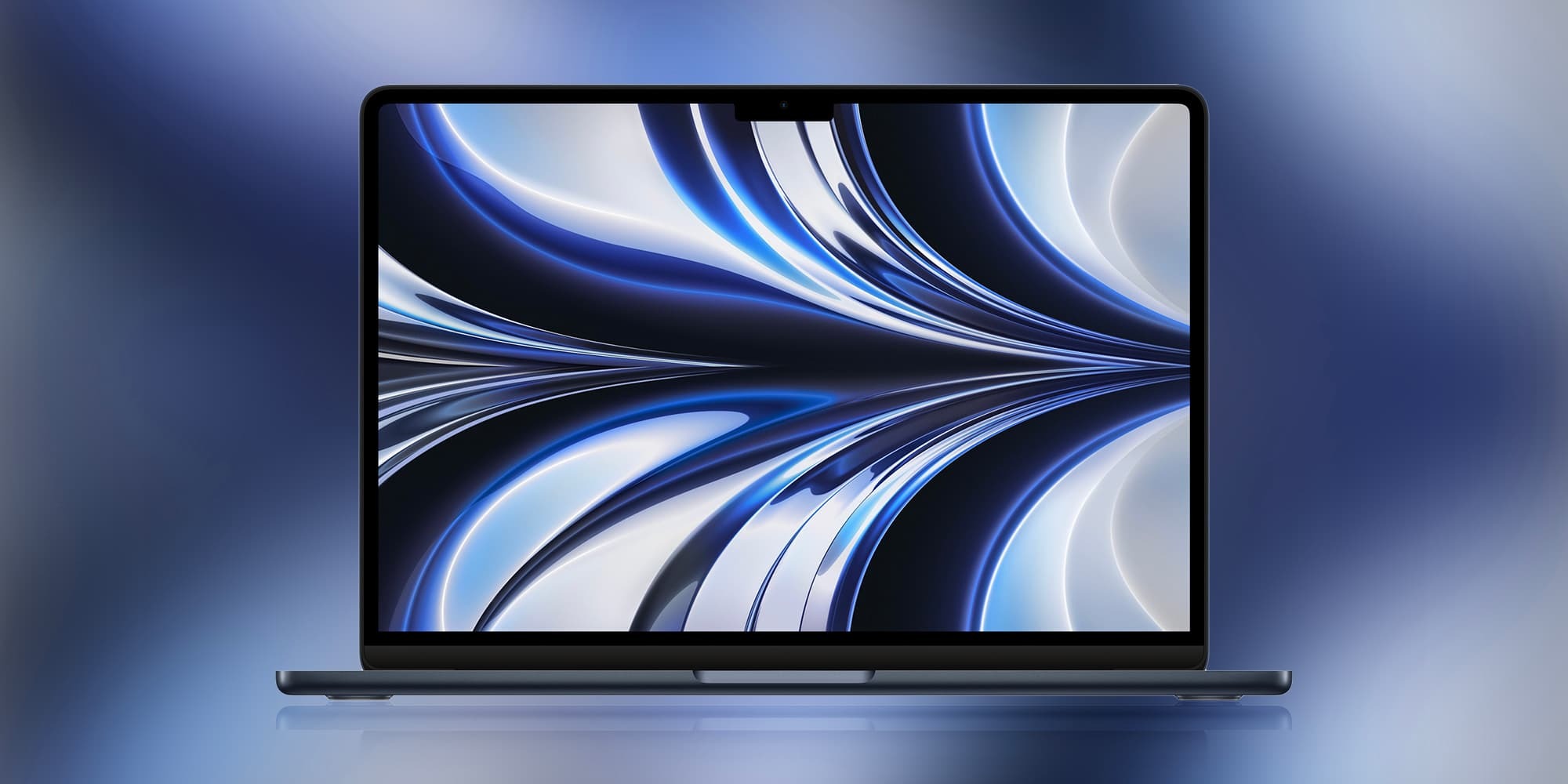
M2 MacBook Air.

A year later, Apple introduced the first 15-inch MacBook Air. It has essentially the same hardware as the smaller version with a similar design, but with a larger display. Prices start at $1299 in the US.Apple is still selling the M1 MacBook Air for prices starting at $999.

MacBook Pro

The 2023 MacBook Pro is available in multiple versions, and customers can choose between 14-inch and 16-inch screen sizes. For the first time, Apple has introduced a less expensive version of the 14-inch MacBook Pro with the base M3 chip. This version has the same design and display as the high-end versions, except that it only has two USB-C ports instead of three.
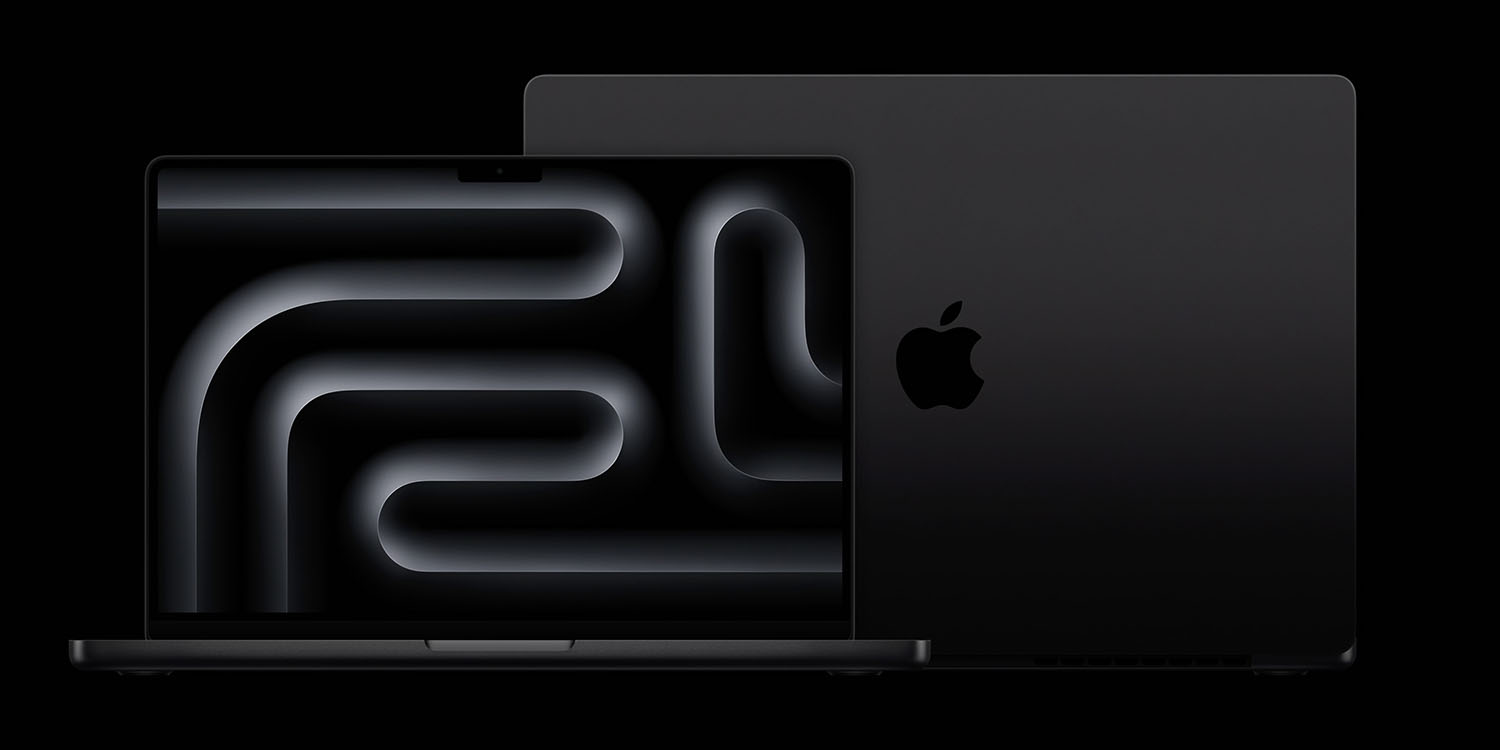
M3 MacBook Pro

The most expensive versions of the MacBook Pro are equipped with the more powerful M3 Pro and M3 Max chips. The laptop can be configured with up to 128GB of RAM and 8TB SSD. These versions also come in a new Space Black color.

Unlike the MacBook Air, the MacBook Pro comes with an HDMI port and an SD card reader. It also features MagSafe and Touch ID on the keyboard. Apple no longer sells MacBooks with the Touch Bar. Prices start at $1,599 in the US.

Mac mini

Mac mini is the cheapest Mac currently available since it’s basically a desktop without a built-in display or other peripherals. The base model with the M2 chip features one Ethernet port, two USB-C/Thunderbolt 4 ports, HDMI 2.0, two USB-A ports, and a headphone jack.

Apple sells a more powerful version of the Mac mini with the M2 Pro chip, which also comes with four USB-C ports instead of two. Mac mini can be configured with up to 32GB of RAM and up to 8TB of storage. Customers can also opt for a 10 Gigabit Ethernet port. The Apple Silicon Mac mini is only available in silver, while the now discontinued Intel model was available in space gray.
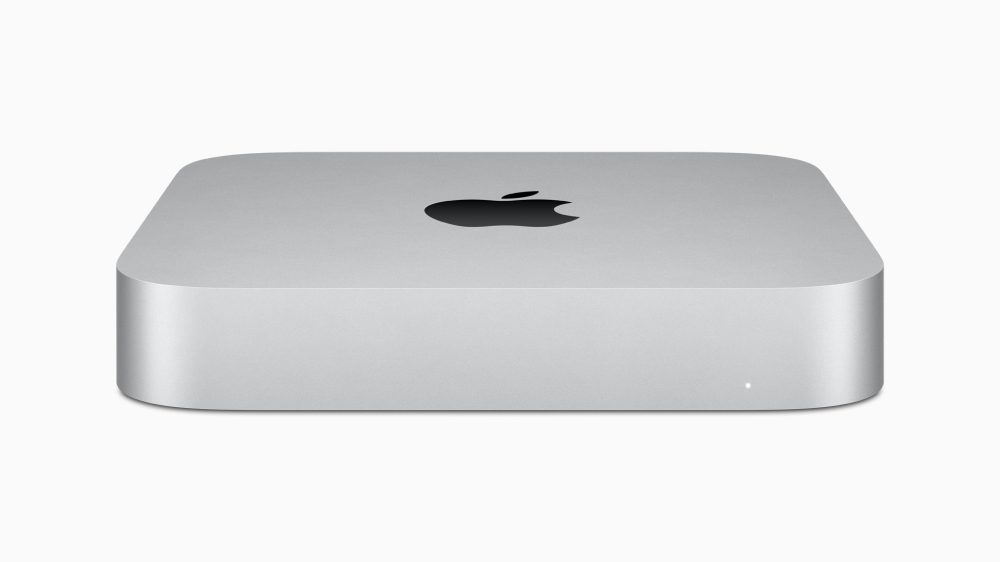
Apple Silicon Mac mini.

Prices for the Mac mini start at $599 in the US. Again, it’s worth noting that it doesn’t come with a keyboard or mouse in the box – you need to buy them separately or use your current ones.

Mac Studio

Mac Studio represents a new category between Mac mini and Mac Pro. It features a design based on the Mac mini, but with a taller body to support the more powerful hardware and also a better cooling system.

The new Mac Studio is targeted at professional users who work with demanding tasks such as video editing, 3D rendering, and machine learning. 

Embraced by creative pros everywhere, Mac Studio now delivers next-generation power in the form of the lightning-fast M2 Max and the boundary-breaking M2 Ultra. It packs outrageous performance and extensive connectivity in an unbelievably compact form, putting everything you need within easy reach and transforming any space into a studio.

By default, Mac Studio already comes with the M2 Max chip, 32GB of RAM, and 512GB SSD storage. A more expensive option lets users customize Mac Studio with M2 Ultra. While M2 Max has a 12-core CPU and a 30-core GPU, M2 Ultra doubles all of those specs. The new chip has a 24-core CPU and a 60-core GPU.

Mac Studio can also be configured with up to 192GB of RAM and 8TB of SSD storage. The machine offers up to six Thunderbolt ports, 10 Gigabit Ethernet, headphone jack, two USB-A ports, and one HDMI port.
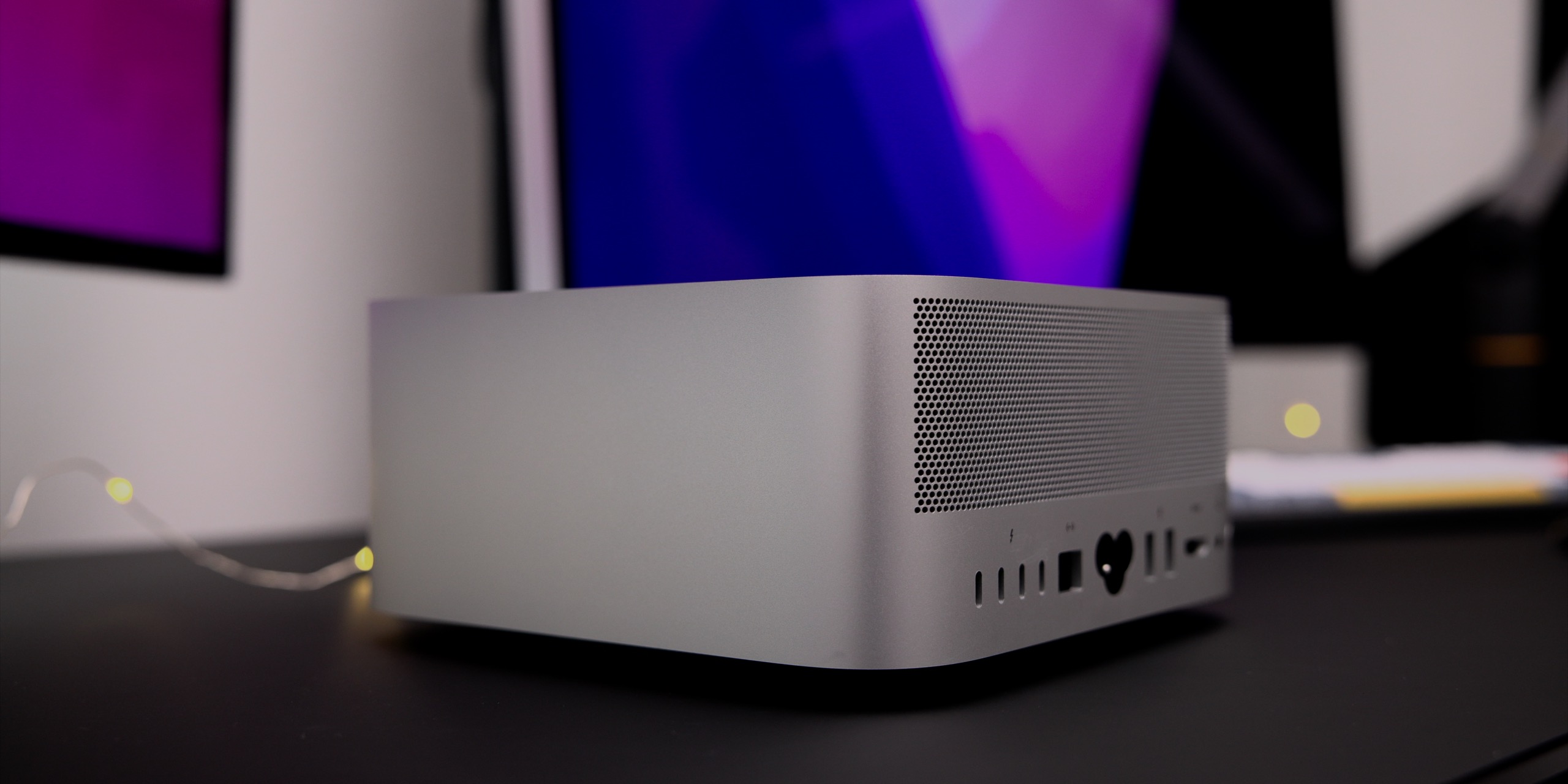
Mac Studio

Apple has been rumored to be working on new versions of this machine with the M3 Max and M3 Ultra chips. However, these versions may not be ready until 2025. Bloomberg’s Mark Gurman said in November last year that the M3 Ultra chip “hasn’t yet gone into broad testing” inside Apple.

In the US, prices for the Mac Studio with M2 Max chip start at $1999. The M2 Ultra chip version starts at $3999. Just like the Mac mini, Mac Studio doesn’t come with a keyboard and mouse in the box. You can find accessories for your Mac Studio here.

iMac

iMac is Apple’s most popular desktop computer with an all-in-one construction. It features a 4.5K display in its 24-inch version and a 5K display in the 27-inch version. At the same time, Apple still sells an entry-level iMac with a regular 1080p display.

The 24-inch iMac is the first to feature the M1 chip, the same as in the Mac mini, MacBook Air, and MacBook Pro. This allowed Apple to introduce a completely redesigned model with a slimmer design, which is also offered in seven new colors. Customers can customize the new 24-inch iMac with up to 16GB of RAM and 2TB of storage.
Site default logo image

The company ships the 24-inch iMac with Magic Mouse and Magic Keyboard, plus a Lightning cable for recharging accessories. Prices in the US start at $1299. Apple has discontinued its old 21.5-inch iMac and the 27-inch iMac 5K.

Mac Pro

Mac Pro is a computer built for professional users who depend on extremely powerful hardware. Available in tower and rack versions, it has a completely modular design. That means users can replace RAM, SSD, GPU, and other internal components.

By default, it features four USB-C/Thunderbolt 3 ports, two USB-A ports, and two 10Gb Ethernet ports. However, the ports can be expanded using the PCI Express slots. Apple also ships the computer with a Magic Mouse and Magic Keyboard, but it does not come with an external monitor included.

All models feature Intel Xeon W processors, which are the most powerful processors offered by Intel. Consumers can configure Mac Pro with up to 28-core processor, 1.5TB RAM, and 8TB of SSD storage. In addition to supporting multiple dedicated GPUs, Apple also offers the Afterburner card — which accelerates the decoding of ProRes videos.

The company recently updated the Mac Pro with new graphics card modules, which include Radeon Pro W6800X and Radeon Pro W6900X.

Site default logo image

Mac Pro prices start at $5999 in the US.

Rumors about upcoming Macs

Top stories about the Mac

Glass-backed iMacs a future possibility as Apple granted a patent for fused-glass housings

Apple could be considering not just a return to glass-backed iPhones, but even replacing the aluminum backs of iMacs and monitors with glass at some stage, reveals a newly-granted patent published today. One of the illustrations appears to show an iMac-style device, while others show something looking like an iPhone (below) … 
Expand
Expanding
Close

Video producer hooks up six (!!) 4K monitors to Mac Pro at 60Hz using only built-in graphics cards [Video]

Video producer Adam Matthews wanted to double the number of 4K monitors hooked up to his Mac Pro, so he built an external GPU to do it. He used a Sonnet Thunderbolt chassis with an AMD 7970 GPU – before discovering that the machine could actually drive all six monitors without it.

When Matthews tried connecting the monitors using only the twin graphics cards built into the Mac Pro, just to see what would happen, he found he was still able to get 60Hz on each, suggesting that Apple has been conservative in its claims.

[youtube=https://www.youtube.com/watch?v=5Y3C5Mthmlc]

Of course, it’s possible that the strain of pushing video to six monitors at once might shorten the life of the Mac Pro, so his Plan A is probably the best route to go if you want to emulate his setup.

Future MacBook Pros could themselves drive three 4K monitors at 60Hz, as Intel revealed that its upcoming Skylake processors have this capability. It’s even possible that Apple could create a MacBook Pro with Mac Pro performance, as Intel also announced professional class Xeon processors for laptops. It’s not likely to happen, but a man can dream …

Apple Store Smart Signs will be globally replaced with Mac and iOS apps

Last week, we reported that Apple is preparing to launch a couple of significant changes for Apple Retail stores this upcoming Wednesday. Besides demoting iPods to the accessory shelves on the sides of Apple Stores, Apple will be removing the long-existing iPad-based Smart Signs. These are the iPads that sit alongside iPhones, iPads, and Macs in the stores explaining pricing and other pertinent information. Now, we’ve gathered a few more details. First, sources say that this will be a change across all Apple Stores across the globe, not just stores in the United States. More significantly, we now know what will replace the Smart Sign functionality: new dedicated pricing apps on both in-store Macs and iOS devices…


Expand
Expanding
Close

The Logic Pros: Moog Sub 37 is one of the best hardware synths for the money

In this week’s episode of The Logic Pros, we are taking a look at the Moog Sub 37. Another analog instrument from legendary synth powerhouse Moog, the Sub 37 takes it up a notch offering a much deeper feature set and refined workflow compared to its baby brother, Sub Phatty.

In last week’s review we found that Sub Phatty was a more than capable instrument that brings Moog’s world famous sound at an, all things considered, affordable price tag. While the Sub 37 will certainly be reaching into your pockets a little deeper, it comes with just about everything the Sub Phatty has to offer, and then some. I might even make the argument that in some ways, for the price, it outshines Moog’s $3,000 – $5,000 Minimoog Voyagers:
Expand
Expanding
Close

Apple pushes Recovery Update 2.0 for OS X El Capitan to beta testers

Apple has published an update to the OS X Recovery software for users on the beta version of OS X El Capitan. The update appears to have been published late yesterday without much fanfare. The boilerplate change log notes that it includes “improvements” to the Recovery software indicating that it’s likely just a bug fix release.

OS X El Capitan beta 7 was released to developers earlier this week alongside a matching public beta. The operating system will be released later this year.

Intel’s upcoming Skylake processors will simultaneously support three 4K monitors at 60Hz

After a pair of leaks revealed most of the details about Intel’s upcoming Skylake processor lineup, the company today itself has teased a few of the features of the upcoming processors. While Intel says launch details will be revealed in a couple of weeks, some information was teased during an Intel Developer Forum presentation today, including details about support for 4K displays.


Expand
Expanding
Close

Apple releases seventh developer preview of OS X El Capitan (Update: public beta also out)

Following yesterday’s misfire on the public beta channel, Apple has released OS X El Capitan Beta 7 (build 15A263e) to developers. The fifth public beta has also returned after being pulled yesterday afternoon. That version comes with a build number of 15A262e, which puts it a few builds ahead of yesterday’s.


Expand
Expanding
Close

Productivity app Things adds push sync feature to keep task lists auto updated across devices

Managing alerts on Cultured Code’s Things task management app across multiple devices is about to become a whole lot more effective. Things already uses its own robust syncing solution called Things Cloud since iCloud syncing has been rocky at times in the past, and today Cultured Code is unveiling a major upgrade to Things Cloud.

Built on an all-new architecture, the Things Cloud “Nimbus” upgrade delivers a push sync feature that allows Things for iPhone, iPad, and Mac to stay up-to-date without having to actively open it on each device. iOS has gained features like Background App Refresh that let apps do more without being front and center, but Things and push sync makes keeping devices in sync a reliable experience.
Expand
Expanding
Close

Apple seeds OS X El Capitan beta 5 to AppleSeed testers (update: pulled for now)

Update: Public beta testers may not see the update currently as it appears to have been pulled for now.

Apple has pushed out the fifth public beta version of OS X 10.11 “El Capitan.” The update brings bug fixes and tweaks the pre-release operating system in preparation for its launch later this year.


Expand
Expanding
Close

Visualizing a modern Apple Wireless Keyboard [Gallery]

Over the weekend, we learned some preliminary details about Apple’s planned updates for two of their most popular Mac accessories, the Apple Wireless Keyboard and Magic Mouse, in the form of FCC filings. Aside from new and improved connectivity thanks to Bluetooth 4.2, both accessories appear to have design deviations from their existing models, as detailed by the rough sketches accompanying the FCC filings. Based on these sketches, I decided to more fully visualize the changes Apple could be planning for an all new and more modern wireless keyboard based on other modern Apple product designs.


Expand
Expanding
Close

Nuance launches cloud-based Dragon Anywhere iOS app, new Mac app

Site default logo image

Nuance, the voice recognition and productivity software company behind the iOS keyboard’s Dictation feature, today has revealed a series of updates to its applications and a new cloud-based synchronization service at the core. Nuance provided us with a demonstration last week of the new iOS and Mac apps, and we came away impressed with the accuracy, speed, and capabilities of the upgraded platform.


Expand
Expanding
Close

The Logic Pros: iPad/Mac synths still can’t quite capture the experience of this $1,000 Moog

In this week’s episode of The Logic Pros, we are taking a hands-on look at Moog’s Sub Phatty synthesizer to see how it stacks up against some of its much more affordable virtual counterparts.

Moog instruments have been used on many of the most popular and historic records over the years, having become as legendary in their own right in the process. The company is widely considered to be one of, if not the premiere synth makers on the planet. Producing the fattest sounding oscillators and filters around since the late 60’s, Moog’s instruments certainly come at a premium, and there’s a good reason for it. In the past few years the company introduced a couple new synthesizers in its Phatty line, that brought Moog’s flagship features and famous ladder-style filter down to a fairly affordable price point. At just under $1,000, cheap certainly isn’t the word to use to describe Moog’s monophonic, all-analog Sub Phatty synthesizer. But it might be the closet thing to a Voyager you’ll get without seriously breaking the bank. 
Expand
Expanding
Close

Apple to begin offering AppleCare through Best Buy for iPhone 6S

Apple and Best Buy have agreed to begin selling both the standard AppleCare protection plan for Macs and the more premium AppleCare+ for iPhones, iPads, and the Apple Watch through Best Buy stores, according to sources. The plans call for Best Buy to begin offering the AppleCare plans in its stores at checkout around the week of September 14th, just ahead of the iPhone 6S launch. This will mark a notable expansion of the Apple and Best Buy relationship, and Best Buy will become one of the only retailers, aside from select U.S. carriers, to offer AppleCare outside of an Apple Store.


Expand
Expanding
Close

Apple releases OS X 10.10.5 update with Mail, Photos, and security improvements

Apple has released the OS X 10.10.5 software update to OS X Yosemite for all users. The update mentions improvements to “stability, compatibility, and security” while also highlighting specific fixes for Mail, Photos, and QuickTime Player apps. Previously, Apple tested the software release with developers and public beta testers. The update is available for all users through the Updates tab of the Mac App Store.
Expand
Expanding
Close

New 15TB SSD fits world’s highest-capacity hard drive in compact, 2.5-inch package

Continuing its push to make solid-state drives (SSDs) the dominant storage medium of next-generation computers, Samsung has revealed the PM1633a, a 15.36TB SSD that is believed to be the world’s highest-capacity hard drive. More amazingly, notes an Ars Technica report, that incredible capacity — over 120 times the storage of an entry-level MacBook Air or MacBook Pro — fits within a compact 2.5″ hard drive enclosure.
Expand
Expanding
Close

Site default logo image

Boot Camp now supports 64-bit Windows 10 on a wide range of Macs dating back to 2012

Apple has announced in a support document that Boot Camp now supports 64-bit versions of Windows 10 on a wide range of Macs dating back to 2012. The updated version of Boot Camp is currently rolling out to Yosemite users – if you haven’t yet received it, it should show up when you use the Mac App Store to check for updates.

Apple gives instructions for performing both a new install and an upgrade from earlier versions of Windows.

Supported Macs are:

  • MacBook Air from Mid 2012
  • MacBook Pro from Mid 2012
  • MacBook Pro with Retina display from Mid 2012
  • iMac from Late 2012
  • Mac mini from Late 2012
  • Mac Pro Late 2013
  • 12-inch MacBook

USB-C is supported on the 12-inch MacBook, in addition to the standard ports which are supported on all compatible models.

Back in March, Apple discontinued Boot Camp support for Windows 7 on the latest MacBook models, requiring Windows 8 and up.

Photo: Jacek Kalużny

How-To: Quickly look up flight status data on iOS 9 and OS X El Capitan

Flight tracking apps have been popular on iOS for as long as the platform had the App Store, and this fall Apple is baking a key function of those apps right into the operating system. A little known feature called ‘flights data detector’ is included in both iOS 9 and OS X El Capitan but was not highlighted on stage during Apple’s WWDC keynote. As one Reddit user highlighted, the feature lets iOS automatically detect when text is referencing a flight and allows users to actually check on the flight’s status and progress with an attractive interface. Here’s how it works on iPhone, iPad, iPod touch, and Mac…
Expand
Expanding
Close

More details on Intel’s upcoming Skylake-U processors for MacBook Air leak

A few weeks back, details regarding Intel’s upcoming Skylake processors were revealed with promises including improved low power performance, improved battery life, and faster integrated graphics. At the time, the information was somewhat vague, only detailing the year-over-year advancements and performance improvements from Broadwell to Skylake chips. Today, however, FanlessTech has given us a more detailed look at the specifications of the Skylake U-Series of processors.


Expand
Expanding
Close

How-To: Swap Your iMac, Mac mini or MacBook CD/DVD drive for a super-fast SSD

When I wrote a series of How-To guides showing how easy it was to swap old Mac hard disks for new solid state drives (SSDs), I focused on raw upgrades — slow mechanical drives for fast chip-based ones. The reason was simple: put an SSD in your Mac instead of the old hard disk, and you’ll be blown away by the speed increases. But as several readers have noted, there is another way to add an SSD to your Mac: you can keep your old hard drive, and instead replace the Mac’s CD/DVD optical drive, also known as a SuperDrive.

Swapping a SuperDrive for an SSD has a mix of pros and cons. It’s typically a little easier and less expensive to replace the SuperDrive than a stock hard drive, and you’ll always wind up with more internal storage than you started with. But you also lose CD/DVD reading and writing abilities — things fewer people care about these days — and you’ll need to set up your Mac to properly take advantage of the SSD. Read on for the details…


Expand
Expanding
Close

Intel announces Mac Pro-class Xeon laptop processors, balancing power and mobility

Intel recently announced plans to bring its professional-class Intel Xeon processors to notebook computers for the first time. The Xeon family of chips is notably only used by Apple in $2,999 and up Mac Pro desktop computers. According to Intel, the high-performance processor will make its way to portable computers starting with processors based on the next-gen Skylake architecture. Specifically, the Xeon E3-1500M v5 family will be the first to bring contemporary workstation power to portable computers, while Intel promises “the right balance of power and mobility” for the upcoming chips. But would Apple ever use Xeon chips in MacBook Pros?
Expand
Expanding
Close

Apple expands 2015 Back to School deal of free Beats Solo2 headphones to online purchases, additional countries

Apple last month kicked off its annual Back to School promotion, announcing that it is giving away a free pair of Beats Solo 2 headphones with the purchase of any eligible Mac. At the time, however, the promo was limited to Apple retail stores, with the promise of the deal coming later on to Apple’s online store. Starting today, however, Apple’s Back to School promotion is now available via Apple’s online store.


Expand
Expanding
Close