MacBook

See All Stories

Light. Years ahead.

Check out our top stories on MacBook:

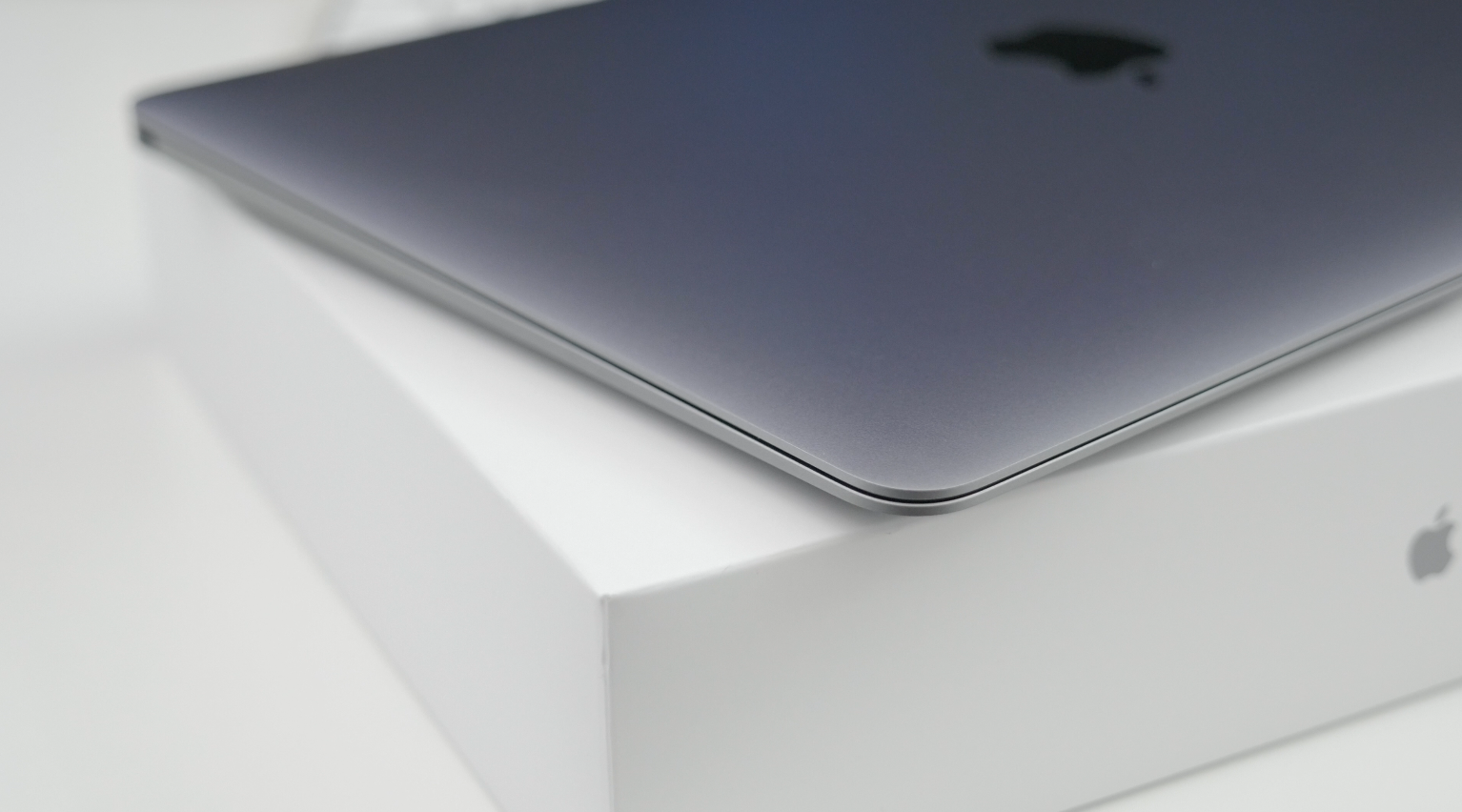
Originally released April 10, 2015 and last refreshed April 19, 2016, the all-new MacBook ($1,299 and up from the Apple Store) is the thinnest and lightest Mac laptop ever made. It’s also the first MacBook to be offered in four color options: classic silver, space gray, gold and rose gold.

Currently offered only with a 12″ screen, it represents the future of Apple laptops. Following a refresh in April 2016, it now includes a 2304×1440 (226ppi) Retina display, 8GB of RAM and up to 512GB of SSD storage, coupled with ultra-low-power Intel Core M processors. The base model includes a 1.1GHz dual-core Intel Core M chip with an Intel HD Graphics 515 GPU; and upgraded models offer to 1.2GHz dual-core Intel Core m5 or 1.3GHz dual-core Intel Core m7 processor with Turbo Boost up to 3.1GHz.

With a redesigned chassis that’s only slightly wider than the keyboard, the new MacBook’s 0.14″–0.52″ thickness was achieved in part by dropping all external connectivity ports save for a 3.5mm headphone port and a new reversible USB-C port, which can be used for power, data connectivity, and video output. Most of the MacBook’s connectivity is handled wirelessly with 802.11ac and Bluetooth 4 support. It promises 9-10 hours of battery life depending on how the computer is being used.

A redesigned Force Touch trackpad now can sense multiple levels of pressure rather than just one, using four pressure sensors and a haptic feedback pad to replicate the clickiness of a traditional trackpad. Additionally, the keyboard has been completely redesigned to retain the expected clicks, precision, and travel of conventional keys, while cutting their depth and width to fit the chassis. An ultra-thin top lid has only enough depth for a 640×480 FaceTime camera, a compromise for the smaller size.

Just like the first-generation MacBook Air, the new MacBook is aimed at users whose computing needs don’t demand incredible horsepower, yet benefit from a slim, light chassis with a really nice screen. Though you’ll do better in raw dollar terms and power by buying a comparably priced 13″ Retina MacBook Pro, you’ll have nearly twice the weight to carry around (2.03 pounds versus 3.48 pounds) and a larger footprint to manage. The choice of which is best for your needs will be highly personal.

Current Lineup:

  • MacBook (12-inch, Early 2016)

Related Guides:


Video: 15 minutes of the new 12-inch MacBook being handled in Ukraine

Site default logo image

[youtube https://www.youtube.com/watch?t=675&v=JpRyw5NaUpE]

Ahead of its April 10th launch, the new 12-inch MacBook is continuing its world early hands-on tour. The computer already surfaced with detailed unboxing footage and hands-on photos in Vietnam, and now a Ukraine-based YouTube channel has posted a 15 minute long video of the new MacBook being handled.
Expand
Expanding
Close

How-To: Choose the best stand or desktop mount for Apple’s iPads and Macs

Apple currently sells more “laptop” than “desktop” Macs, but in reality, most Macs will be used substantially on flat surfaces — desks, tables, and sometimes nightstands. iPads are more lap-friendly, but also tend to get used upright, particularly for watching videos and access in the kitchen. Since I’ve spent a lot of time testing Apple device stands and mounts, I wanted to share what I’ve learned with you, so you can choose the solution that best suits your Mac, iPad, or both at the same time.

Below, I’ve hand-picked options for different types of users, starting with passive MacBook stands such as Twelve South’s BookArc for MacBook Pro ($50). Made from Mac-matching aluminum with gray rubber inserts, BookArc is designed to safely hold a MacBook Pro upright so that its ports and SD card reader are easily accessible. Twelve South also sells a smaller version of BookArc for the MacBook Air, a bigger BookArc for the Mac Pro, and an earthy version called BookArc mod for fans of wood. That’s a rarity, as most Mac and iPad stands are designed to match Apple’s products, as you’ll see inside…


Expand
Expanding
Close

Geekbench results from 12-inch MacBook show similar performance to 2011 MacBook Air

Site default logo image

Even though the device is not yet available, an early unboxing gave us a hands-on look at Apple’s upcoming 12-inch Retina MacBook this morning, and now Geekbench results (cached) from the device have emerged giving us a look at what kind of performance we can expect from it. As we predicted, the Geekbench process tested the performance of the entry-level 12-inch Retina MacBook, which packs an Intel Core M-5Y31 processor clocked at 1.1GHz with Turbo Boost to 2.4GHz.


Expand
Expanding
Close

12-inch MacBook gets video unboxing in Vietnam ahead of April 10th release [Gallery]

Site default logo image

The 12-inch Retina MacBook may not be available in stores yet, but Vietnam-based blog Tinhte has already gotten its hands on the next-gen machine. A video posted to YouTube (embedded below) shows the MacBook being unboxed, though it doesn’t seem to be a shipping model, as it won’t boot into OS X. You can see the full unboxing video below, along with a gallery of photos of the computer itself and the accessories that ship with it, including the new charger and quick start guide.


Expand
Expanding
Close

Review: Kanex’s Thunderbolt 2 Express Dock is a handy MacBook hub with middle-of-pack features, pricing

As I’ve said before, Thunderbolt 2 docks are a really great idea for MacBook users. Before now, there were three major options: Belkin’s $300 Thunderbolt 2 Express HD DockElgato’s $220 Thunderbolt 2 Dock (review), and CalDigit’s $226 Thunderbolt Station 2 (review). All three are designed for the same purpose — to connect a bunch of peripherals (including hard drives, a monitor, and audio cables) to your Mac with one Thunderbolt 2 cable — and they all have the same core peripheral ports, with small differences to set them apart from one another.

This month, Kanex is entering the fray with the Thunderbolt 2 Express Dock ($250), which looks a lot like Belkin’s dock but is closer in price to Elgato’s and CalDigit’s. Aluminum on the top and bottom with a black plastic core, it has a front-mounted USB 3.0 port with two more on the back, and comes bundled with a power adapter and 3.3-foot Thunderbolt cable. While it doesn’t stand out in any major way from its earlier rivals, it’s competently executed and attractively designed, with some modest feature tweaks that prospective buyers should know about…


Expand
Expanding
Close

Site default logo image

Apple releases OS X 10.10.3 build 14D127 for public and developer betas

Apple today released yet another build of OS X Yosemite 10.10.3 to both the developer and public beta programs. This version is labeled as 14D127, which is several builds newer than the previous release of 14D113. As always, this new release includes various bug fixes.

As we’ve previously highlighted, 10.10.3 will bring a new, more diverse Emojis keyboard to the Mac, improved login for Google services, and APIs for the new Force Touch Trackpad on the new 12-inch MacBook and 13-inch MacBook Pro with Retina display. Apple has not yet announced when 10.10.3 will be released, but perhaps a launch will come in line with the upcoming MacBook in April.


Expand
Expanding
Close

Review: Swapping MagSafe for SnapFit, BatteryBox adds 60Wh of portable power to MacBook Airs, Pros

Thanks to Apple’s patent on the MagSafe connectors used in MacBook Airs and Pros, the list of third-party external batteries for MacBooks previously began with Hyper’s HyperJuice/HyperJuice 2 and ended with Lenmar’s ChugPlug — not much of a variety. Apple’s legal department chased Hyper for attaching harvested MagSafe connectors to its batteries, and Lenmar chose a workaround, sending ChugPlug’s power indirectly though an Apple wall adapter. Neither solution was ideal. It took until now for a completely different third solution to appear: BatteryBox ($220) from Gbatteries Energy.

BatteryBox is the first MacBook power option I’ve tested that doesn’t require either MagSafe or an Apple wall adapter to function. Since the developers went out of their way to create something that won’t run afoul of Apple’s legal team, there’s absolutely nothing Mac-like about its brick-like rectangular design. And it’s not cheap, priced between the two HyperJuices and higher than ChugPlug, which can now be had for only $100. But it works, adding a 60-watt-hour additional battery to the 38-95-watt-hour cells already inside MacBook Airs and Pros. So if you’re on the road without access to a power outlet and need to add hours of additional runtime to your Apple laptop, this is a viable alternative….


Expand
Expanding
Close

Site default logo image

Future Macs could get up to 10TB SSDs thanks to new Intel/Micron technology

SSDs are fast, but still expensive compared to spinning metal drives, giving us less storage capacity in today’s Macs than we got in older models. Pick up a classic 13-inch MacBook Pro with a hard drive, for example, and you’ll get 500GB of storage for $1100, compared to just 128GB of SSD storage in the $1300 entry-level Retina model.

That may be set to change thanks to new 3D NAND technology announced by Intel and Micron, allowing them to fit far greater storage capacity into the same space as today’s drives. By stacking flash cells on top of each other, up to 32 layers deep, they can can triple the capacity in the same size chip without the usual high price-tag, reports PC World.

For a standard 2.5-inch SATA drive that means up to 10TB of space; for the M.2 drive type used by most laptops, the 3D NAND will boost capacities up to 3.5TB.

We’ve been promised this technology before–Samsung demonstrated 24 layers of 3D NAND back in 2013–but Intel and Micron say that manufacturers will be able to buy the new chips later this year. Of course, with Apple not noted for its generosity when it comes to storage capacity, you may not want to hold your breath.

How-To: Decode Apple’s Tech Specs pages before buying a new Mac, Part 2

As I noted in Part 1 of How-To: Decode Apple’s Tech Specs pages before buying a new Mac, Apple has designed the Mac purchasing process to be easy: pick a model, pick the good, better, or best configuration, hand over your cash, and enjoy your computer. Since most people get confused by tech specs — bullet points filled with numbers and acronyms — Apple downplays them in its marketing materials, leaving customers to sort through the details and figure out what most of them mean.

But these specs are really important when you’re shopping for the right Mac for your current and future needs. So I’ve created this How-To guide to walk you through each of Apple’s Tech Specs pages using clear explanations, hopefully enabling you to properly understand what you’re about to buy. Part 1 focused on the “big 5″ Mac specs you really need to know about, and this Part 2 looks at the rest — generally things that remain the same in a given model, regardless of the configuration you choose…


Expand
Expanding
Close

How-To: Decode Apple’s Tech Specs pages before buying a new Mac (Part 1)

Buying a Mac is designed to be easy. Apple has a handful of different models, each generally available in good, better, and best configurations. You’re supposed to start with the specific Mac model that fits your needs, pick a configuration that has the price and features you want, and walk away happy with your purchase. (Better yet, do your research online and save money after ordering from Amazon, or use the product guides off to the bottom right of this page.)

One thing Apple tends to downplay are tech specs — important numbers and acronyms that nonetheless confuse many people. Look carefully on Apple’s web site and you’ll find that there’s a Tech Specs page for every Mac Apple sells; they’re the keys to making an informed Mac purchase that will be right for your current and future needs. My latest How-To is here to walk you through each of Apple’s specs with clear explanations, so you can understand what you’re about to buy. This Part 1 discusses the “big 5” Mac specs you need to know about, and Part 2 tackles the rest


Expand
Expanding
Close

Inklet plug-in adds pressure-sensitive drawing on new Force Touch MacBook trackpad

Site default logo image

Ten One Design has released an updated version of its drawing plug-in, Inklet, adding pressure-sensitive drawing on the new Force Touch trackpad in all Mac drawing apps, including Photoshop, Lightroom, Aperture and Illustrator. The new trackpad was introduced by Apple on the 12-inch MacBook and 13-inch MacBook Pro with Retina display.

This means MacBook owners with the new trackpad will enjoy enhanced, highly-accurate pressure sensitivity when drawing on the trackpad whether drawing with a stylus or with a finger.

Inklet for Mac adds an icon to your menubar that you click when you want to draw on your trackpad in your chosen app … 
Expand
Expanding
Close

Site default logo image

Apple discontinues Boot Camp support for Windows 7 on latest MacBook models

Apple’s latest MacBook Pro and the upcoming MacBook will not support running Windows 7 through Boot Camp according to a support document for the software. Starting on the newest machines, users will need to upgrade to Windows 8 or later in order to take advantage of the Mac’s dual-boot capabilities.

Of course, for users who still rely on Windows 7, there are solutions that allow you to run the operating system on your Mac. Both Parallels Desktop 10 and VMWare Fusion 7 Pro support versions of Windows back to XP and feature an integrated experience designed for the latest version of OS X.

Microsoft recently announced that it would be taking a page from Apple’s playbook and allowing existing Windows 7 and 8 users to upgrade to the upcoming Windows 10 for free, giving those stuck on older versions a chance to update to a Boot Camp-compatible system.

Feature: Becoming the Apple stereotype of writing a novel on a MacBook in Starbucks

Site default logo image

Update: Both 11/9 and my second technothriller, The Billion Dollar Heist, are now available on Amazon.

Of all the stereotypes we hear about Apple owners, there is perhaps none so enduring as the guy writing a novel on his MacBook in Starbucks. Well, one November, I became that guy. Fast-forward a few years, and I have a 110,000-word technothriller ready to unleash on an unsuspecting public.

I’d had an idea for a novel years earlier, but I’d initially done what almost everyone does when they have an idea for a novel: absolutely nothing. The gap between having an idea and having a completed novel seemed too enormous to contemplate, especially when it would have to be combined with, you know, working for a living.

But then someone told me about something called NaNoWriMo: National Novel Writing Month. Every November, around 400,000 people across the USA, UK, Canada and a number of other countries around the world attempt to write 50,000 words of a novel. I decided to become one of them–using Apple technology, naturally … 
Expand
Expanding
Close

Pixelmator 1.1 for iPad adds realistic watercolor painting, new Color Picker, more

Site default logo image

Pixelmator has today released a new update for the iPad version ($9.99) of its popular image editor. Version 1.1 includes a brand new watercolor painting feature, which can be used to create brand new pieces of art from a blank canvas or add stylistic additions to existing images and photos. Brushes overlay new colors additively with soft radiuses to create beautiful blends and shading. Pixelmator says they spoke to real artists to help design the brush strokes. It feels really nice to use.

Although watercolor painting is the headline addition, Pixelmator 1.1 also includes a new Color Picker with a swatch of previously selected colors, an updated rendering engine for better performance and much more. You have to see it in action … (video below)


Expand
Expanding
Close

Happy Hour Podcast 006 | New Apple Watch details, a controversial Steve Jobs flick, and the future of USB-C with Apple

Welcome to Happy Hour 006. In this episode Zac, Seth, and Benjamin discuss new Apple Watch details and wrap up the need-to-know information, a new controversial Steve Jobs documentary, and the future of USB-C. How will it affect future iOS devices and Macs? The Happy Hour podcast is available for download on iTunes and through our dedicated RSS feed…

[soundcloud url=”https://api.soundcloud.com/tracks/196449768?secret_token=s-WhO3T” params=”auto_play=false&hide_related=false&show_comments=true&show_user=true&show_reposts=false&visual=true” width=”100%” height=”150″ iframe=”true” /]

Click here to subscribe on iTunes or listen to the episode embedded above.


Expand
Expanding
Close

Apple seeds OS X 10.10.3 build 14D105 to developers and Public Beta users

Site default logo image

Less than a week following the previous seed, Apple has released build 14D105 of the upcoming OS X Yosemite 10.10.3 to both developers and users of the Public Beta. Apple has not yet said when 10.10.3 will be released to all OS X Yosemite users, but the increase in seeds in recent weeks likely indicates that a wider launch is fast approaching. As we’ve previously detailed, 10.10.3 will include the all new iCloud-based Photos app for the Mac, developer APIs for the new Force Touch Trackpad on the MacBook and MacBook Pro with Retina display, and a new Emoji picker across the system.


Expand
Expanding
Close

Brace yourself – Core M benchmarks illustrate likely low-end performance from new MacBook

Site default logo image

Lenovo’s Yoga 3 Pro convertible laptop–which uses the same Broadwell Core M processor as Apple’s new ultraportable MacBook–has provided the first look at its likely performance. AnandTech‘s numbers show that in overall performance terms, the Yoga 3 Pro was delivering a little over 90% of the performance of the early 2014 MacBook Air which has far fewer pixels than the Retina MacBook…


Expand
Expanding
Close

Did Apple invent USB Type-C? Maybe a little bit

Lightning and USB Type-C Connectors

Yesterday on his Talk Show podcast, Daring Fireball’s John Gruber suggested that his Apple sources told him that Apple invented USB Type-C. Known for often insightful but always ‘not negative‘ Apple commentary, Gruber sometimes peppers his stories with info he’s gained from inside Apple which he calls “little birdies” (that admittedly haven’t been 100% recently, but used to be spot on).

The quote, taken from TheTechBlock about 54 minutes in:

I have heard, can’t say who, but let’s call them “informed little birdies”, that USB-C is an Apple invention and that they gave it to the standard bodies. And that the politics of such is that they can’t really say that. They’re not going to come out in public and say it, but they did. It is an Apple invention and they do want it to become a standard.

That’s a bit weird, because if Apple did invent USB Type-C, it would seem like a no-brainer for replacing Lightning. But Gruber noted in a post earlier this week that he didn’t think Apple would replace Lightning with USB Type-C.

I think the answer is probably “No, Apple is not going to switch the iPhone and iPad to USB-C”. I think Lightning is a more elegant design, including being slightly thinner. And I think Apple likes having a proprietary port on iOS devices.

But, if they did move iOS devices to USB-C, then you could charge your iOS devices and MacBook with the same cable. And within a few years, all phones and tablets from all companies would charge using the same standard.

A few minutes of research into the matter yields a wealth of data about the genesis of USB Type-C and while Apple does play an active role, it appears they had a lot of help – to put it charitably…
Expand
Expanding
Close

Opinion: Are we bidding farewell to MagSafe, and does it matter?

Site default logo image

When Apple unveiled the new 12-inch MacBook with just a single port (plus a headphone socket), it was doing not just one radical thing, but two. Reducing a machine to just one port was the first; dropping MagSafe was the second.

MagSafe has been one of the key features of MacBooks since it was first introduced by Apple in 2006. It is still highlighted on Apple’s website as one of the key design features of both the MacBook Pro and MacBook Air.

MacBook Air offers innovations you won’t find anywhere else — like the MagSafe 2 power connector, which breaks cleanly away from the notebook if you accidentally trip over the power cord.

The magnetic power cord attaches securely and detaches cleanly.

It’s one of the features that even the most die-hard opponents of Macs tend to grudgingly admit is a good idea. And yet that (very) shiny new MacBook aimed at the largest slice of the MacBook Air market doesn’t have it. Is this a one-off move for a single model, or will we see USB C power replacing MagSafe across the entire MacBook range … ? 
Expand
Expanding
Close

Happy Hour Podcast 005 | Discussing Apple’s 12-inch MacBook, Apple Watch, and other ‘Spring Forward’ announcements

Happy Hour is back and this week we’re discussing all of Apple’s latest announcements. The Spring Forward event brought along a few new Apple Watch details, slight MacBook Pro/Air updates, and the anticipated 12-inch MacBook with Retina Display. In this episode, we’re breaking down the announcements and serving up all of the need-to-know information about Apple’s latest and greatest for 2015. The Happy Hour podcast is available for download on iTunes and through our dedicated RSS feed…

[soundcloud url=”https://api.soundcloud.com/tracks/195410101″ params=”auto_play=false&hide_related=false&show_comments=true&show_user=true&show_reposts=false&visual=true” width=”100%” height=”150″ iframe=”true” /]

Click here to subscribe on iTunes or listen to the episode embedded above.


Expand
Expanding
Close

Opinion: Apple’s Spring Forward event signals huge changes ahead for Mac, iPad, Apple TV + Apple itself

Although many people expected that Apple’s Spring Forward event would mostly focus on the Apple Watch, more than half of the event — notably, the first part — covered other topics. Collectively, there were so many interesting developments that their individual significance was somewhat lost, particularly given that long-awaited Watch pricing news wrapped up the event.

That’s why I wanted to reconsider what Spring Forward revealed about some of Apple’s non-Watch products. Some of the announcements signal that big changes are ahead for Apple’s Mac, iPad, and Apple TV product lines, as well as Apple itself. Read on for my thoughts, and add yours to the comments section below…


Expand
Expanding
Close

USB-C cable gallery, compare to Lightning and Micro-USB, specs and Apple’s future

Site default logo image

Lightning vs. <a href="http://www.amazon.com/Aukey-Hi-speed-Reversible-Connector-Supported/dp/B00RGNJXD4/ref=sr_1_1?amp;amp;qid=1421386415&amp;amp;sr=8-1&tag=thepartim-20&ie=UTF8&amp;amp;peasin=B00RGNJXD4&amp;amp;keywords=B00RGNJXD4&amp;amp;pebp=1421386732649">USB-C cable from Aukey</a>

We’ve been poring over Apple’s change to the 8.4mm by 2.6mm USB Type C standard since we got tipped the design of the new MacBook late last year. It is a big change for Apple and puts the future of longstanding technologies like Thunderbolt and MagSafe into questionable status.  Even Lightning seems a whole lot more vulnerable when an adapter that is marginally bigger, but has the whole industry behind it, shows up in Apple’s future flagship laptop.

Some quick, fun facts on USB Type C that make it pretty amazing:
Expand
Expanding
Close