AAPL Company

See All Stories

Breaking news from Cupertino. We’ll give you the latest from Apple headquarters and decipher fact from fiction from the rumor mill.
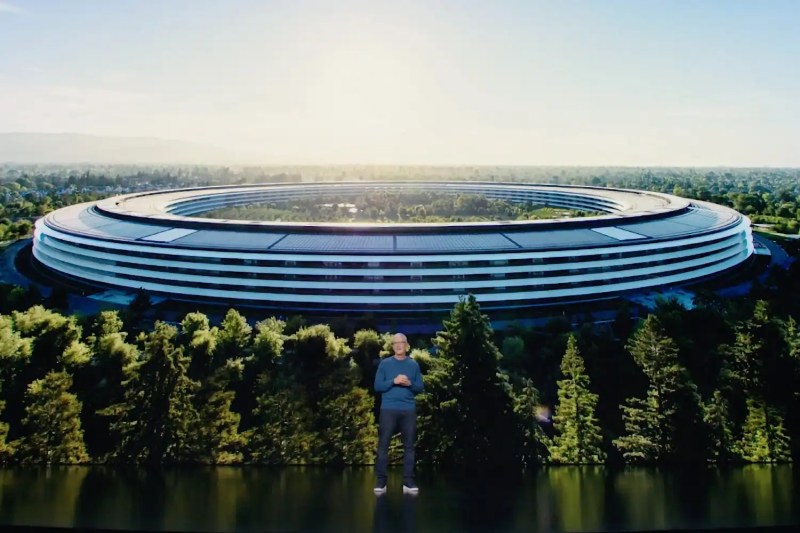
Apple Park Tim Cook AAPL

AAPL is a California-based computer company that became the most successful smartphone company in the world.

AAPL defined by Apple

Here’s how Apple defines itself:

Apple revolutionized personal technology with the introduction of the Macintosh in 1984. Today, Apple leads the world in innovation with iPhone, iPad, Mac, Apple Watch, and Apple TV. Apple’s five software platforms — iOS, iPadOS, macOS, watchOS, and tvOS — provide seamless experiences across all Apple devices and empower people with breakthrough services including the App Store, Apple Music, Apple Pay, and iCloud. Apple’s more than 100,000 employees are dedicated to making the best products on earth, and to leaving the world better than we found it.

Key AAPL history

From Apple I to iMac

Apple was founded in 1976 by Steve Jobs (Steve), Steve Wozniak (Woz), and (briefly) Ronald Wayne as a business partnership: Apple Computer Company. The following year it became Apple Computer, Inc. The company’s first product was the Apple I, a personal computer hand-built by Woz and sold in part-completed kit form. The Apple II and Apple III followed.

The modern Apple as we know it today began in 1983, with the launch of the first personal computer with a graphical user interface, the Lisa. Way too expensive to succeed, it was replaced by the Macintosh in 1984, launched with the single showing of a Ridley Scott commercial during the Super Bowl. The Macintosh transformed the world’s understanding of what a computer was, and would eventually lead to Microsoft adopting the GUI approach.

Steve Jobs and then Apple-CEO John Scully fell out in 1985, when Steve wanted to focus on the Macintosh while Scully wanted to put more attention on the Apple II, which was still selling well. That led to Steve being forced out of the company and going off to form NeXT.

Apple focused on selling Macintosh models at the highest possible margins, but would eventually fall foul of a mix of unsustainable pricing in the face of competition from Windows machines, and an overly complex product lineup. By 1996, the company was in trouble, and in 1997 Steve was brought back, along with the NeXT operating system, which would eventually form the basis of Mac OS X.

Steve simplified the Mac lineup and had industrial designer Jony Ive work on a whole new look for a consumer desktop Mac, the colorful iMac. The iMac, like the original Macintosh, again changed the world’s understanding of what a computer was, and who should want one.

From Apple Computer, Inc. to Apple, Inc.

In 2001, Apple launched the iPod. Although this wasn’t the first mp3 player, it was massively better than anything on the market at the time, and succeeded in turning a geeky piece of technology into a consumer electronics product with mass-market appeal.

The success of the iPod paved the way into other mobile devices. Apple was working on what would eventually become the iPad, when Steve realized that this was the basis of a smartphone. He diverted the team’s work into this, to launch the iPhone in 2007. The iPad launched later, in 2010.

The iPhone was yet another transformational product. While most other smartphones of the time were clunky devices with a keyboard and stylus, the iPhone was a sleek-looking device operated with a finger, and so simple that no user guide was needed. It was with the launch of the iPhone that Apple Computer, Inc. was renamed to Apple, Inc.

From Intel to Apple Silicon

While the iPhone, iPad, Apple Watch, and more are made with Apple-designed processors, the Mac lineup has historically relied on third-party companies for its CPUs. Over the years, Macs progressed from Motorola 680000 series chips through PowerPC to Intel.

In 2020, Apple began a two-year transition to the final stage in that journey, with Macs too finally getting Apple-designed chips. The first such is the M1 chip, used in the latest Mac mini, MacBook Air, and 13-inch MacBook Pro. Other Apple Silicon Macs followed.

AAPL today

Apple is one of the largest companies in the world. It was the first publicly traded company to hit a trillion-dollar valuation in 2018, $2 trillion in 2020, and $3T in 2022.

The company’s product lineup includes five different Mac families (MacBook Air, MacBook Pro, iMac, Mac Pro, and Mac mini); four iPad ranges (iPad mini, iPad, iPad Air, iPad Pro); four iPhone 12 models (12, 12 mini, 12 Pro, 12 Pro Max); three main Apple Watch models (SE, Series 3, Series 6); as well as other products, including Apple TV, AirPods, and HomePod mini.

In addition to hardware sales, Apple derives a growing proportion of its income from Services, including the App Store, iCloud, Apple Music, and Apple Pay.
Opinion: Apple’s privacy-first approach has downsides but is really paying dividends now

HomePod reviews almost universally agreed on two things: the speaker sounds incredibly impressive for the size and price, and Apple’s smart speaker is the least-smart one on the market. Both Amazon’s Echo and Google’s Home speakers were found to be significantly more capable when it comes to answering questions and carrying out tasks.

This is not, of course, coincidence. Amazon opens its Alexa ‘recipes’ up to any third-party developer, and Google has long snaffled-up as much data as it can to make its smart assistants as capable as possible. Apple, in contrast, carefully controls the personal data available to both itself and to third-party developers …


Expand
Expanding
Close

Tim Cook schools Facebook on privacy, talks upcoming campus and education strategy in new interview

Apple’s Tim Cook sat down today with MSNBC’s Chris Hayes and Recode’s Kara Swisher for an interview following the company’s special education event yesterday. Cook shared more details about Apple’s vision for how tech and education will complement each other, the future of jobs, his ideas and some advice on privacy, and some choice words for Facebook’s Mark Zuckerberg.


Expand
Expanding
Close

Meeting tomorrow aims to combine 59 iPhone throttling lawsuits into one class action case

The interval between Apple being accused of wrong-doing and the first lawsuit is never very long, but the revelation that the company was deliberately slowing older iPhones appears to have resulted in a record number of cases.

Last time we counted, there were 30 separate cases, and that number has now almost doubled. However, a meeting tomorrow aims to combine all the US cases into a single class action lawsuit …


Expand
Expanding
Close

Here’s everything Apple announced at its education event today

Apple today held its “field trip” education event in Chicago, unveiling a new iPad with Apple Pencil support, a slew of software features, and much more. While the event wasn’t as jam-packed as usual Apple showcases, there were a few things that may have easily slipped under the radar.

Head below for our full roundup of everything Apple announced today….


Expand
Expanding
Close

Interview: Apple logo creator Rob Janoff on making timeless work, fielding criticism, and what makes a good designer

At a time when design trends and tastes seem to fluctuate with increasing speed, one image has remained remarkably persistent: the Apple logo. Often remixed but never replaced, the symbol has been continuously in use in one form or another since graphic designer Rob Janoff first sketched it in 1977. 9to5Mac talked with Janoff about his time working with Steve Jobs, the perspective gained from working over 40 years in the design industry, and an upcoming creative collaboration.


Expand
Expanding
Close

Analyst: Apple Watch and services will overtake iPhone as main growth driver over next five years

iphone x

A new report today from Business Insider shares new projections about how valuable Apple services will be to the company’s growth as iPhone shipments stagnate. Morgan Stanley analyst Katy Huberty believes the company’s services and Apple Watch will be the primary revenue growth drivers over the next five years.


Expand
Expanding
Close

Comment: The three reasons I think Apple has created its microLED manufacturing facility

OLED superseded LCD because it’s brighter, has better color saturation, and is more power-efficient. microLED is expected to replace OLED within the next few years for the same reasons – it improves on all three of those factors.

I don’t believe that Apple’s ‘secret manufacturing facility‘ for microLED screens indicates any desire or plan on Apple’s part to move into large-scale component manufacturing, but I do think it’s a very smart move.

I suspect there are three reasons Apple has established the facility …


Expand
Expanding
Close

Bloomberg: Apple secretly building its own MicroLED screens for future devices, starting with Apple Watch

A new report from Bloomberg this evening says that Apple is “designing and producing its own device displays,” which is a first for the company. Citing people familiar with the situation, the report explains that Apple using a secret manufacturing facility near its headquarters in California…


Expand
Expanding
Close

Apple touts developer success in response to allegations of ‘abusive trade practices’ in France

It was reported yesterday that the French government is taking both Apple and Google to court over alleged “abusive trade practices.” Specifically, the government claims that neither Apple nor Google treat their developers fairly, citing factors such as non-negotiable commissions and contract terms.

Today, both Google and Apple have commented on the accusations made by French Finance Minister Bruno Le Maire…


Expand
Expanding
Close