AAPL Company

See All Stories

Breaking news from Cupertino. We’ll give you the latest from Apple headquarters and decipher fact from fiction from the rumor mill.
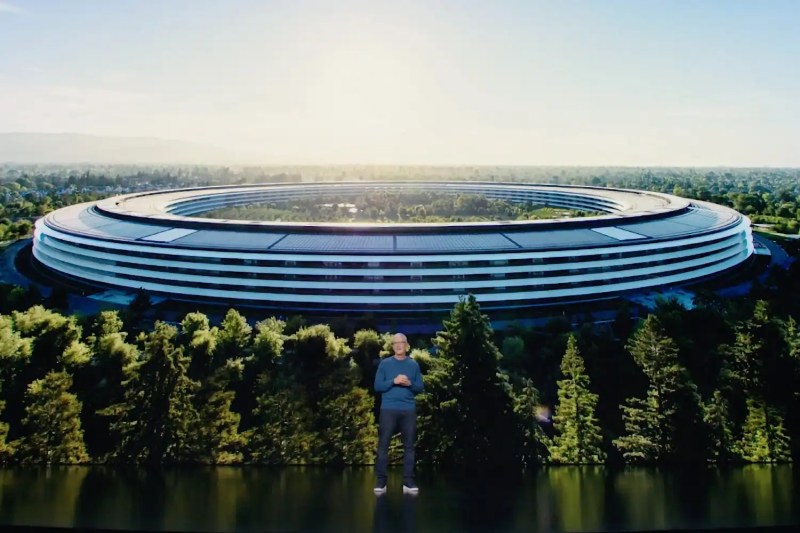
Apple Park Tim Cook AAPL

AAPL is a California-based computer company that became the most successful smartphone company in the world.

AAPL defined by Apple

Here’s how Apple defines itself:

Apple revolutionized personal technology with the introduction of the Macintosh in 1984. Today, Apple leads the world in innovation with iPhone, iPad, Mac, Apple Watch, and Apple TV. Apple’s five software platforms — iOS, iPadOS, macOS, watchOS, and tvOS — provide seamless experiences across all Apple devices and empower people with breakthrough services including the App Store, Apple Music, Apple Pay, and iCloud. Apple’s more than 100,000 employees are dedicated to making the best products on earth, and to leaving the world better than we found it.

Key AAPL history

From Apple I to iMac

Apple was founded in 1976 by Steve Jobs (Steve), Steve Wozniak (Woz), and (briefly) Ronald Wayne as a business partnership: Apple Computer Company. The following year it became Apple Computer, Inc. The company’s first product was the Apple I, a personal computer hand-built by Woz and sold in part-completed kit form. The Apple II and Apple III followed.

The modern Apple as we know it today began in 1983, with the launch of the first personal computer with a graphical user interface, the Lisa. Way too expensive to succeed, it was replaced by the Macintosh in 1984, launched with the single showing of a Ridley Scott commercial during the Super Bowl. The Macintosh transformed the world’s understanding of what a computer was, and would eventually lead to Microsoft adopting the GUI approach.

Steve Jobs and then Apple-CEO John Scully fell out in 1985, when Steve wanted to focus on the Macintosh while Scully wanted to put more attention on the Apple II, which was still selling well. That led to Steve being forced out of the company and going off to form NeXT.

Apple focused on selling Macintosh models at the highest possible margins, but would eventually fall foul of a mix of unsustainable pricing in the face of competition from Windows machines, and an overly complex product lineup. By 1996, the company was in trouble, and in 1997 Steve was brought back, along with the NeXT operating system, which would eventually form the basis of Mac OS X.

Steve simplified the Mac lineup and had industrial designer Jony Ive work on a whole new look for a consumer desktop Mac, the colorful iMac. The iMac, like the original Macintosh, again changed the world’s understanding of what a computer was, and who should want one.

From Apple Computer, Inc. to Apple, Inc.

In 2001, Apple launched the iPod. Although this wasn’t the first mp3 player, it was massively better than anything on the market at the time, and succeeded in turning a geeky piece of technology into a consumer electronics product with mass-market appeal.

The success of the iPod paved the way into other mobile devices. Apple was working on what would eventually become the iPad, when Steve realized that this was the basis of a smartphone. He diverted the team’s work into this, to launch the iPhone in 2007. The iPad launched later, in 2010.

The iPhone was yet another transformational product. While most other smartphones of the time were clunky devices with a keyboard and stylus, the iPhone was a sleek-looking device operated with a finger, and so simple that no user guide was needed. It was with the launch of the iPhone that Apple Computer, Inc. was renamed to Apple, Inc.

From Intel to Apple Silicon

While the iPhone, iPad, Apple Watch, and more are made with Apple-designed processors, the Mac lineup has historically relied on third-party companies for its CPUs. Over the years, Macs progressed from Motorola 680000 series chips through PowerPC to Intel.

In 2020, Apple began a two-year transition to the final stage in that journey, with Macs too finally getting Apple-designed chips. The first such is the M1 chip, used in the latest Mac mini, MacBook Air, and 13-inch MacBook Pro. Other Apple Silicon Macs followed.

AAPL today

Apple is one of the largest companies in the world. It was the first publicly traded company to hit a trillion-dollar valuation in 2018, $2 trillion in 2020, and $3T in 2022.

The company’s product lineup includes five different Mac families (MacBook Air, MacBook Pro, iMac, Mac Pro, and Mac mini); four iPad ranges (iPad mini, iPad, iPad Air, iPad Pro); four iPhone 12 models (12, 12 mini, 12 Pro, 12 Pro Max); three main Apple Watch models (SE, Series 3, Series 6); as well as other products, including Apple TV, AirPods, and HomePod mini.

In addition to hardware sales, Apple derives a growing proportion of its income from Services, including the App Store, iCloud, Apple Music, and Apple Pay.

Live blog: Apple’s fiscal year Q3 2017 earnings call

Apple just announced its earnings for the third quarter of 2017, reporting profits of $8.72 billion on revenues of $45.4 billion. The company sold 41 million iPhones, 11.4 million iPads, and 4.29 million Macs.

Now that the numbers are out there in the public, Apple is set to hold its quarterly earnings call, which will kick-off at 2PM PT/5PM ET and we’ll have live coverage right here…


Expand
Expanding
Close

Apple announces Q3 2017 revenue of $45.4b: 41m iPhones, 11.4m iPads, 4.29m Macs

Apple has announced its latest quarter results including $45.4b in revenue and $8.72 profit from 41m iPhones, 11.4m iPads, and 4.29m Macs sold.

FY17 Q3 results compare to the previous quarter’s $52.9 billion in revenue, $11.03 billion in profit, 50.7 million iPhones, 8.92 million iPads, and 4.19 million Macs. In the same quarter a year ago, Apple reported $42.4 billion in revenue, $7.8 billion in profit, 40.4 millions iPhones sold, 9.9 million iPads sold, and 4.2 million Macs sold.

Full press release after the break, and stick around for our earnings call live blog at the top of the hour:


Expand
Expanding
Close

Apple requests tax-breaks for suppliers as it seeks to establish ‘mini-Shenzhen’ in India

Apple has asked the Indian government to extend the tax breaks it has been granted for its own operations to its suppliers. This would enable the company to move from mere iPhone assembly in India – with the actual parts still made in China – to more of a true manufacturing operation.

We described recently how Apple relies on an entire network of suppliers centred around the Chinese city of Shenzhen. Tim Cook’s discussions with Indian prime minister Narendra Modi have extended to establishing a kind of Little Shenzhen within India …


Expand
Expanding
Close

Comment: Apple is about to give a big clue on iPhone 8 timing, but it may not be easy to decode

There’s unlikely to be any drama when Apple reveals its fiscal Q3 (calendar Q2) earnings later today. Analyst expectations are for the company to deliver within the revenue range promised in its guidance three months earlier. The only question is whether it will be at the high end or somewhere in the middle.

The numbers everyone are waiting to hear are Apple’s revenue guidance for fiscal Q4: calendar months July to September. With the new iPhone models usually launched in September, Q4 generally includes the opening weekend sales – with revenue guidance reflecting this fact.

When Apple gives its guidance today (which is usually +/- $1B), it will give a big clue as to whether or not the iPhone 8 will launch in September – but it won’t necessarily be easy to decode …


Expand
Expanding
Close

Analysts expect AAPL to hit Q3 2017 earnings guidance, but note of iPhone 8’s impact going forward

Apple is set to release its Q3 2017 earnings tomorrow, Tuesday, August 1st. The company’s third fiscal quarter marks an interesting one as much of the news around Apple has shifted to the iPhone 8 that won’t be unveiled until later this year. Nevertheless, analysts expect Apple to report numbers in line with guidance…


Expand
Expanding
Close

Some have ‘lost hope’ as decision on Apple’s proposed Irish data center delayed yet again

Some supporters of Apple’s proposed data center in Ireland say that have ‘totally lost hope’ that the project will go ahead after a final ruling on planning consent has been delayed yet again.

The latest delay means that a final decision won’t be made until some two years after Apple had hoped to begin construction …


Expand
Expanding
Close

Experts say it’s ‘highly unlikely’ Apple will build 3 manufacturing plants in the U.S.

trump china apple

Foxconn yesterday officially confirmed its plans to build a $10 billion display manufacturing plant in Wisconsin, a move that had been rumored for a long time. Just a few days before that, however, President Trump touted that Apple had promised him 3 “big, big, big” factories in the United States, yet Foxconn’s new Wisconsin factory won’t be for Apple displays, but rather Sharp.

Some have speculated that Trump may have gotten Foxconn confused with Apple, and a new report from The Wall Street Journal outlines just how unlikely it is for Apple to expand to the United States so quickly…


Expand
Expanding
Close

Comment: Is Trump’s claim about Apple building new plants all hype?

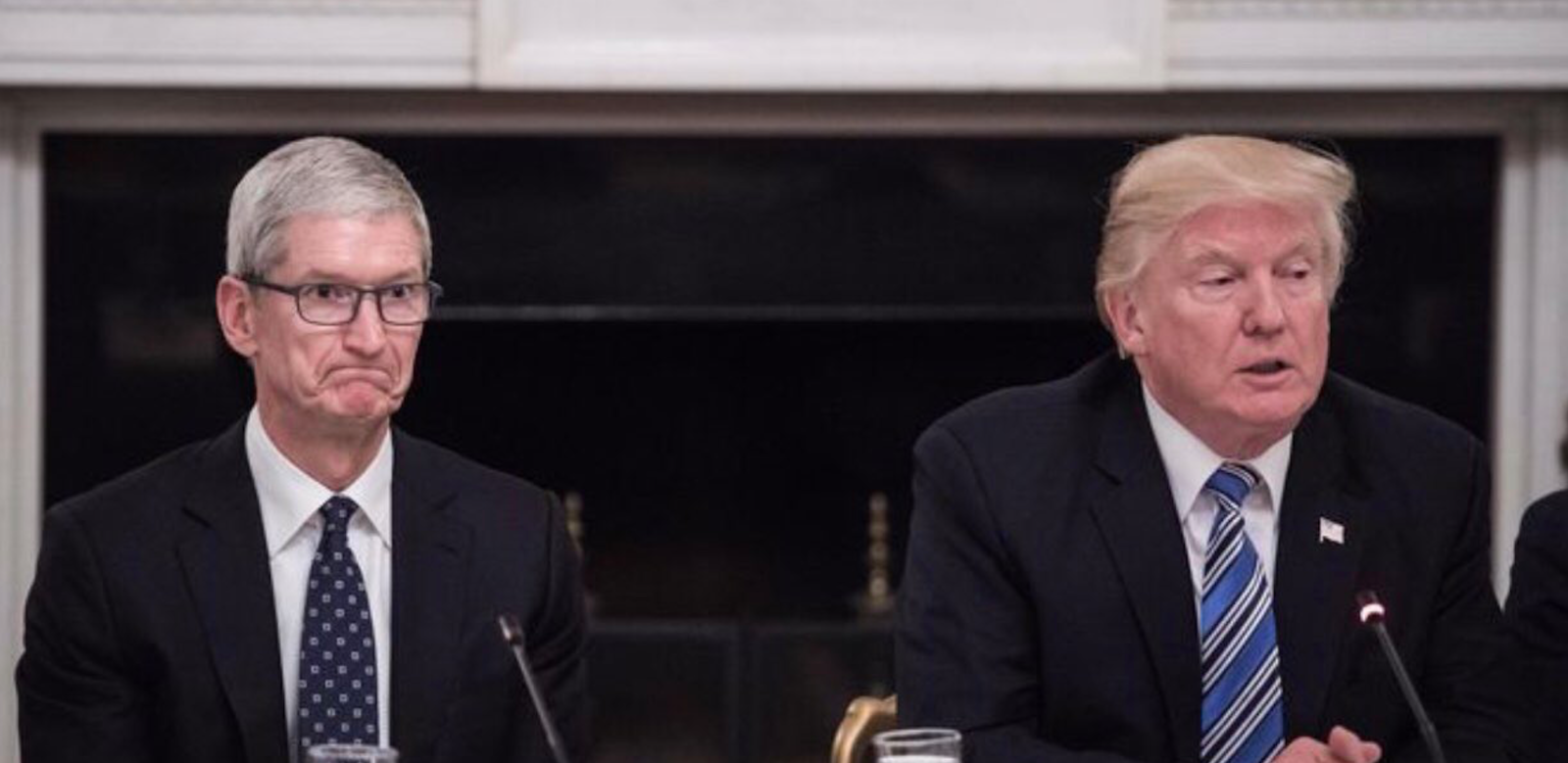
President Trump claimed in a WSJ interview that Tim Cook has promised to build three large manufacturing plants in the U.S. – without specifying when this might happen, where they might be located or what they might make.

“I spoke to [Mr. Cook], he’s promised me three big plants—big, big, big,” Mr. Trump said as part of a discussion about business-tax reform and business investment. “I said you know, Tim, unless you start building your plants in this country, I won’t consider my administration an economic success. He called me, and he said they are going forward.”

But there is every reason to doubt this, no persuasive reason to believe it – and little basis for believing it would matter much even if it were true …


Expand
Expanding
Close

As other tech companies voice support for Apple, Qualcomm says iPhone import ban wouldn’t hurt competition

As the legal saga between the two continues, Qualcomm is firing back after a host of tech companies came out in support of Apple last week. The chip maker is accusing the Computer & Communications Industry Association, a group that consists of companies such as Google, Samsung, and Facebook, of waging a “coordinated effort aimed at misdirecting” government regulators.


Expand
Expanding
Close

Apple’s 2017 Back to School deal expected to launch in UK any day now [U]

Update: Online chat with Apple support indicates Back to School is launching in Germany on August 8. It’s likely to roll out to the UK and other European countries the same day.

This year’s Back to School deal, in which Apple offers a free pair of Beats headphones in addition to the normal education discount, is expected to be rolled out in the UK imminently.

A source tells us that Apple is in the final stages of preparations for the UK launch of the deal, which was first announced in the U.S. earlier this month …


Expand
Expanding
Close

As Apple forsakes Imagination Tech, concern expressed over possible Chinese takeover

Apple’s decision to design its own GPUs for iOS devices rather than license designs from Imagination Tech may have unexpected consequences. A report over the weekend suggests that an equity fund back by the Chinese government is exploring a bid for the company.

Concern is being expressed at the potential security implications of Chinese control over chip designs used in a wide variety of technology, including aerospace and defence equipment …


Expand
Expanding
Close

Intel slams Qualcomm in new legal filing, alleges a ‘long list’ of monopolistic practices

After being named in a group legal filing expressing support for Apple in its case against Qualcomm, Intel has now filed its own statement with the International Trade Commission. The chipmaker alleges that Qualcomm is not licensing its patents at a fair rate and thus abusing its position in the industry.


Expand
Expanding
Close

Samsung, Google, & others formally back Apple in legal dispute with Qualcomm

Apple today has received support from a handful of tech companies in its ongoing legal dispute with Qualcomm. As reported by Reuters, the Computer & Communications Industry Association, which consists of tech companies such as Samsung, Intel, Google, Amazon, and more, today filed comments with the U.S. International Trade Commission arguing that an import ban on iPhones would hurt consumers…


Expand
Expanding
Close

AAPL again declared the most profitable company in the world

Fortune has for the second consecutive year declared Apple the most profitable company in the world, despite coming in 9th overall in the Fortune Global 500. The rankings are based on the most recent financial year for each company.

Fortune is best known for its Fortune 500 ranking of U.S. companies, where Apple this year took the #3 slot. But the company also compiles a global list, and it’s here that Apple came in 9th in the overall rankings but #1 in profitability …


Expand
Expanding
Close