AAPL Company

See All Stories

Breaking news from Cupertino. We’ll give you the latest from Apple headquarters and decipher fact from fiction from the rumor mill.
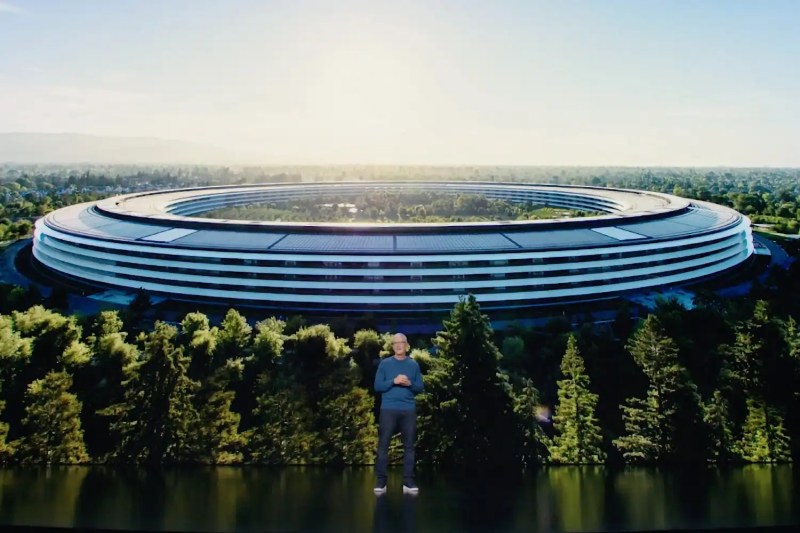
Apple Park Tim Cook AAPL

AAPL is a California-based computer company that became the most successful smartphone company in the world.

AAPL defined by Apple

Here’s how Apple defines itself:

Apple revolutionized personal technology with the introduction of the Macintosh in 1984. Today, Apple leads the world in innovation with iPhone, iPad, Mac, Apple Watch, and Apple TV. Apple’s five software platforms — iOS, iPadOS, macOS, watchOS, and tvOS — provide seamless experiences across all Apple devices and empower people with breakthrough services including the App Store, Apple Music, Apple Pay, and iCloud. Apple’s more than 100,000 employees are dedicated to making the best products on earth, and to leaving the world better than we found it.

Key AAPL history

From Apple I to iMac

Apple was founded in 1976 by Steve Jobs (Steve), Steve Wozniak (Woz), and (briefly) Ronald Wayne as a business partnership: Apple Computer Company. The following year it became Apple Computer, Inc. The company’s first product was the Apple I, a personal computer hand-built by Woz and sold in part-completed kit form. The Apple II and Apple III followed.

The modern Apple as we know it today began in 1983, with the launch of the first personal computer with a graphical user interface, the Lisa. Way too expensive to succeed, it was replaced by the Macintosh in 1984, launched with the single showing of a Ridley Scott commercial during the Super Bowl. The Macintosh transformed the world’s understanding of what a computer was, and would eventually lead to Microsoft adopting the GUI approach.

Steve Jobs and then Apple-CEO John Scully fell out in 1985, when Steve wanted to focus on the Macintosh while Scully wanted to put more attention on the Apple II, which was still selling well. That led to Steve being forced out of the company and going off to form NeXT.

Apple focused on selling Macintosh models at the highest possible margins, but would eventually fall foul of a mix of unsustainable pricing in the face of competition from Windows machines, and an overly complex product lineup. By 1996, the company was in trouble, and in 1997 Steve was brought back, along with the NeXT operating system, which would eventually form the basis of Mac OS X.

Steve simplified the Mac lineup and had industrial designer Jony Ive work on a whole new look for a consumer desktop Mac, the colorful iMac. The iMac, like the original Macintosh, again changed the world’s understanding of what a computer was, and who should want one.

From Apple Computer, Inc. to Apple, Inc.

In 2001, Apple launched the iPod. Although this wasn’t the first mp3 player, it was massively better than anything on the market at the time, and succeeded in turning a geeky piece of technology into a consumer electronics product with mass-market appeal.

The success of the iPod paved the way into other mobile devices. Apple was working on what would eventually become the iPad, when Steve realized that this was the basis of a smartphone. He diverted the team’s work into this, to launch the iPhone in 2007. The iPad launched later, in 2010.

The iPhone was yet another transformational product. While most other smartphones of the time were clunky devices with a keyboard and stylus, the iPhone was a sleek-looking device operated with a finger, and so simple that no user guide was needed. It was with the launch of the iPhone that Apple Computer, Inc. was renamed to Apple, Inc.

From Intel to Apple Silicon

While the iPhone, iPad, Apple Watch, and more are made with Apple-designed processors, the Mac lineup has historically relied on third-party companies for its CPUs. Over the years, Macs progressed from Motorola 680000 series chips through PowerPC to Intel.

In 2020, Apple began a two-year transition to the final stage in that journey, with Macs too finally getting Apple-designed chips. The first such is the M1 chip, used in the latest Mac mini, MacBook Air, and 13-inch MacBook Pro. Other Apple Silicon Macs followed.

AAPL today

Apple is one of the largest companies in the world. It was the first publicly traded company to hit a trillion-dollar valuation in 2018, $2 trillion in 2020, and $3T in 2022.

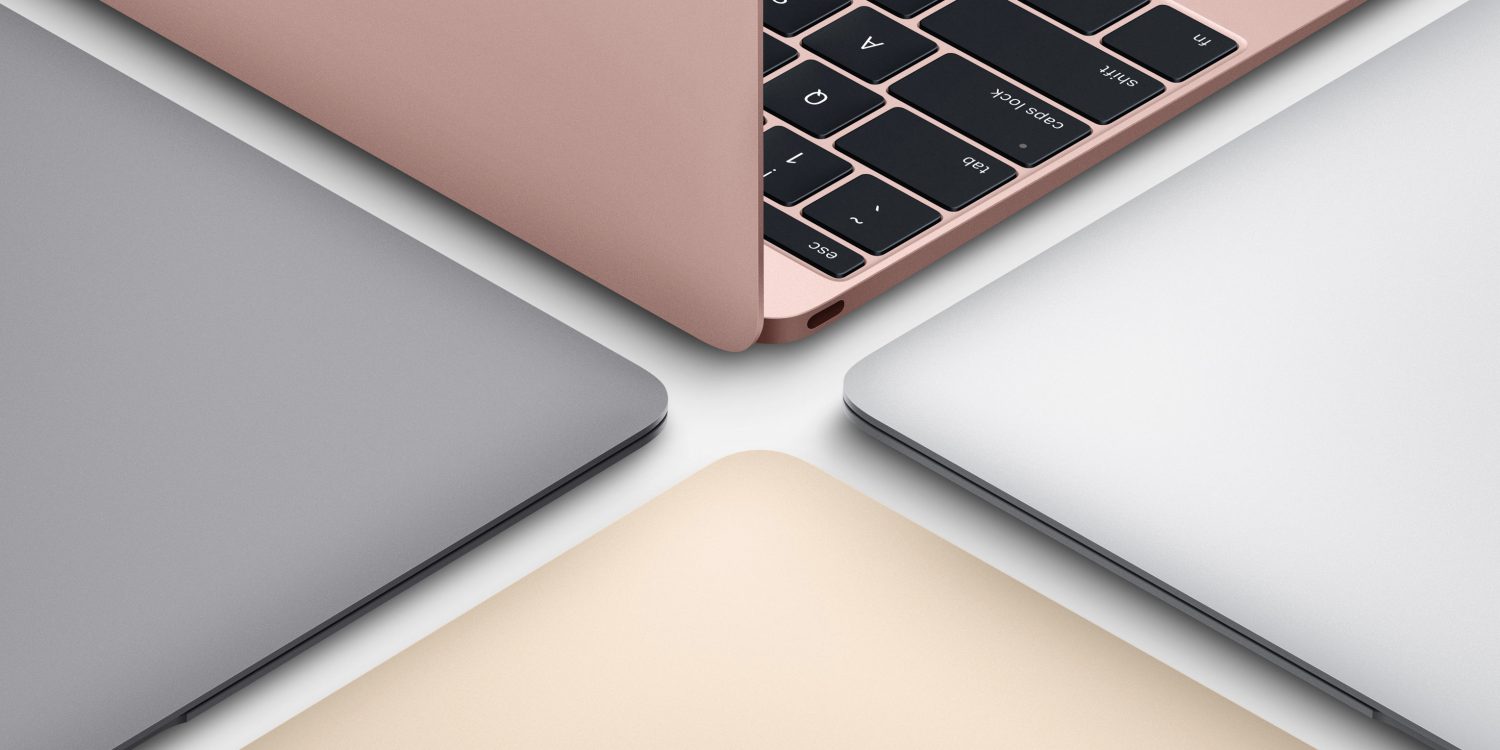
The company’s product lineup includes five different Mac families (MacBook Air, MacBook Pro, iMac, Mac Pro, and Mac mini); four iPad ranges (iPad mini, iPad, iPad Air, iPad Pro); four iPhone 12 models (12, 12 mini, 12 Pro, 12 Pro Max); three main Apple Watch models (SE, Series 3, Series 6); as well as other products, including Apple TV, AirPods, and HomePod mini.

In addition to hardware sales, Apple derives a growing proportion of its income from Services, including the App Store, iCloud, Apple Music, and Apple Pay.

Apple supports UK’s Year of Engineering, introduces school children to its engineers

Apple is lending its support to a British government initiative designed to help fill the skills gap of around 20,000 engineers. The Year of Engineering project is designed to introduce schoolchildren to some of the work done by engineers, and encourage more of them to plan it as a career.

Apple is introducing students to a number of its teams, including one that normally keeps a low profile …


Expand
Expanding
Close

TSMC reportedly nearing record profit levels in 2018 from manufacturing Apple A12 chip for next-gen iPhones, 7nm process

Apple’s key supplier TSMC is looking ahead to a strong year in terms of profitability, even if total revenue is lower, driven by production of new iPhone chips.

Via Digitimes, TSMC is set to manufacture the system-on-a-chip for 2018 iPhones, dubbed Apple A12. The chip wafers are expected to be made with a 7 nanometer process. The current A11 chip inside iPhone X and iPhone 8 uses a 10nm feature size.


Expand
Expanding
Close

Report: Apple’s complaints about AT&T and Verizon may have led to DOJ eSIM investigation [U]

UPDATE: An AT&T spokesperson gave us the following statement:

We are aware of the investigation into GSMA’s process for developing eSIM standards that provide a better experience for consumers. Along with other GSMA members, we have provided information to the government in response to their requests and will continue to work proactively within GSMA, including with those who might disagree with the proposed standards, to move this issue forward.

News has broke this afternoon that the US Department of Justice has opened an investigation over antitrust concerns and potential collusion between Verizon and AT&T in efforts to prevent eSIM adoption and progress. Apple Watch and iPad both use eSIM technology and Apple is reportedly one of multiple manufacturers who has raised concerns with the DOJ. 
Expand
Expanding
Close

‘Father of iPod’ Tony Fadell thinks Apple needs to tackle iPhone addiction, company reportedly working on it

The former Apple engineer Tony Fadell, nicknamed the ‘father of the iPod,’ thinks Apple has a responsibility to tackle the problem of iPhone addiction.

He says what is needed is the equivalent of nutrition advice – where we know which food types in what quantities are healthy – and then a way to track our ‘intake’ …


Expand
Expanding
Close

This year’s flagship iPhone could be even more expensive than the iPhone X, say analysts

With all the signs pointing to the iPhone X not selling as well as Apple and its suppliers had hoped, many wondered whether the $999+ price tag was too high even for iPhone loyalists. One popular line of thought is that as the technology included in the flagship model will, like everything else, fall in price over time, that Apple would use the savings to give customers a slightly more palatable price this year.

But at least one bank thinks that won’t be the case, and that this year’s iPhone X equivalent will be even more expensive …


Expand
Expanding
Close

Apple Stores relying on in-store contractors to catch up on iPhone battery service backlog

It’s no secret that Apple Stores have struggled to keep up with demand for iPhone battery replacements, and it appears the company is trying a new strategy to reduce repair times for customers with affected iPhones. 9to5Mac has heard from multiple Apple Stores that the company has brought in both AppleCare employees and external contractors to work in retail stores on iPhone battery replacements specifically.


Expand
Expanding
Close

Korea likely to be third country to fine Apple for unfair contracts with carriers

An investigation by the South Korean Fair Trade Commission (FTC) into alleged unfair practices by Apple is expected to result in the iPhone maker being fined, says a local report. Apple is accused of ‘dumping’ both advertising and repair costs on carriers.

It follows earlier fines for unfair contracts in both Taiwan and France …


Expand
Expanding
Close

Analysts predict Apple will use repatriated overseas cash to double stock buyback program

When the Republican tax bill passed in December, allowing Apple and other companies a tax break on repatriating their overseas cash, there was much speculation about how the Cupertino company would spend it.

There was the usual speculation, of course, about Apple buying Netflix or Tesla, but the smart money appeared to be on boosting its stock buyback program – and analysts think the scale of that could be dramatic …


Expand
Expanding
Close

Tech products largely exempted from US import tariffs on 1300 Chinese products

Concerns that Apple could be hurt by US tariffs on imports from China appear to have been allayed.  There was speculation that Chinese-made Apple products might be caught in the net when the Trump administration broadened the scope of its proposed protectionist measures.

However, lobbying by Apple and other US tech companies seem to have been successful in persuading the White House that taxing tech imports would be too damaging to the US economy …


Expand
Expanding
Close