AAPL Company

See All Stories

Breaking news from Cupertino. We’ll give you the latest from Apple headquarters and decipher fact from fiction from the rumor mill.
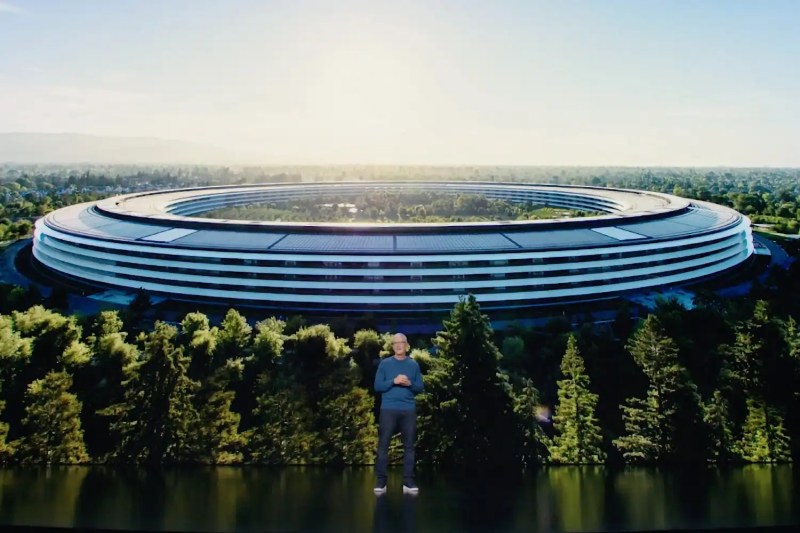
Apple Park Tim Cook AAPL

AAPL is a California-based computer company that became the most successful smartphone company in the world.

AAPL defined by Apple

Here’s how Apple defines itself:

Apple revolutionized personal technology with the introduction of the Macintosh in 1984. Today, Apple leads the world in innovation with iPhone, iPad, Mac, Apple Watch, and Apple TV. Apple’s five software platforms — iOS, iPadOS, macOS, watchOS, and tvOS — provide seamless experiences across all Apple devices and empower people with breakthrough services including the App Store, Apple Music, Apple Pay, and iCloud. Apple’s more than 100,000 employees are dedicated to making the best products on earth, and to leaving the world better than we found it.

Key AAPL history

From Apple I to iMac

Apple was founded in 1976 by Steve Jobs (Steve), Steve Wozniak (Woz), and (briefly) Ronald Wayne as a business partnership: Apple Computer Company. The following year it became Apple Computer, Inc. The company’s first product was the Apple I, a personal computer hand-built by Woz and sold in part-completed kit form. The Apple II and Apple III followed.

The modern Apple as we know it today began in 1983, with the launch of the first personal computer with a graphical user interface, the Lisa. Way too expensive to succeed, it was replaced by the Macintosh in 1984, launched with the single showing of a Ridley Scott commercial during the Super Bowl. The Macintosh transformed the world’s understanding of what a computer was, and would eventually lead to Microsoft adopting the GUI approach.

Steve Jobs and then Apple-CEO John Scully fell out in 1985, when Steve wanted to focus on the Macintosh while Scully wanted to put more attention on the Apple II, which was still selling well. That led to Steve being forced out of the company and going off to form NeXT.

Apple focused on selling Macintosh models at the highest possible margins, but would eventually fall foul of a mix of unsustainable pricing in the face of competition from Windows machines, and an overly complex product lineup. By 1996, the company was in trouble, and in 1997 Steve was brought back, along with the NeXT operating system, which would eventually form the basis of Mac OS X.

Steve simplified the Mac lineup and had industrial designer Jony Ive work on a whole new look for a consumer desktop Mac, the colorful iMac. The iMac, like the original Macintosh, again changed the world’s understanding of what a computer was, and who should want one.

From Apple Computer, Inc. to Apple, Inc.

In 2001, Apple launched the iPod. Although this wasn’t the first mp3 player, it was massively better than anything on the market at the time, and succeeded in turning a geeky piece of technology into a consumer electronics product with mass-market appeal.

The success of the iPod paved the way into other mobile devices. Apple was working on what would eventually become the iPad, when Steve realized that this was the basis of a smartphone. He diverted the team’s work into this, to launch the iPhone in 2007. The iPad launched later, in 2010.

The iPhone was yet another transformational product. While most other smartphones of the time were clunky devices with a keyboard and stylus, the iPhone was a sleek-looking device operated with a finger, and so simple that no user guide was needed. It was with the launch of the iPhone that Apple Computer, Inc. was renamed to Apple, Inc.

From Intel to Apple Silicon

While the iPhone, iPad, Apple Watch, and more are made with Apple-designed processors, the Mac lineup has historically relied on third-party companies for its CPUs. Over the years, Macs progressed from Motorola 680000 series chips through PowerPC to Intel.

In 2020, Apple began a two-year transition to the final stage in that journey, with Macs too finally getting Apple-designed chips. The first such is the M1 chip, used in the latest Mac mini, MacBook Air, and 13-inch MacBook Pro. Other Apple Silicon Macs followed.

AAPL today

Apple is one of the largest companies in the world. It was the first publicly traded company to hit a trillion-dollar valuation in 2018, $2 trillion in 2020, and $3T in 2022.

The company’s product lineup includes five different Mac families (MacBook Air, MacBook Pro, iMac, Mac Pro, and Mac mini); four iPad ranges (iPad mini, iPad, iPad Air, iPad Pro); four iPhone 12 models (12, 12 mini, 12 Pro, 12 Pro Max); three main Apple Watch models (SE, Series 3, Series 6); as well as other products, including Apple TV, AirPods, and HomePod mini.

In addition to hardware sales, Apple derives a growing proportion of its income from Services, including the App Store, iCloud, Apple Music, and Apple Pay.

Other tech companies join Apple in taking action against hate groups

Other tech companies – including Facebook, Google, LinkedIn, Spotify, Squarespace and Twitter – have joined Apple in taking action against hate groups in the wake of the Charlottesville tragedy.

Apple responded by blocking Apple Pay on the websites belonging to white supremacists and other hate groups, and by a company-wide email announcing $2M+ donations to groups opposing Nazis. Other companies are taking a range of actions …


Expand
Expanding
Close

Tim Cook says ‘hate is a cancer’ & promises $2M donation in company email following Charlottesville tragedy

Following the company’s decision to block Apple Pay on websites promoting white supremacy and hate groups, Apple CEO Tim Cook this evening sent a mass email to all Apple employees to discuss the tragedy in Charlottesville that occurred over the weekend.

In the email, obtained by 9to5Mac, Cook expressed his dissonance with President Trump, while he also said that Apple will be making donations in support of equality…


Expand
Expanding
Close

Apple & other tech companies ask U.S. Supreme Court to apply 4th Amendment protection to location data

Apple Supreme Court

Apple has joined with Google, Facebook, Microsoft, Verizon and others in asking the U.S. Supreme Court to rule that 4th Amendment protections apply to cellphone location data. This would mean that location data could not be accessed without a warrant or court order.

The issue is before the Supreme Court as a result of a 2011 conviction …


Expand
Expanding
Close

Chinese app developers reported Apple to antitrust regulators, alleging monopolistic behavior [U]

Update: CNBC reports that Chinese regulators are now examining the complaint. No formal investigation has been opened at this stage, however.

To be clear, the Chinese regulators are not formally investigating Apple over any breach of antitrust laws. Instead, the SAIC is only reviewing the complaint. Following their review, the regulators may choose to start an investigation.

Apple has been reported to Chinese antitrust regulators by a group of 28 app developers, accusing it of monopolistic behavior.

The WSJ reports that the developers make three specific complaints …


Expand
Expanding
Close

Emergency services organizations call for Apple to implement life-saving location feature

Emergency services organizations around the world are calling on Apple to implement a location feature which they say would save thousands of lives.

Advanced Mobile Location (AML) is a capability built into carrier networks which can automatically identify the exact position of someone making a emergency call with pin-point accuracy. Google added support for it in Android last year, but Apple has so far not responded to requests to implement it in iOS …


Expand
Expanding
Close

Apple’s R&D spend up 15%, now at similar level to iPhone development period

Apple’s highly-focused approach means that it spends a smaller percentage of its revenue on research & development than almost any other tech company. But it ramped up R&D spending significantly in its most recent fiscal quarter.

The WSJ noted that Apple increased its R&D spend by 15% in the quarter ending in July, hitting a total of $11.2B for the 12-month period. Things get more interesting, argues the paper, when you view it in percentage terms …


Expand
Expanding
Close

U.S. iPhone market share up on last year, but Samsung takes #1 slot, says Kantar

Apple saw its share of the U.S. smartphone market hit 34% in the three months ending in May, reports Kantar – up 4.7 points on the same quarter last year.

However, Apple was knocked out of the #1 slot by Samsung, which saw its own market share rise from 32.9% to 36.2% quarterly, though still down year-on-year …


Expand
Expanding
Close

Opinion: There are signs Apple is starting to target mid-market consumers too

If there’s one certainty in life where Apple is concerned, it’s that it targets the premium end of the market. Apple would tell you that it aims to make the best products, and that these cost money to make. A more cynical observer might say that Apple aims to make the highest margins and makes the products (and adds the marketing) it takes to achieve this.

But either way, the company has always targeted those customers willing to pay the big bucks for premium products. That approach has meant that while Samsung sells almost twice as many smartphones as Apple, it’s the Cupertino company that hoovers up almost 80% of the total profits in the industry.

But there are signs that Apple may be broadening its horizons …


Expand
Expanding
Close

By targeting the mid-market, Apple has struck gold with the $329 iPad

iPad sales have been declining for so long now that it was almost a jolt to finally see some good news for the tablet in Apple’s numbers. In the past quarter, iPad sales were not only up, but by a substantial margin: up 15% year-on-year. The stock market sent Apple shares soaring to new highs based at least partly on the news.

The company doesn’t provide any breakdown of models, but as analysts have noted, there was rather a large clue …


Expand
Expanding
Close

AAPL’s Q3 call ‘one of the most bullish,’ say analysts, as stock hits $158 in pre-market

Apple’s Q3 financials seem to have been well-received, with AAPL stock sitting at $158 in pre-market trading at the time of writing – up more than 5% on yesterday’s close. The company reported revenue of $45.4b and sales of 41m iPhones, 11.4m iPads and 4.29m Macs.

Most analysts also seem pleased, with Macquarie describing the earnings call as “one of its most bullish in recent memory” – even if Barclays did sound a sour note …


Expand
Expanding
Close