Opinion pieces & commentary
See All Stories

Opinion pieces are intended to provide interesting perspective on an Apple-related topic, and to be an entertaining read. They represent the opinions of their authors, and not of the site as a whole: this is the reason we don’t label them as editorials.

We use the ‘Opinion’ prefix for longer pieces, and ‘Comment’ for shorter pieces that may be making just a single observation.

We fully encourage discussion and debate on opinion pieces, and you are of course welcome to strongly disagree with both the author and other commenters. All we ask is that you apply the golden rule to your interactions: treat others as you’d wish to be treated. In particular, debate the topic not the person – it’s absolutely fine to say that you think someone is completely wrong because x, y and z; it’s not ok to call their views idiotic.

That said, we love to hear your thoughts and views, and really appreciate those who take the time to give their considered opinions.

Opinion: What we can expect from an Apple Car if it really goes on sale in 2020

Site default logo image

What a difference a couple of weeks can make. We knew on February 5th that Apple was offering quarter-million dollar signing bonuses to Tesla engineers to persuade them to jump ship, but the idea that the company planned to make a car was just a vague rumor. Fast-forward a fortnight and it’s now being treated as established fact.

Our own exclusive reporting on the sheer range of automotive hires by Apple makes it clear that the company is, at the very least, seriously investigating the possibility, with a 1,000-strong team reportedly approved by Tim Cook. And while we need to bear in mind the cautionary note in Seth Weintraub’s piece that there’s a big difference between an R&D project and a real, live product, at this stage an Apple car seems more likely than not.

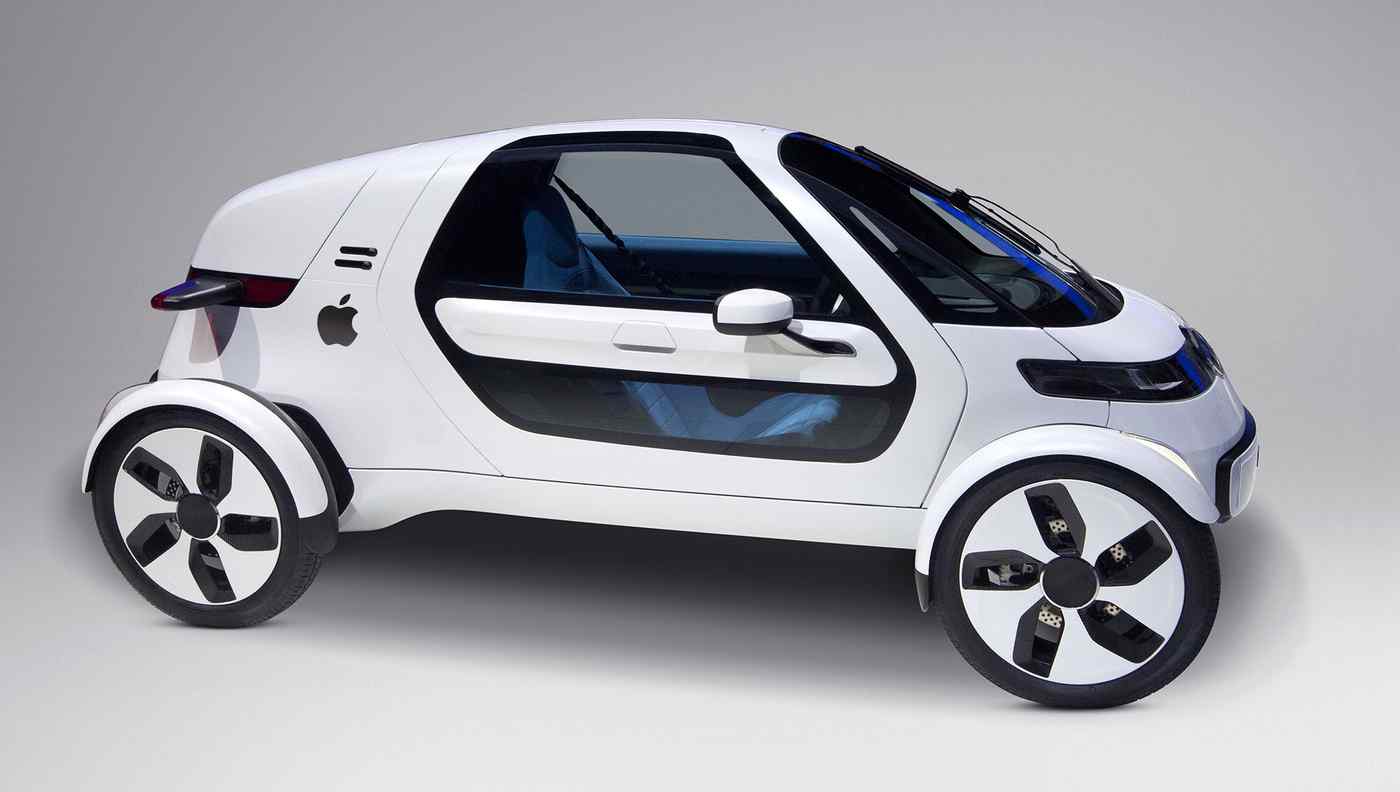
But if Bloomberg is right that Apple plans to launch a car by 2020, I think it’s important to recognize what form that car will and won’t take (spoiler: it won’t look like the above) … 
Expand
Expanding
Close

Opinion: Five reasons why Apple Car is happening, and five big issues to consider

Site default logo image

Unless you’re Seth Weintraub, the idea that Apple would more likely develop a car than a search engine would have been controversial — as shown above, even The Onion-level comical — two weeks ago. That’s changed. Following public sightings of Apple-leased vans that looked a lot like street view mappers, numerous reports have substantially confirmed that Apple’s working on an electric car, quite possibly a self-driving car. Blessed with great insight (and sources), Seth already highlighted some of the big picture reasons Apple would get into the automotive industry before most people had accepted it as reality.

Now that the dust has settled, and even non-believers are acknowledging that an Apple Car could be coming in the not-too-distant future, it’s time to look at the big picture for Apple and the automotive industry. Below, you’ll find five big reasons the Apple Car is happening, as well as five big potential issues worth considering.
Expand
Expanding
Close

Opinion: Apple Pay is easier than swiping a card … until it’s not

Site default logo image

Apple unveiled its mobile payment service Apple Pay last September alongside the iPhone 6 and Apple Watch later rolling it out to new iPhone users in October through the free iOS 8.1 software update. Dozens of banks and credit unions have flipped the switch on Apple Pay since then as more merchants have announced support or plans to accept the new payment method.

Apple Pay, which allows users to securely pay in stores using the latest models of the iPhone simply by placing the smartphone near a special terminal, uses your existing credit or debit card without revealing personal information like your name or card number to merchants.

In practice, Apple Pay is a real delight to use as a payment method as it feels a bit like you’re skipping the payment process altogether; I imagine moving from cash and checks to debit and credit cards years ago felt similar. There’s still a social oddity about paying with your phone in many parts of the United States in 2015, though, which I’m not sure happened with the transition to using cards.
Expand
Expanding
Close

Opinion: Could Apple’s Pinterest profile be an early step toward properly-curated apps?

Site default logo image

iOS and Android are completely different worlds when it comes to apps. Android is pretty much the wild west, with little control over quality or even safety (malware is commonplace). iOS, on a non-jailbroken device, is a walled garden, where Apple decides what apps can and can’t do, and which ones get approved for sale.

Yet despite that carefully-controlled approach, the App Store can still feel like a bit of a jungle. Which is why I wonder whether the Pinterest tie-in announced yesterday may offer hope for the future.

But let’s start with the problem I think needs to be solved, and that problem begins with search. Results may vary by country, and you can try the searches for yourself to compare your results with mine, but here’s what I get for a few obvious app searches … 
Expand
Expanding
Close

Opinion: Could Apple’s integrated streaming music service decimate the competition?

Site default logo image

Image: Forbes

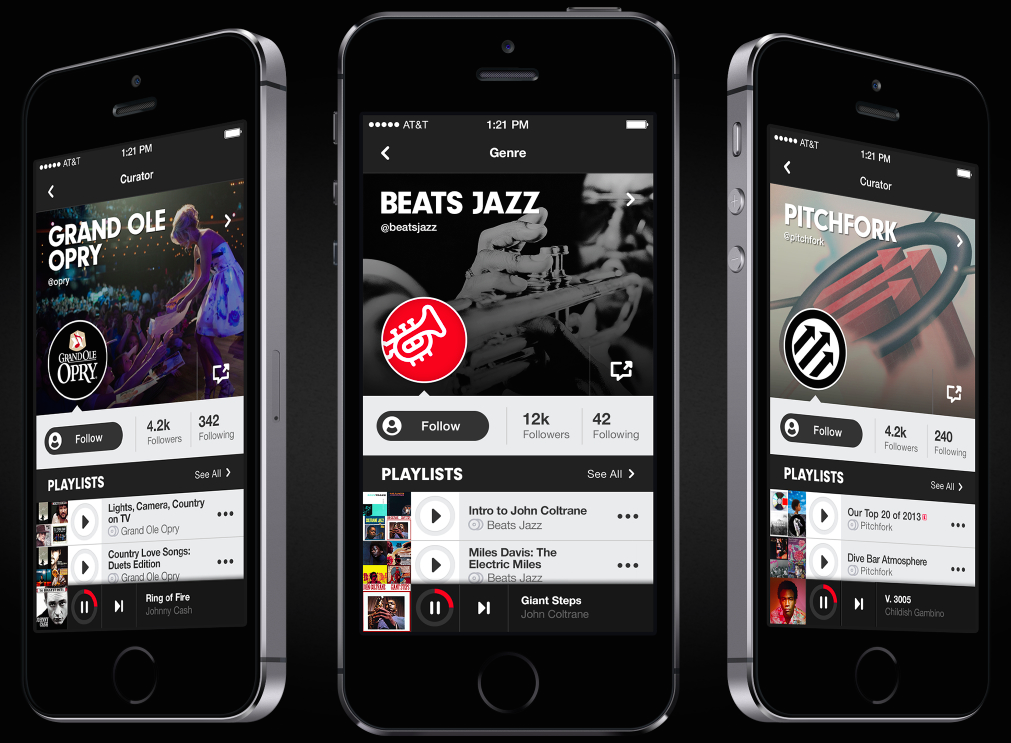
When Apple enters a new business, you know it’s not going to do so in a half-hearted, small way. When it launches its Apple-branded Beats Music service later this year, it’s a no-brainer to predict that it’s going to be a big deal for the music industry. With Apple’s deep integration of Beats into its existing iOS/iTunes ecosystem exclusively revealed by Mark Gurman added into the mix, I wonder whether the unique selling points being notched up by Apple could be enough to leave existing big-name players like Spotify, Google Play and Rdio dead in the water?

That’s rather a grand idea, of course. As of last month, Spotify reached 15 million paid subscribers–up 50% in the last six months alone. Beats Music had only a little over 100,000 subscribers at the time Apple bought the company, and is rumored to have only 2-3 times as many now. But an Apple-ified Beats Music service has four things going for it … 
Expand
Expanding
Close

Apple’s new Photos app means big future changes for free photo storage

Site default logo image

Apple yesterday released a preview of its upcoming all-new Photos app for Mac, which replaces iPhoto and Aperture with a simpler all-in-one photo editor and library manager. Most of the discussion of Photos focused on the huge number of changes from iPhoto and Aperture, burying one very important detail: Apple is changing the way it handles cloud-based photo storage.

Before Photos, Apple offered free storage of photos with limitations in a feature called Photo Stream, which didn’t count against iCloud storage. But the new Photos app uses Apple’s beta iCloud Photo Library feature, which was recently added in iOS 8.1. iCloud Photo Library promises to let you synchronize your entire photo collection including edits and albums across all of your devices… but you have to share your iCloud storage with photos, and album syncing and edits don’t apply to the free 1,000 – 25,000 image storage of Photo Stream.

As most long-time iOS users know, the free 5GB of iCloud storage Apple offers is often not enough to store much more than a single device backup, and for many that will mean no spare room for a photo collection. Consequently, Apple is suggesting that users should buy additional iCloud storage, paying monthly fees to store and sync their photos. As the Photos app is rolling out, Apple is allowing users to stick with the old Photo Stream feature and continue using the new Photos app without turning on the iCloud Photo Library. But it remains to be seen if that will be an option long-term once Photos is released publicly and how users will respond when they find out their free 5GB iCloud storage isn’t cutting it for their photo collection…


Expand
Expanding
Close

Opinion: Square Enix’s flip-flop on iOS 8 support spotlights App Store ambiguities, risks

Site default logo image

Square Enix’s The World Ends With You


Buying an app from the App Store is designed to be as easy as possible. A large button with a price tag sits as close to the app’s icon and name as possible, while additional details linger below. You’re not supposed to think or worry too much about each purchase — the transaction is impulse-driven when the price is low — and the implication is that the app will work when you get it, and keep working for a long time thereafter.

But what happens when an app — marketed as compatible with current iPhones, iPads, and iPod touches — is never updated for the latest version of iOS, and either stops working after an iOS upgrade, or never works at all on new devices? That’s the situation buyers of Square Enix’s $18 The World Ends with You: Solo Remix (and $20 iPad version) have found themselves in since iOS 8 was released. The game’s description claims that it “requires iOS 4.3 or later” and is compatible with devices that shipped with iOS 8, but it wasn’t actually iOS 8-compatible. Yesterday, Square Enix publicly flip-flopped on whether it would leave the game unplayable or fix it. Before changing its tune, the company told customers that they’d need to continue to keep using iOS 7 in order to play the game — an unrealistic alternative, though one that’s faced by users of numerous iOS apps that aren’t being updated by their developers.

By considering abandonment of the 69% of iOS users who are currently on iOS 8, Square Enix wasn’t just making a business choice; it was also spotlighting the risk App Store customers take every time they purchase an app. And it also revealed how long-unsolved App Store listing ambiguities are subjecting users, developers, and Apple itself to unnecessary problems.


Expand
Expanding
Close

A double-edged sword: did the iPhone preserve RadioShack…or kill it?

Site default logo image

The day has finally come. It seems struggling electronics retailer RadioShack is finally dead. This doesn’t come as a surprise to anyone who has paid attention to the company at all in the past few years. The chain hasn’t turned a profit since 2011, and several attempts to reboot its image have failed miserably.

How RadioShack reached this point is also no surprise: it failed to keep up with the ever-evolving technology market, choosing instead to attempt to walk the line between DIY hobbyist and mainstream electronics.

While no one would argue that RadioShack’s insistence on keeping one foot in each world eventually led to its demise, it could also be argued that it’s exactly what kept the company around for so long.


Expand
Expanding
Close

Why my next car probably won’t have CarPlay (Spoiler: Apple Watch)

Site default logo image

My next new car probably won’t have CarPlay. I’ve reached this decision in part due to automakers’ slow crawl to put CarPlay in vehicles that you can actually buy today. While 2015 may bring the feature to more vehicles on the road with more than 30 automobile brands committed to ship CarPlay in the future, we’re still not there yet and the roll out is slow.

More influential, though, is my experience using aftermarket CarPlay in my current car for several months convincing me that CarPlay’s features are not yet where they need to be. As I noted in my hands-on review last fall, CarPlay introduces a new set of problems while trying to make using your iPhone in the car safer and easier.

So if CarPlay isn’t ultimately the answer to creating a better iPhone experience on the road, then what is? I’m convinced the Apple Watch will be better suited…


Expand
Expanding
Close

Opinion: Apple’s pricing and sales experience will make or break Apple Watch

It has a date — sort of. And it has a price — mostly. But less than three months before its release, the Apple Watch is still enigmatic in ways that the similarly pre-announced iPhone and iPad were not. Apple still hasn’t said more than one thing (“starting at $349”) about how the 34 different Watch models will be priced, and despite hiring a new team of sales executives from the fashion and watch worlds, no major changes are obvious at the Apple Stores where the watches will be sold.

What’s going to happen between now and April? 9to5Mac’s editorial team has been actively discussing the possibilities, and we’re ready to share our thinking with you today. Read on…


Expand
Expanding
Close

Opinion: Could there be method in Apple’s apparent madness in removing freebies?

Site default logo image

I was extremely surprised when Apple made the decision to drop its Single of the Week, after doing the same thing with its 12 Days of Christmas promo. As I wrote then, the free single seemed a win-win-win: consumers got free music, lesser-known artists got exposure, Apple got the goodwill that stems from giving away free stuff.

But thinking more about it, perhaps there is method in Apple’s madness after all. Let’s start with the obvious point: the company is about to launch an Apple-branded Beats Music service, and it would then make sense to say that this, not iTunes freebies, is the way to discover new music.

But it’s not just music: 12 Days of Christmas was content of all types, apps included, so I think there could be a bigger picture here. Bear with me while I make that case in a slightly roundabout fashion …


Expand
Expanding
Close

Will Apple allow ads on Apple Watch?

Site default logo image

With more developers and businesses taking advantage of Bluetooth beacons for advertising to nearby iPhone users, many consumers have concerns that the experience could be intrusive from an end user’s perspective. Apple Watch, scheduled for release later this year, could potentially add to that problem if Apple decides to allow iOS apps sending info to the smartwatch to also send advertising as we come in contact with beacons. It hasn’t yet, however, provided public details about what it plans for advertising on the device.

Despite the fact that there aren’t specific references to advertising in Apple’s guidelines for app developers building features for Apple Watch, a couple companies have already announced plans to deliver ads to the device. But do they know something we don’t? Or has Apple not yet made up its mind regarding what it plans for advertising policies on the Watch ahead of a launch expected in the next couple of months?

Sources at large advertising companies tell us Apple is being very cooperative, but that the company hasn’t relayed anything in the form of final guidelines.
Expand
Expanding
Close

Opinion: Does the minimalist 12-inch MacBook Air design represent the future of MacBooks?

Site default logo image

While we’ve been expecting the 12-inch MacBook Air for quite some time and some of the details have long been rumored, the design exclusively revealed in Mark Gurman’s report has raised eyebrows throughout the tech world. Especially the most dramatic element: the reduction of the ports to just one multifunction USB-C socket, a headphone socket and a pair of microphones.

The $64,000 questions are: will this ruthlessly cut-down approach prove workable—and is this a design unique to this one machine, or does it represent the future of all MacBooks … ?


Expand
Expanding
Close

Twitterrific 5 for Mac may become the first casualty in Twitter’s war on developers, but it won’t be the last

Site default logo image

If you open the Mac App Store right now and do a search for “twitter,” you’ll find results just like the ones in the image above. You may recognize the official Twitter app along with some of the most popular and prolific third-party clients. Right below Twitter for Mac you’ll find Twitterrific.

Twitterrific has been around for quite a while now, and was the very first native Twitter application ever built for Mac. It was also the first app to use the word “tweet” to refer to the posts on the network, and introduced many modern staples like conversations and replies. To this day it remains a popular choice among users and has seen many major updates and redesigns. It’s currently on its fourth major version.

In December 2012, Twitterrific 5 was released for iOS devices. The Iconfactory, Twitterrific’s developers, promised that a Mac version of the updated app was in development and would include support for the new iCloud syncing feature and an all-new design. Three days shy of a year after releasing the iPhone update, however, users were given what is currently the app’s most recent update. It included only two bug fixes. The developers have noted that the 5.0 update for Mac is facing big delays.

So what’s going on here? Why has it taken two years for any more news of the update? When will the new version finally be available?

The unfortunate truth? Not even the developers know.


Expand
Expanding
Close

Passcode vs. Touch ID: A Legal Analysis

Site default logo image

[Ed. note: Jason Stern is a Criminal Defense Attorney in private practice in New York City]

8:34 am. A college professor receives a text message threatening to blow up the history building. The professor immediately contacts law enforcement, who trace the origin of the call to a student who lives off-campus.

When FBI agents arrive at the student’s residence, they arrest the student and seize his smartphone. In an attempt to search the device to recover evidence of the crime (and perhaps stop other related crimes), they find the smartphone is protected by fingerprint security measures.

With the suspect in handcuffs, the agent swipes the student’s finger across the phone to access his call history and messages. Once the FBI swipes the suspect’s finger and bypasses the biometric security, the phone asks for the student’s passcode. The FBI agent asks for his password but the student refuses to speak. How can the FBI agent access the phone? Whereas a fictional Federal Agent like Jack Bauer would simply pull out his gun, jam it in the suspect’s mouth and scream, “WHERE IS THE BOMB?”, in our example, the FBI agent would hit the proverbial brick wall.

Yes, the phone could be brought back to the lab for analysis and hacking by forensics personnel, but the suspect in this case could not be forced to disclose the password on the phone…
Expand
Expanding
Close

iPhone 6 Plus and Nexus 6 compared: is Google’s bigger display really that much of an advantage?

Site default logo image

TechCrunch

TechCrunch went hands-on with Google’s newest smartphone, the Nexus 6, and took some time to compare it to the iPhone 6 Plus. In the photo above, you’ll see that the two phones share near identical dimensions, though the Nexus still manages to pack a larger 6.22-inch display space into the same body.

The Nexus is actually a bit bigger than it looks in the photo, though the perspective makes it a little hard to tell. When compared spec-for-spec, the Nexus comes in at 6mm taller, 5mm wider, and 3mm thicker than the iPhone. It’s not a huge difference, but the Nexus display is still noticeably bigger than the iPhone 5.5-inch screen. How?


Expand
Expanding
Close

Opinion: Why the iPhone 6 bends and why it wouldn’t be an issue if Apple addressed it properly

Last week, #BendGate took the Internet by storm. I’m sure you’re all familiar with it by now, but if not, BendGate was created from an alleged bending issue with Apple’s iPhone 6 Plus. There’s a specific weak point on the inside of the chassis right beneath the volume buttons that allows it to bend very easily with pressure added in the right place. To most, it may seem like a non-issue, but a single video sparked one of the biggest viral moments this year in tech…
Expand
Expanding
Close

Opinion: It’s time for Apple to deliver on its Lightning cable’s ‘improved durability’

Site default logo image

When you think about easily damaged Apple products, a smashed iPhone display with a screen like a spider web probably first comes to mind. While I’ve never cracked my own iPhone screen in my four years of carrying one virtually everywhere and mostly without a case, I have had to replace the charging cable required to keep the iPhone juiced up more than enough times.

The classic 30-pin cable used on the iPhone 4s and prior certainly wasn’t the most durable cable I’ve ever owned, but the Lightning cable introduced alongside the iPhone 5 in 2012 has proved one of the least forgiving accessories I’ve ever needed to use, and that’s despite Apple SVP of Worldwide Marketing Phil Schiller touting Lightning’s “improved durability” when he introduced it.

You may not have the same experience, but there’s even a Tumblr dedicated to venting over broken Lightning cables, and that just shouldn’t be the case.


Expand
Expanding
Close

Android Wear gives us a glimpse at what home automation with an iWatch should look like

Site default logo image

Home automation, a category more broadly referred to as the “internet of things,” is almost surely going to be a large and growing market in the coming years. And while Apple’s recently announced entry is the forthcoming HomeKit platform, Google has yet to announce anything exactly equivalent. At I/O 2014, however, Google did announce its plan for Nest, and shed much more light on its Android Wear smartwatch operating system.


Expand
Expanding
Close

Opinion: Why the new $50 iPod pricing tiers probably won’t make it to Apple’s lucrative iPhones and iPads

Site default logo image

Earlier today Apple made a significant change to the iPod touch lineup. Aside from a few small hardware improvements to the lowest-end model, the company has—for the first time—started to close the price gap between storage tiers.

When the iPod touch first launched, there was a $70 gap between the 8 GB and 16 GB models. Jumping from 16 GB to 32 GB would cost an extra $100. However, with the launch of the second-generation iPod touch, the gap between the lowest two tiers increased to $100, and it’s stayed there ever since.

Until today, that is. Now, for the first time since the debut of the first iPhone in 2007, there is a mere $50 gap between all three capacities of an iOS device. Is this a sign that Apple is ready to give in and drop the ridiculous $100 pricing tiers on future big ticket premium devices when the actual Flash storage and controllers only cost Apple a few bucks? Or will we continue to see a $100 price gap between iPhones when the next-gen model is revealed this fall?


Expand
Expanding
Close

Opinion: Has Apple finally promoted iCloud from a hobby to a serious service?

Site default logo image

I wrote a piece last month arguing that it was time for Apple to up its iCloud game, showing that the company is serious about cloud storage by focusing more on fast, reliable syncing, and by matching the functionality, storage capacities, and pricing of Google Drive.

In the WWDC keynote, Apple did exactly that. MobileMe may not, in Steve Jobs’ words, have been Apple’s finest hour, but it did at least include iDisk – an online drive we could access directly to store anything we liked – not just documents created in Apple’s own apps. It’s been a long time coming, but iDisk is finally back in the form of iCloud Drive.

The new iCloud pricing, too, looks set to be exactly what I asked for – comparable to Google Drive… 
Expand
Expanding
Close

Opinion: Beats Music is actually so good that I’m worried about Apple ruining it (à la LaLa)

Site default logo image
Beats Music for iPhone

My first reaction to yesterday’s news that Apple is nearing the close of a $3.2 billion deal to purchase Beats Electronics was one of worry, but not for the reasons that I saw in much of the commentary from others. I’m less concerned with what Apple could have planned for the headphones business or that the price tag is so high; after all, it’s exciting to think that Apple could make a major acquisition (its largest yet) after somewhat of a quiet period. What worries me is what Apple has planned for the not-so-popular-yet subscription streaming service Beats Music…

Expand Expanding Close

Opinion: With all of the new Apple data centers, is it time for iCloud to get serious about storage?

Site default logo image

The Apple ecosystem is a large part of why I stick to an all-Apple line-up for my laptops, tablet and phone. iCloud is key to that, of course, providing seamless backup and syncing between devices.

Whether it’s my calendar, contacts, reminders, notes, ebooks or Safari bookmarks, all are available on all devices within a minute or two of me updating any of them. Documents I create in Pages, Numbers or Keynote are again available from any of my devices providing I choose to store them on iCloud. As I pay the extra for iTunes Match, I’m also able to stream any of my music from any device.

In some respects, Apple clearly takes the cloud seriously. It has invested massively in expanding its network of data centers, including a $1B investment in Reno, expansion in Maiden and new data centers as far afield as Hong Kong and the Netherlands. Yet, central as it is to the ecosystem, iCloud still feels a bit like it deserves the tag Steve Jobs famously applied to Apple TV: a hobby


Expand
Expanding
Close

Opinion: Can Apple maintain its $100 tier flash storage pricing for iPhones & iPads indefinitely?

Site default logo image

There’s a certain marketing genius to Apple’s tiered pricing for flash storage on its iPhones and iPads. Since customers can’t add storage via a microSD card later, they have to decide in advance how much storage they need, and many of us are going to err on the side of safety, bumping our purchase up to a higher price-band.

Adding $100 or $200 to the price of an iDevice for maybe $5-10 worth of flash storage/controller capacity is an important source of income for Apple, and one of the reasons its margins are so high. Whatever the company makes on a 16GB device, if it can upsell you to a 32GB or 64GB (or even 128GB, in the case of the iPad), almost all of the premium charged on those beefier models is pure profit.

It’s not money Apple would give up lightly, but I do wonder whether it’s sustainable … 
Expand
Expanding
Close