AAPL Company

See All Stories

Breaking news from Cupertino. We’ll give you the latest from Apple headquarters and decipher fact from fiction from the rumor mill.
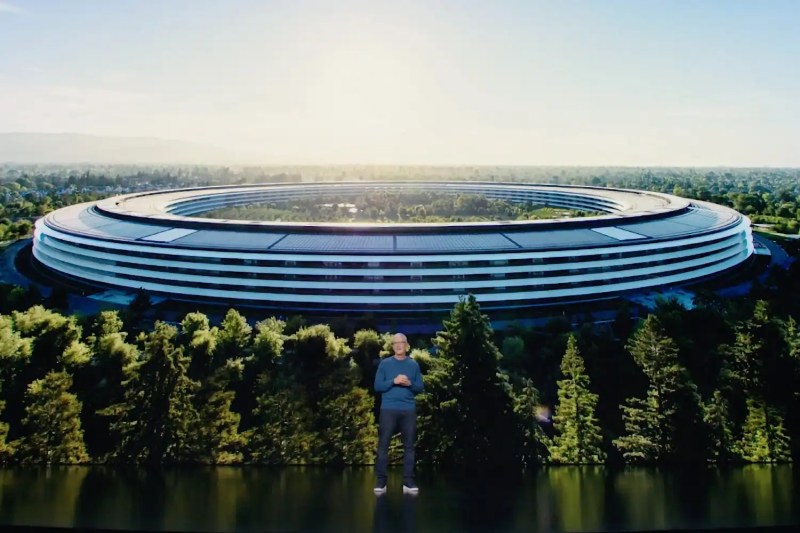
Apple Park Tim Cook AAPL

AAPL is a California-based computer company that became the most successful smartphone company in the world.

AAPL defined by Apple

Here’s how Apple defines itself:

Apple revolutionized personal technology with the introduction of the Macintosh in 1984. Today, Apple leads the world in innovation with iPhone, iPad, Mac, Apple Watch, and Apple TV. Apple’s five software platforms — iOS, iPadOS, macOS, watchOS, and tvOS — provide seamless experiences across all Apple devices and empower people with breakthrough services including the App Store, Apple Music, Apple Pay, and iCloud. Apple’s more than 100,000 employees are dedicated to making the best products on earth, and to leaving the world better than we found it.

Key AAPL history

From Apple I to iMac

Apple was founded in 1976 by Steve Jobs (Steve), Steve Wozniak (Woz), and (briefly) Ronald Wayne as a business partnership: Apple Computer Company. The following year it became Apple Computer, Inc. The company’s first product was the Apple I, a personal computer hand-built by Woz and sold in part-completed kit form. The Apple II and Apple III followed.

The modern Apple as we know it today began in 1983, with the launch of the first personal computer with a graphical user interface, the Lisa. Way too expensive to succeed, it was replaced by the Macintosh in 1984, launched with the single showing of a Ridley Scott commercial during the Super Bowl. The Macintosh transformed the world’s understanding of what a computer was, and would eventually lead to Microsoft adopting the GUI approach.

Steve Jobs and then Apple-CEO John Scully fell out in 1985, when Steve wanted to focus on the Macintosh while Scully wanted to put more attention on the Apple II, which was still selling well. That led to Steve being forced out of the company and going off to form NeXT.

Apple focused on selling Macintosh models at the highest possible margins, but would eventually fall foul of a mix of unsustainable pricing in the face of competition from Windows machines, and an overly complex product lineup. By 1996, the company was in trouble, and in 1997 Steve was brought back, along with the NeXT operating system, which would eventually form the basis of Mac OS X.

Steve simplified the Mac lineup and had industrial designer Jony Ive work on a whole new look for a consumer desktop Mac, the colorful iMac. The iMac, like the original Macintosh, again changed the world’s understanding of what a computer was, and who should want one.

From Apple Computer, Inc. to Apple, Inc.

In 2001, Apple launched the iPod. Although this wasn’t the first mp3 player, it was massively better than anything on the market at the time, and succeeded in turning a geeky piece of technology into a consumer electronics product with mass-market appeal.

The success of the iPod paved the way into other mobile devices. Apple was working on what would eventually become the iPad, when Steve realized that this was the basis of a smartphone. He diverted the team’s work into this, to launch the iPhone in 2007. The iPad launched later, in 2010.

The iPhone was yet another transformational product. While most other smartphones of the time were clunky devices with a keyboard and stylus, the iPhone was a sleek-looking device operated with a finger, and so simple that no user guide was needed. It was with the launch of the iPhone that Apple Computer, Inc. was renamed to Apple, Inc.

From Intel to Apple Silicon

While the iPhone, iPad, Apple Watch, and more are made with Apple-designed processors, the Mac lineup has historically relied on third-party companies for its CPUs. Over the years, Macs progressed from Motorola 680000 series chips through PowerPC to Intel.

In 2020, Apple began a two-year transition to the final stage in that journey, with Macs too finally getting Apple-designed chips. The first such is the M1 chip, used in the latest Mac mini, MacBook Air, and 13-inch MacBook Pro. Other Apple Silicon Macs followed.

AAPL today

Apple is one of the largest companies in the world. It was the first publicly traded company to hit a trillion-dollar valuation in 2018, $2 trillion in 2020, and $3T in 2022.

The company’s product lineup includes five different Mac families (MacBook Air, MacBook Pro, iMac, Mac Pro, and Mac mini); four iPad ranges (iPad mini, iPad, iPad Air, iPad Pro); four iPhone 12 models (12, 12 mini, 12 Pro, 12 Pro Max); three main Apple Watch models (SE, Series 3, Series 6); as well as other products, including Apple TV, AirPods, and HomePod mini.

In addition to hardware sales, Apple derives a growing proportion of its income from Services, including the App Store, iCloud, Apple Music, and Apple Pay.

Live blog: Apple’s fiscal year Q4 2017 earnings call

Moments ago, Apple announced the results for its fiscal fourth quarter of 2017, reporting profits of $10.7 billion on revenue of $52.6 billion. The company sold 46.7 million iPhones, 10.3 million iPads, and 5.4 million Macs. As usual, next up on the docket is Apple’s quarterly earnings call, which will kick-off at 2PM PT/5PM ET and we’ll have live coverage right here…


Expand
Expanding
Close

Apple announces Q4 2017 revenue of $52.6b: 46.7m iPhones, 10.3m iPads, 5.4m Macs, next quarter guidance $84b-$87b

We’re just hours away from the launch of the iPhone X (ahhh!), but first Apple has to report how its last quarter went which includes initial iPhone 8 and iPhone 8 Plus sales. iPhone X only became available for pre-order last Friday and won’t appear in today’s results.

In addition to the iPhone 8 and iPhone 8 Plus, Apple’s fiscal year 2017 fourth quarter results also include Apple Watch Series 3 and Apple TV 4K.

So how did Apple perform last quarter with the iPhone X looming over the iPhone 8 and iPhone 8 Plus? Apple reports $52.6b in revenue and $10.7b profit from 46.7m iPhones, 10.3m iPads, and 5.4m Macs sold. Next quarter Apple forecasts revenue between $84 billion and $87 billion (that’s a lot).

FY17 Q4 results compare to the previous quarter’s $45.4 billion in revenue, $8.72 billion in profit, 41 million iPhones, 11.4 million iPads, and 4.29 million Macs. In the same quarter a year ago, Apple reported $46.9 billion in revenue, $9 billion in profit, 45.51 millions iPhones sold, 9.28 million iPads sold, and 4.89 million Macs sold.

Full press release after the break, and stick around for our earnings call live blog at the top of the hour:


Expand
Expanding
Close

Analysts expecting Apple’s Q4 revenue to be bang in the middle of company’s forecast

Apple is due to report its fiscal Q4 (calendar Q3) earnings later today, and Wall Street analysts expect the company to report revenue bang in the middle of the company’s guidance.

Perhaps reflecting the fact that it was difficult even for Apple to judge how many people would buy the iPhone 8 in September versus holding out for the iPhone X, the company gave unusually wide guidance this time around …


Expand
Expanding
Close

In unusual step, Apple touts positive comments from early iPhone X reviews

Apple has just issued a press release rounding up some positive comments from early reviewers of the iPhone X. This is an unusual step from the company, which is taking a different tack to reviews of this year’s flagship phone.

The press release has brief quotes from reviews by Buzzfeed, CNET, Creative Live Blog, the Evening Standard, Mashable, TechCrunch and the Wall Street Journal …


Expand
Expanding
Close

Apple’s Irish data center saga may finally be over as local residents’ appeal rejected

After more than two years and numerous false-starts, it appears that Apple has now cleared the final hurdle standing in the way of building a $1B data center in Ireland. A bid by two local residents to pursue a High Court appeal has been refused.

Objections by a small number of local residents delayed things from the start, with the local planning body responding by asking Apple to respond to five concerns …


Expand
Expanding
Close

Comment: Apple seems to be turning the delayed iPhone X launch to its marketing advantage

They say when life gives you lemons, make lemonade, and it looks to me like Apple may be doing just that with the delayed launch of the iPhone X. The company appears to be taking a new approach to marketing this year’s flagship phone.

Apple normally has a very regimented approach to the way they the press – and hence the public – get exposed to a new iPhone, with two distinct phases …


Expand
Expanding
Close

iPhone 8 sees Apple bounce back in China, sales up 40% after six quarters of decline

The iPhone 8 launch has seen Apple return to growth in China after six consecutive quarters of declining sales in the world’s most populous country. The report comes from Canalys, which says that iPhone sales grew by a dramatic 40% year-on-year.

The company says that Q3 sales, which include the iPhone 8, hits 11 million, up from 8M in the same quarter last year. However, warns the firm, that growth could be short-lived despite excitement about the iPhone X …


Expand
Expanding
Close

Google coy about rumored $3B payment to Apple, deal likely to worth even more in future

It was suggested back in August that Google was paying Apple $3B this year to remain the default search engine on iOS devices. That’s up from the $1B it’s known to have paid in 2014, and – as it’s almost all profit – is estimated to account for a whopping 5% of Apple’s total operating profit for the year …


Expand
Expanding
Close

Apple hires Channel 4 TV exec as company reportedly plans Apple Store-friendly original video content

Apple video service

Apple’s latest hire to help in its push for original video content is BBC executive Jay Hunt, which is notable as it is the company’s first high-profile broadcasting executive hire outside of the US, Financial Times reports. That news comes today as a separate report details Apple’s reportedly not-so-edgy approach as it shops for content…


Expand
Expanding
Close

Bloomberg suggests Apple has lost its supply-chain mojo over iPhone X

A Bloomberg piece points to weak sales by several key Apple suppliers, and suggests this is evidence that the iPhone maker has lost its famed supply-chain management expertise.

Thanks to Taiwan rules requiring the disclosure of monthly sales, we can track endemic weakness at its exclusive processor maker Taiwan Semiconductor Manufacturing Co. and primary assembler Hon Hai Precision Industry Co.

Columnist Tim Culpan argues that with the iPhone X, Apple let its desire for innovation get ahead of its ability to source the necessary components …


Expand
Expanding
Close

Apple’s new Chicago flagship store is more than an architectural marvel [Gallery]

Apple opened a new flagship store in downtown Chicago yesterday and it is stunning. Sitting right along the Chicago River, Apple Michigan Avenue has been moved south about 5 blocks. 14 years ago Apple opened its first flagship store here in Chicago, and now they are doubling down on their mission: stores aren’t just for making money.


Expand
Expanding
Close

App developer who’s been using Animoji name since 2014 sues Apple for trademark infringement

An iOS app developer who’s been using the name ‘Animoji’ since 2014, and registered it as a U.S. trademark the same year, is suing Apple for trademark infringement. Apple last month announced Animoji as a headline feature of the iPhone X.

He claims that Apple was aware of his trademark both because his app has been in the iOS app store since 2014 and, he alleges, because the company tried to buy the name …


Expand
Expanding
Close

Qualcomm CEO expects to resolve differences w/ Apple, but there’s no end in sight

Apple and Qualcomm are currently engaged in a well-publicized and increasingly bitter legal battle over patents and licensing, but Qualcomm is still hopeful things will work themselves out. Speaking at the Wall Street Journal’s D.Live conference, Qualcomm CEO Steve Mollenkopf touted that Qualcomm has a “long history” of settling issues like the Apple one…


Expand
Expanding
Close

Report: Apple entered deep acquisition talks w/ health clinic startup as it mulls entry into primary care

Top image: Conan pokes fun at congressman’s iPhone/healthcare argument with mock ‘Apple Healthcare’ ad

According to a new report from CNBC, Apple entered “deep” talks with Crossover Health about an acquisition. The move comes as Apple continues its push into healthcare and Crossover Health is a startup that provides on-site medical care to a number of employers.


Expand
Expanding
Close