Mac

See All Stories

Apple’s Mac lineup consists of MacBook, MacBook Air, MacBook Pro, iMac, Mac Pro, and Mac Mini. The Mac runs macOS for its operating system.
Mac lineup

History

The Mac is Apple’s lineup of computers, and it can be considered the company’s oldest product. The name “Mac” comes from the original Macintosh, which was introduced in 1984 and is also considered the first personal computer for the masses to have a graphical user interface. The first Macintosh hit the stores on January 24, 1984, costing $2,945.

Among all these years, Apple has introduced many different Mac models, ranging from desktops to laptops to professional tower machines. The current lineup consists of the MacBook Air, MacBook Pro, Mac mini, iMac, and Mac Pro. However, there have been other Mac models were discontinued, such as the eMac, MacBook, and iMac Pro.

The history of modern Macs began in 1998, a year after Steve Jobs returned to Apple. Apple had dozens of Macintosh computers at that time, but Steve decided to rethink the entire lineup. In 1998, Apple announced the iMac G3, which ditched the floppy disk and serial ports in favor of USB connectors.
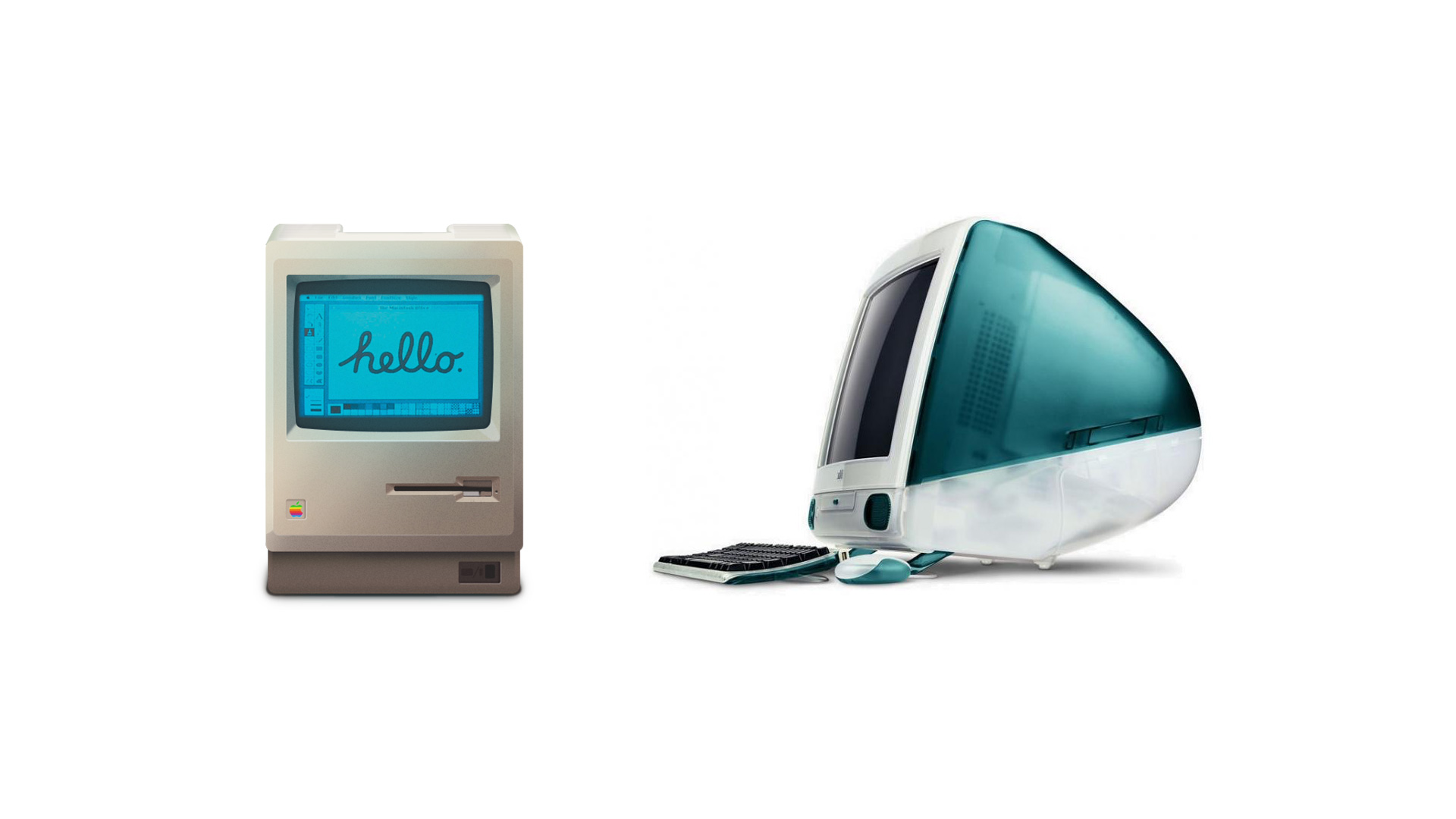
Macintosh and iMac G3.

Unlike the Macintosh, the first iMac was considered a huge success — not only for its technology, but also for its unique design with colorful translucent plastic. Apple quickly expanded the Mac lineup with other models, which included the iBook and PowerBook (which became the MacBook and MacBook Pro) and the PowerMac, which is now the Mac Pro.

macOS

What makes a Mac the Mac is the macOS operating system, which has also had a long history since the introduction of the first Macintosh. Initially called Mac OS, the operating system was rebuilt when Steve Jobs returned to Apple.

The first version of Mac OS X was released on March 24, 2001 with a new interface that is still present in some ways in current versions of macOS. Apple’s desktop operating system comes with many free applications such as Pages, Keynote, Numbers, iMovie, and GarageBand.

With macOS, users also have access to deep integrations with other Apple devices. For instance, you can answer calls and send SMS from your iPhone using your Mac. Handoff lets you switch from one device to the other and pick up where you left off. Apple Watch users can unlock their computer without entering a password, and you can even copy and paste between devices.
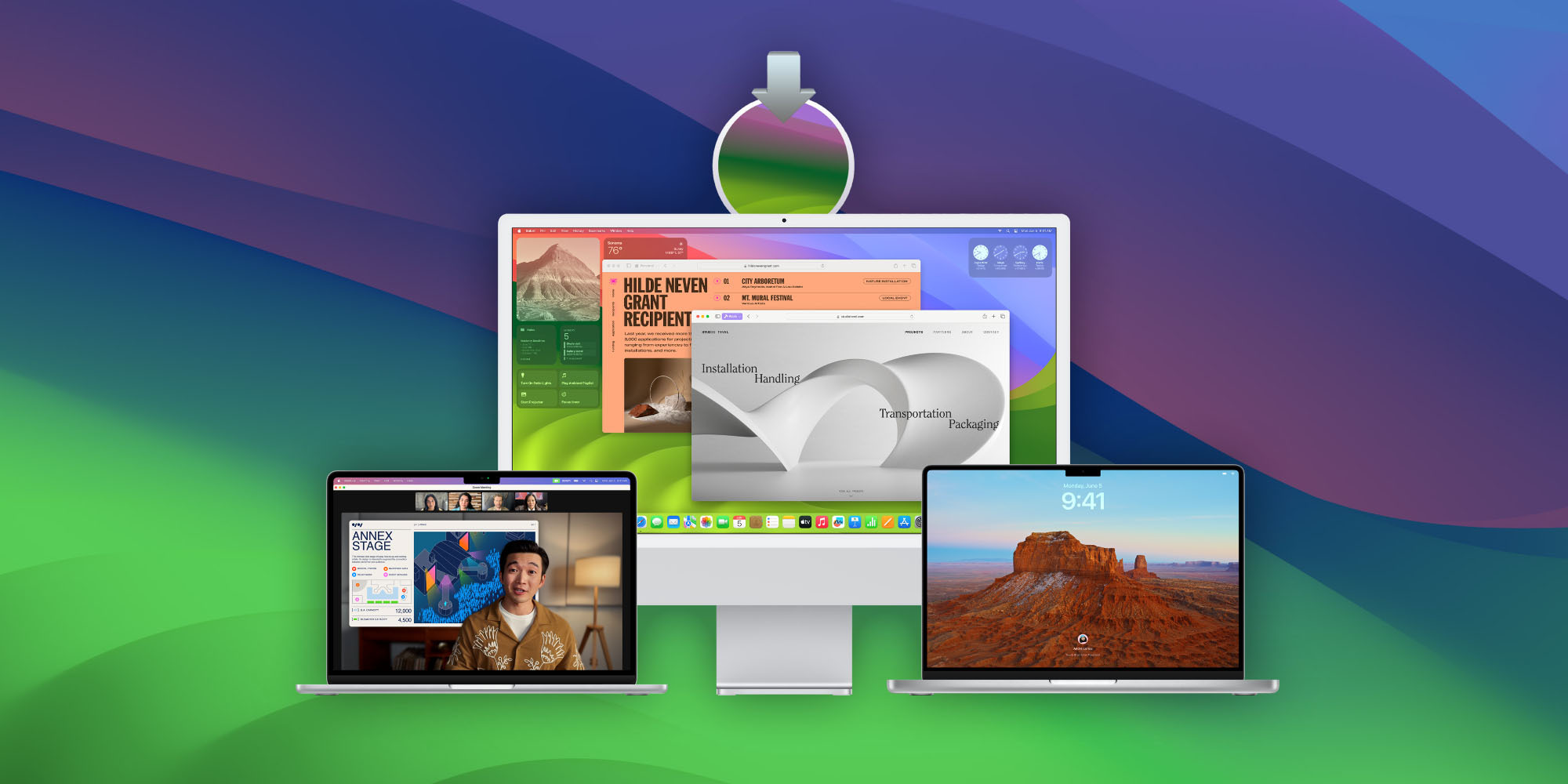
macOS Sonoma

Apple’s desktop operating system is also integrated with services offered by the company, such as iCloud, Apple Music, and Apple TV+.

The current version of macOS is Sonoma (version 14), which features new slow-motion screen savers, widgets on desktop, camera effects on FaceTime and other apps, web apps, passkey sharing, improved PDF support, and Game Mode. The update also comes with a new API that lets developers easily port Windows games to macOS.

Architecture Transitions

The Mac has had three major architecture transitions in its history. Apple’s first computers ran on Motorola processors, but the company decided to migrate to the new PowerPC platform in 1994. While this brought benefits at the time, the PowerPC processors were not delivering what Apple expected.

It was in 2005 that Apple confirmed the transition from PowerPC to Intel. Intel processors had become faster and more efficient than PowerPC, which enabled the development of new Mac computers that were more powerful and also more compact. Developers have been given access to a Developer Transition Kit running Mac OS X Tiger with Intel Pentium 4 to update their apps before the transition begins.
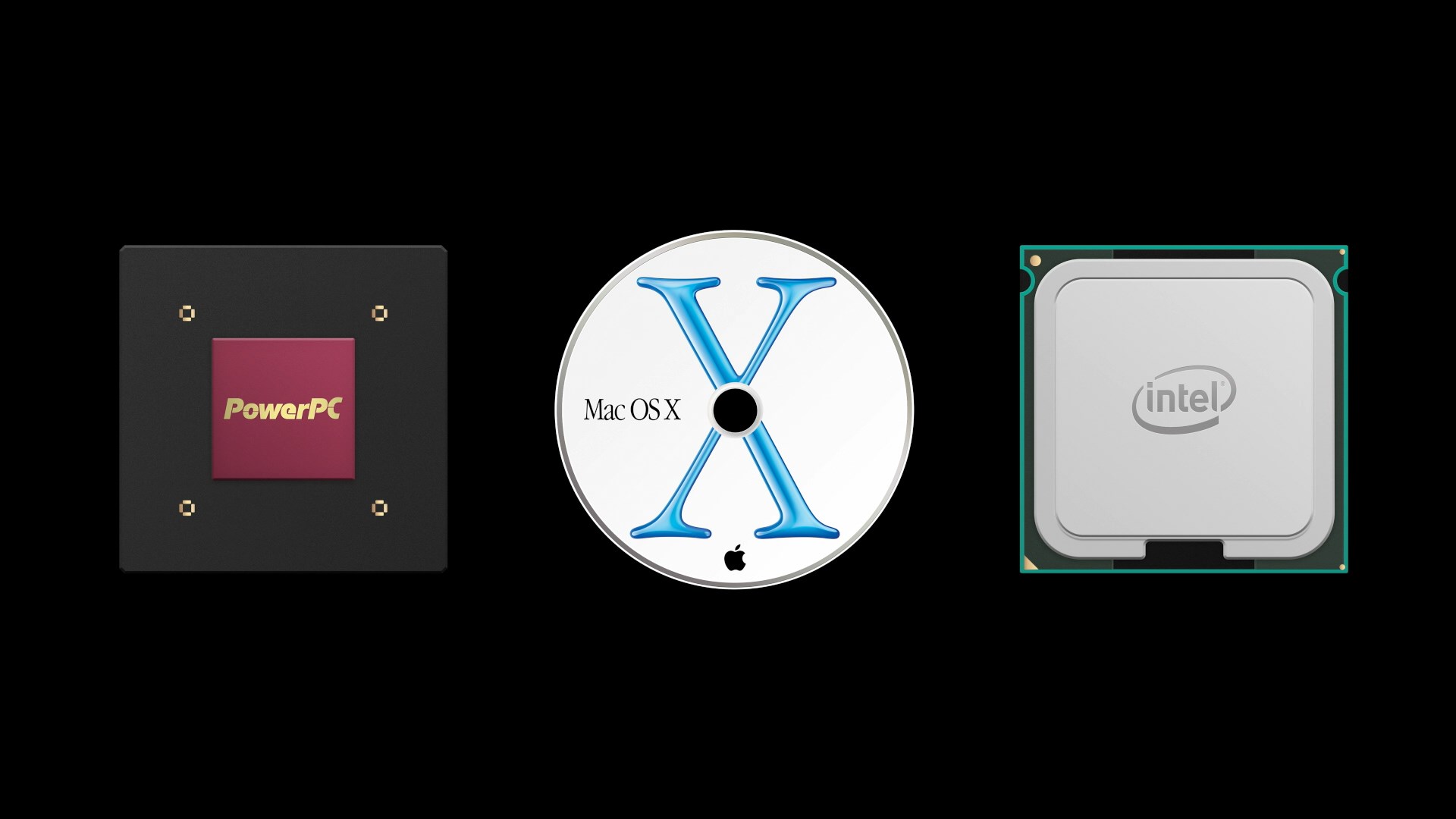
Power PC, Mac OS X, and Intel processor.

Apple said that the transition would begin in June 2006 and be finished by the end of 2007. However, the transition to Intel was fully completed in August 2006 when the company replaced the PowerMac with the new Intel Mac Pro.

As the years went by, Apple once again felt the need to have more powerful and efficient processors for its computers. This time, the company was already working on its own chips for the iPhone and iPad. In June 2020, Apple confirmed that it was changing the architecture of the Mac, now from Intel to ARM chips, which are called Apple Silicon.

Apple offered a Mac mini DTK running on the same A12Z Bionic chip as the 2020 iPad Pro. This way developers could once again update their apps ahead of the transition. In addition to being more powerful and energy efficient, the ARM architecture of Apple Silicon chips has enabled Macs to run iOS apps for the first time.
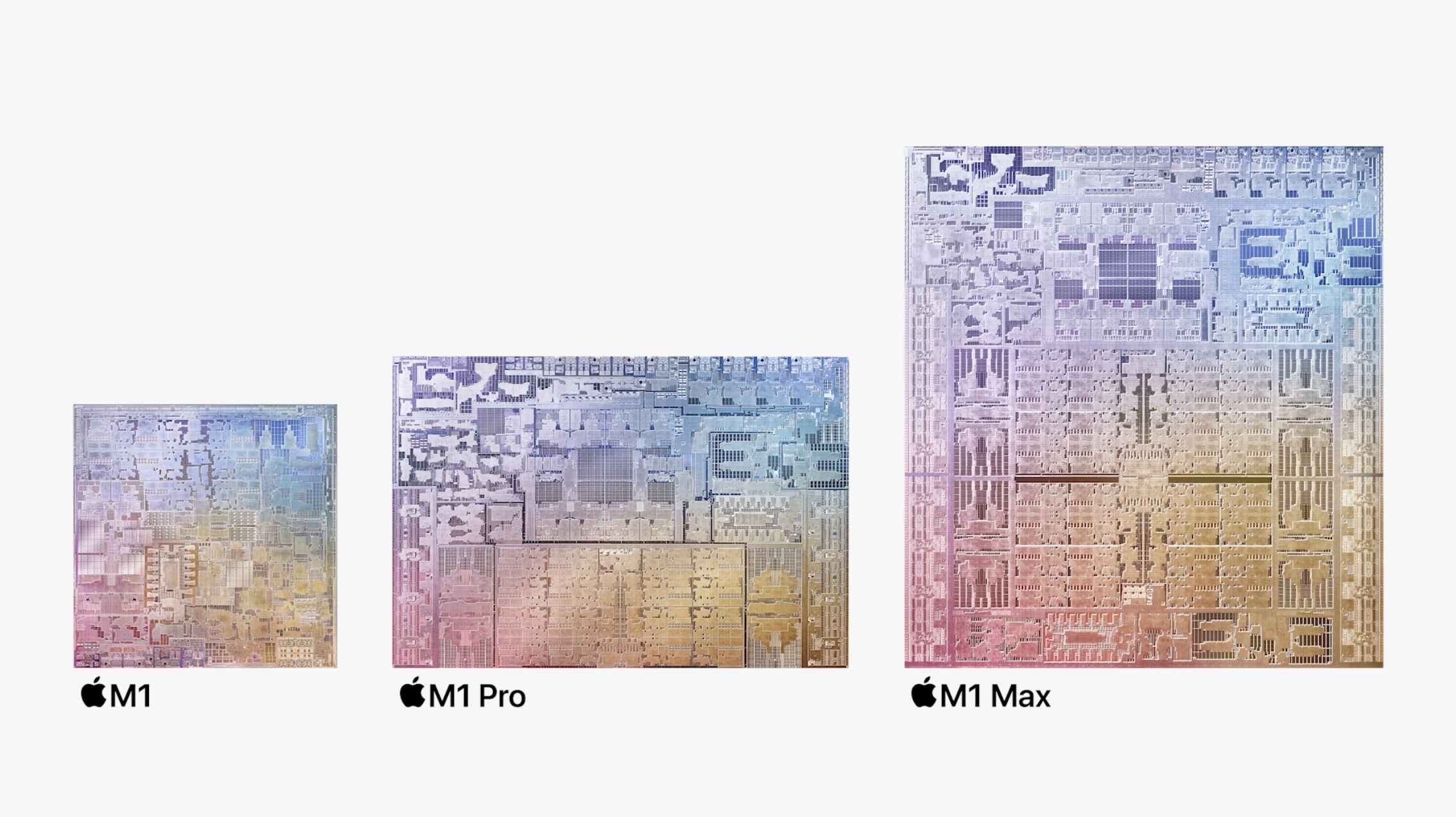
Apple M1 chip | Mac

The first Apple Silicon Macs were released in November 2020 with the M1 chip. The company later introduced more powerful variants of the M1 chip, called M1 Pro, M1 Max, and M1 Ultra. Macs with Apple Silicon have become known for being more powerful while consuming much less power, which has resulted in MacBooks with extended battery life.

In June 2022, Apple introduced the M2 chip, which is around 20% faster than the M1 and also supports more RAM. M2 also has more powerful variants: M2 Pro, M2 Max, and M2 Ultra.

Apple unveiled the M3, M3 Pro, and M3 Max chips in October 2023. The main highlight of this generation is the 3 nanometer technology, the same as the A17 Pro chip. The M3 family also features better GPUs with support for hardware-accelerated ray-tracing.

Current Mac lineup

Apple currently sells a variety of Mac computers, which includes MacBooks, Mac mini, iMac, and Mac Pro. While some of the Macs have already been updated with an Apple Silicon chip, others remain with Intel processors.

MacBook Air

The MacBook Air is Apple’s most affordable laptop and it has become popular for its light, compact design. The 2022 version is powered by the M2 chip and is offered with 8GB, 16GB, or 24GB of RAM. Plus, it has a new, edge-to edge 13.6-inch Retina display.

The laptop features Touch ID and has two Thunderbolt 3 compatible USB-C ports, a MagSafe connector for charging, and a headphone jack. Prices start at $1099 in the US. It’s offered in silver, space gray, starlight, and midnight.
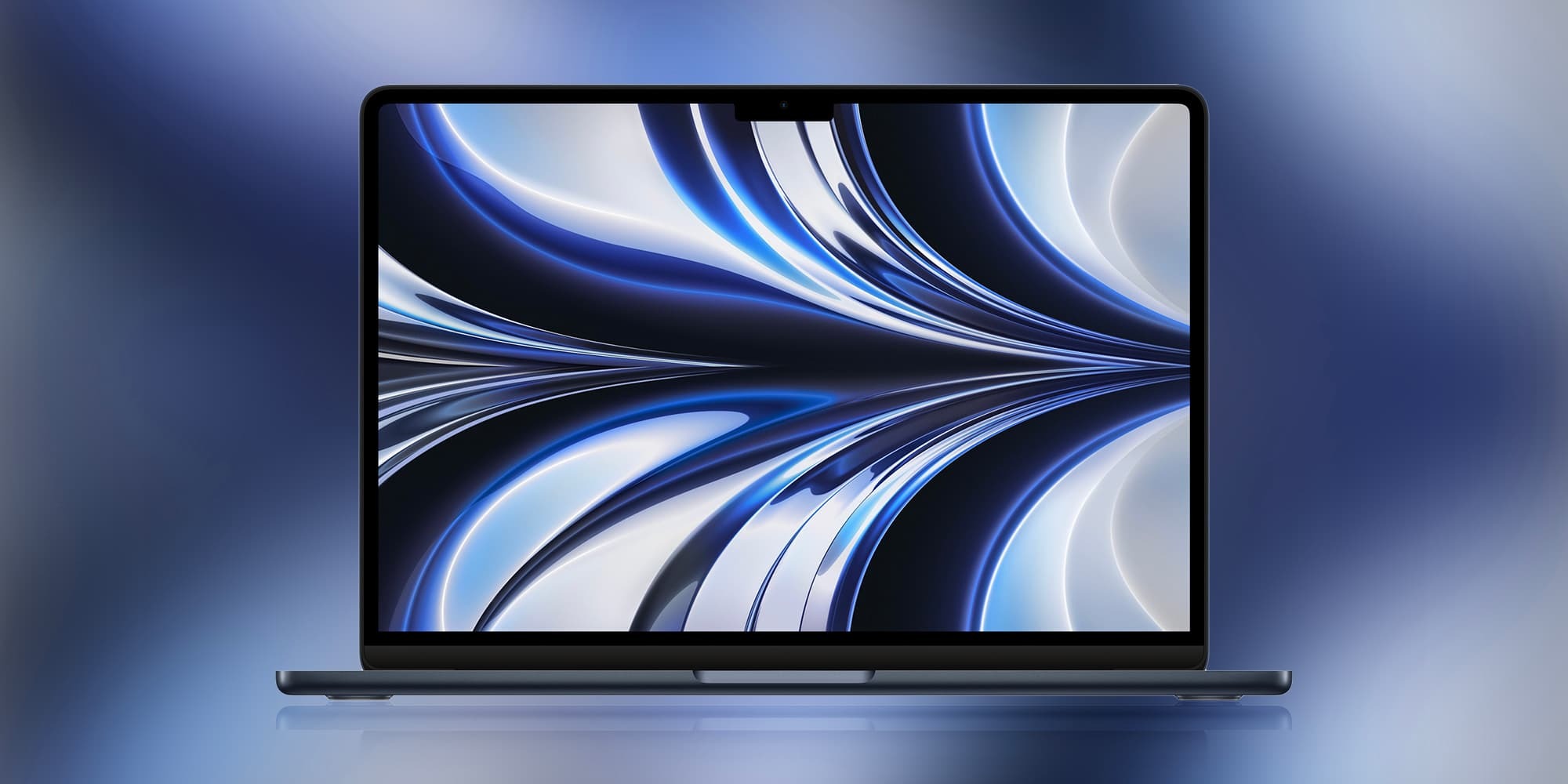
M2 MacBook Air.

A year later, Apple introduced the first 15-inch MacBook Air. It has essentially the same hardware as the smaller version with a similar design, but with a larger display. Prices start at $1299 in the US.Apple is still selling the M1 MacBook Air for prices starting at $999.

MacBook Pro

The 2023 MacBook Pro is available in multiple versions, and customers can choose between 14-inch and 16-inch screen sizes. For the first time, Apple has introduced a less expensive version of the 14-inch MacBook Pro with the base M3 chip. This version has the same design and display as the high-end versions, except that it only has two USB-C ports instead of three.
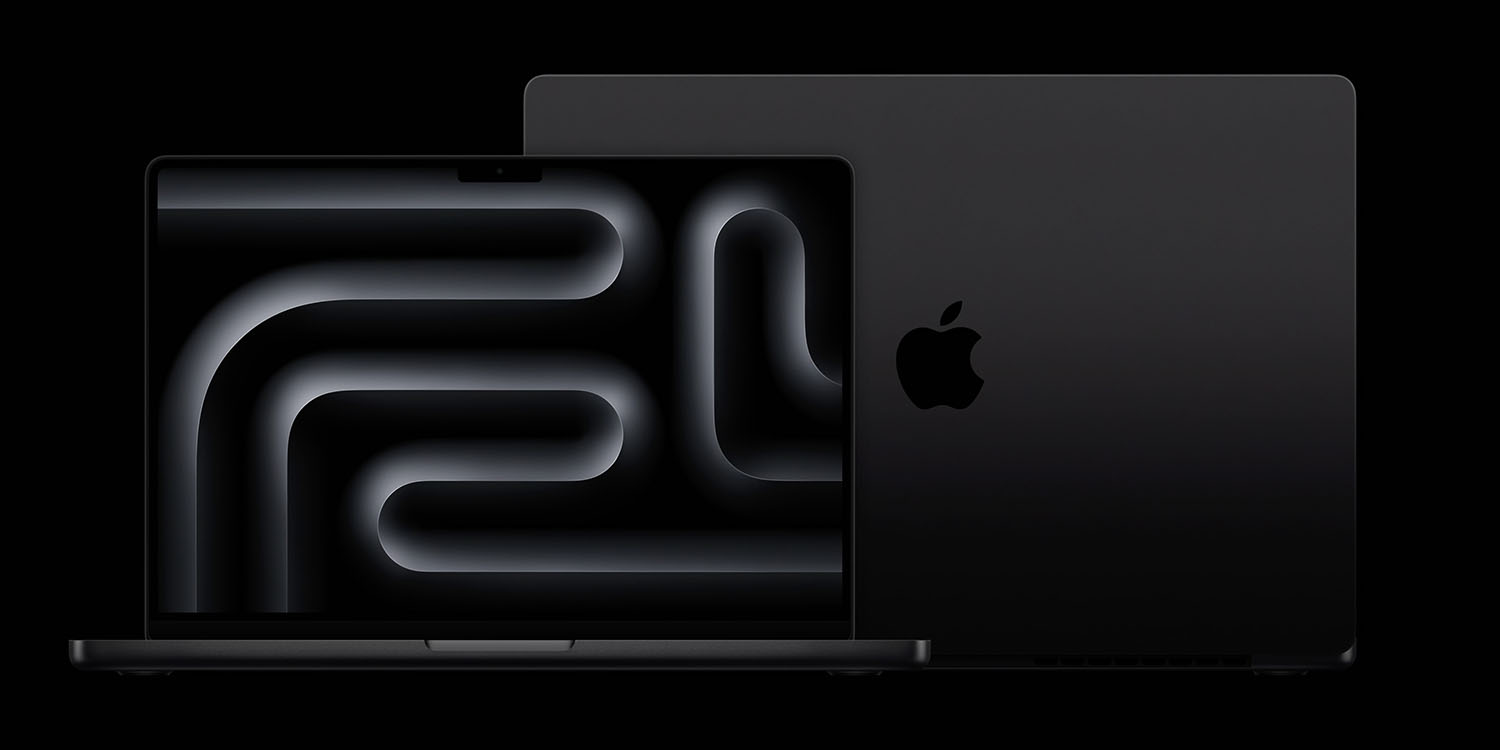
M3 MacBook Pro

The most expensive versions of the MacBook Pro are equipped with the more powerful M3 Pro and M3 Max chips. The laptop can be configured with up to 128GB of RAM and 8TB SSD. These versions also come in a new Space Black color.

Unlike the MacBook Air, the MacBook Pro comes with an HDMI port and an SD card reader. It also features MagSafe and Touch ID on the keyboard. Apple no longer sells MacBooks with the Touch Bar. Prices start at $1,599 in the US.

Mac mini

Mac mini is the cheapest Mac currently available since it’s basically a desktop without a built-in display or other peripherals. The base model with the M2 chip features one Ethernet port, two USB-C/Thunderbolt 4 ports, HDMI 2.0, two USB-A ports, and a headphone jack.

Apple sells a more powerful version of the Mac mini with the M2 Pro chip, which also comes with four USB-C ports instead of two. Mac mini can be configured with up to 32GB of RAM and up to 8TB of storage. Customers can also opt for a 10 Gigabit Ethernet port. The Apple Silicon Mac mini is only available in silver, while the now discontinued Intel model was available in space gray.
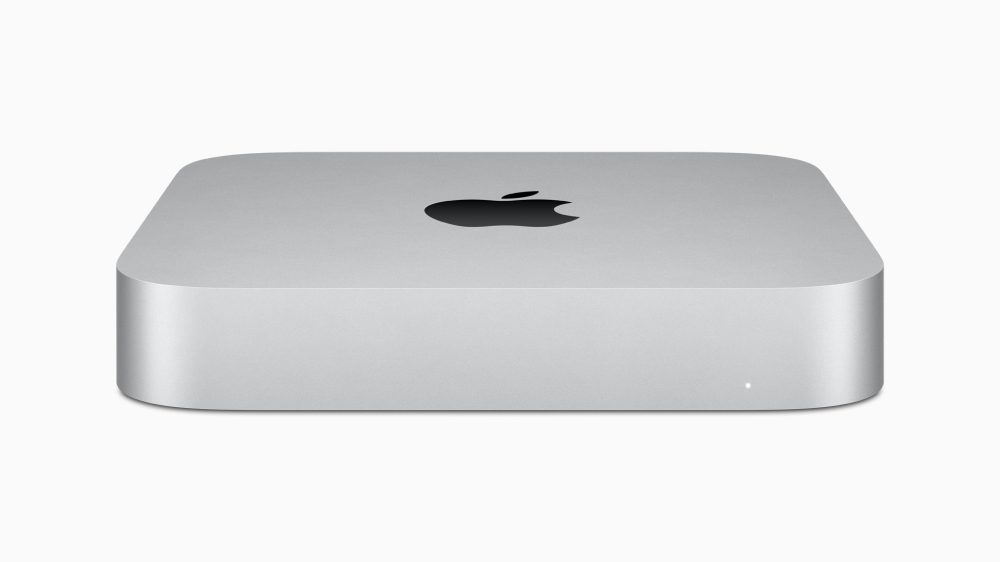
Apple Silicon Mac mini.

Prices for the Mac mini start at $599 in the US. Again, it’s worth noting that it doesn’t come with a keyboard or mouse in the box – you need to buy them separately or use your current ones.

Mac Studio

Mac Studio represents a new category between Mac mini and Mac Pro. It features a design based on the Mac mini, but with a taller body to support the more powerful hardware and also a better cooling system.

The new Mac Studio is targeted at professional users who work with demanding tasks such as video editing, 3D rendering, and machine learning. 

Embraced by creative pros everywhere, Mac Studio now delivers next-generation power in the form of the lightning-fast M2 Max and the boundary-breaking M2 Ultra. It packs outrageous performance and extensive connectivity in an unbelievably compact form, putting everything you need within easy reach and transforming any space into a studio.

By default, Mac Studio already comes with the M2 Max chip, 32GB of RAM, and 512GB SSD storage. A more expensive option lets users customize Mac Studio with M2 Ultra. While M2 Max has a 12-core CPU and a 30-core GPU, M2 Ultra doubles all of those specs. The new chip has a 24-core CPU and a 60-core GPU.

Mac Studio can also be configured with up to 192GB of RAM and 8TB of SSD storage. The machine offers up to six Thunderbolt ports, 10 Gigabit Ethernet, headphone jack, two USB-A ports, and one HDMI port.
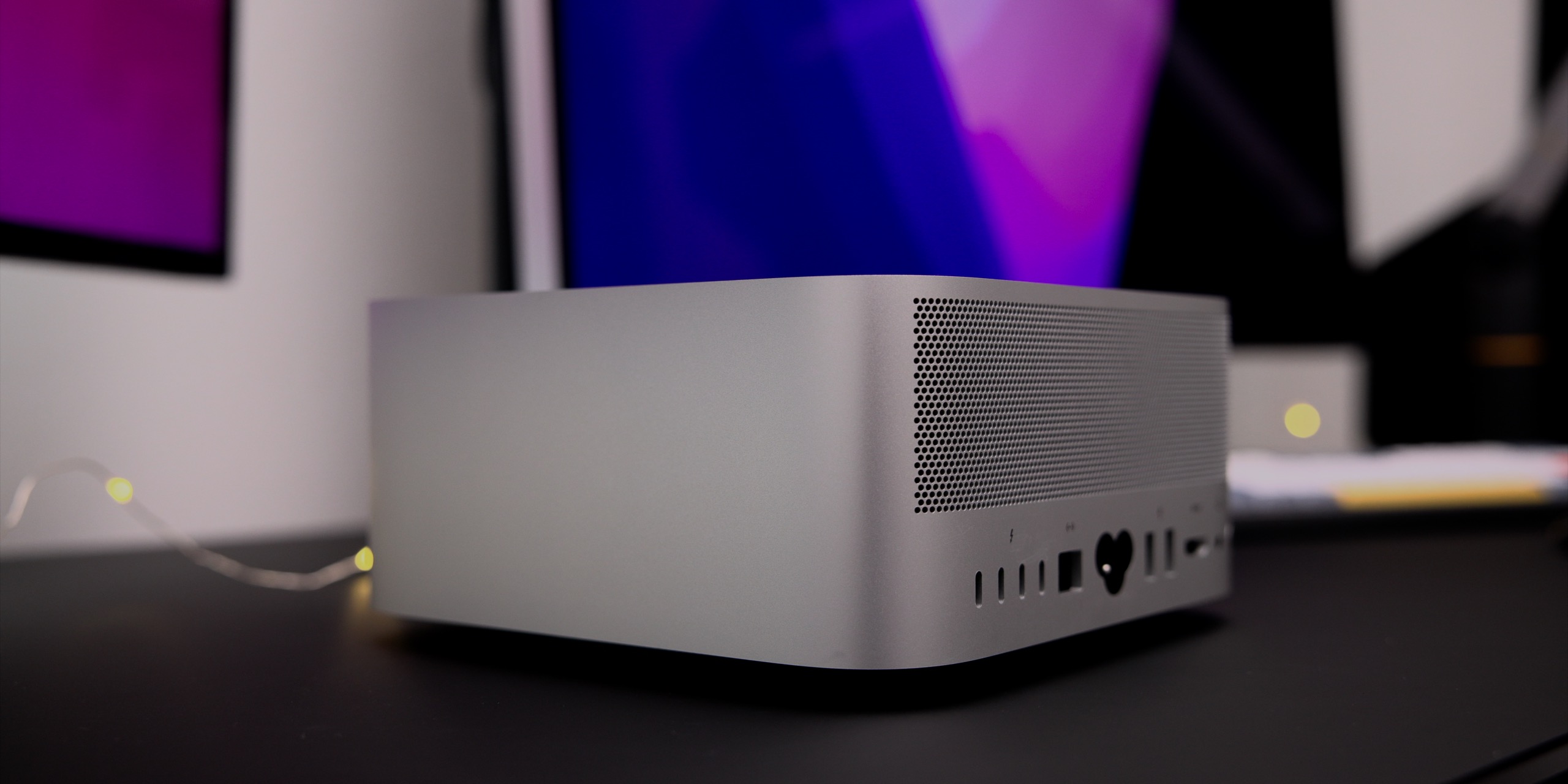
Mac Studio

Apple has been rumored to be working on new versions of this machine with the M3 Max and M3 Ultra chips. However, these versions may not be ready until 2025. Bloomberg’s Mark Gurman said in November last year that the M3 Ultra chip “hasn’t yet gone into broad testing” inside Apple.

In the US, prices for the Mac Studio with M2 Max chip start at $1999. The M2 Ultra chip version starts at $3999. Just like the Mac mini, Mac Studio doesn’t come with a keyboard and mouse in the box. You can find accessories for your Mac Studio here.

iMac

iMac is Apple’s most popular desktop computer with an all-in-one construction. It features a 4.5K display in its 24-inch version and a 5K display in the 27-inch version. At the same time, Apple still sells an entry-level iMac with a regular 1080p display.

The 24-inch iMac is the first to feature the M1 chip, the same as in the Mac mini, MacBook Air, and MacBook Pro. This allowed Apple to introduce a completely redesigned model with a slimmer design, which is also offered in seven new colors. Customers can customize the new 24-inch iMac with up to 16GB of RAM and 2TB of storage.
Site default logo image

The company ships the 24-inch iMac with Magic Mouse and Magic Keyboard, plus a Lightning cable for recharging accessories. Prices in the US start at $1299. Apple has discontinued its old 21.5-inch iMac and the 27-inch iMac 5K.

Mac Pro

Mac Pro is a computer built for professional users who depend on extremely powerful hardware. Available in tower and rack versions, it has a completely modular design. That means users can replace RAM, SSD, GPU, and other internal components.

By default, it features four USB-C/Thunderbolt 3 ports, two USB-A ports, and two 10Gb Ethernet ports. However, the ports can be expanded using the PCI Express slots. Apple also ships the computer with a Magic Mouse and Magic Keyboard, but it does not come with an external monitor included.

All models feature Intel Xeon W processors, which are the most powerful processors offered by Intel. Consumers can configure Mac Pro with up to 28-core processor, 1.5TB RAM, and 8TB of SSD storage. In addition to supporting multiple dedicated GPUs, Apple also offers the Afterburner card — which accelerates the decoding of ProRes videos.

The company recently updated the Mac Pro with new graphics card modules, which include Radeon Pro W6800X and Radeon Pro W6900X.

Site default logo image

Mac Pro prices start at $5999 in the US.

Rumors about upcoming Macs

Top stories about the Mac

Apple patched a major SSL bug in iOS yesterday, but OS X is still at risk

Site default logo image

Update: Apple says an OS X fix is coming soon.

Yesterday Apple released iOS update 7.0.6 alongside new builds for iOS 6 and Apple TV  that it said provided “a fix for SSL connection verification.” While Apple didn’t provide much specific information on the bug, it wasn’t long before the answer was at the top of Hacker News. It turns out that minor security fix was actually a major flaw that could in theory allow attackers to intercept communications between affected browsers and just about any SSL-protected site. Not only that, but the bug is also present in current builds of OS X that Apple has yet to release a security patch for.

Researchers from CrowdStrike described the bug in a report:

“To pull off the attack an adversary has to be able to Man-in-The-Middle (MitM) network connections, which can be done if they are present on the same wired or wireless network as the victim. Due to a flaw in authentication logic on iOS and OS X platforms, an attacker can bypass SSL/TLS verification routines upon the initial connection handshake. This enables an adversary to masquerade as coming from a trusted remote endpoint, such as your favorite webmail provider and perform full interception of encrypted traffic between you and the destination server, as well as give them a capability to modify the data in flight (such as deliver exploits to take control of your system),”

Adam Langley, a senior software engineer at Google, also wrote about the flaw on his blog ImperialViolet and created a test site to check if you have the bug (pictured above):
Expand
Expanding
Close

Site default logo image

Mac users four times more likely to run latest OS than Windows users

Some sums done by ComputerWorld show that Mac users are four times more likely to upgrade to the latest available version of the operating system than Windows users.

Microsoft has convinced just 11.6 percent of Windows users who acquired their system since 2001 and still actively use it to go online to migrate to the current edition of its operating system […]

Apple’s convinced 41.6 percent of Mac users who acquired their system since 2001 and still actively use them online to adopt the current edition of the OS.

A large part of it is cost, of course: Mavericks was a free upgrade, and previous upgrades have been priced far more competitively than Windows.

But Apple has also offered a simpler upgrade path, adding features rather than making major changes to the core user-interface. OS X also operates more efficiently, allowing Mavericks to run well on far older hardware than is the case for Windows 8.

Apple’s two-step verification for Apple IDs arrives in Canada, France, Germany, Japan, Italy, & Spain

Site default logo image

Back in May of last year, a long list of readers in countries around the world reported having access to Apple’s two-step verification security feature for their Apple ID. Shortly after the news broke, the feature disappeared in many countries signaling it had been launched prematurely. The only officially supported countries listed on Apple’s website included the “U.S., UK, Australia, Ireland, and New Zealand.” However, today the feature has appeared in several new countries including Canada, France, Germany, Japan, Italy, & Spain. Apple has also updated its support pages for two-step verification here and here to list the new countries. 


Expand
Expanding
Close

How-to: Use Preview to put signatures on PDF’s, Pages Documents, and Mail messages

Site default logo image

As we have written about in previous articles, Preview is a valuable tool in OS X that does not get a lot of press. In this article, we will review how you can use Preview to capture your signature using the iSight camera on a Mac, then use it in Pages documents, to sign PDF documents, and as an image in your signature in the Mail app.


Expand
Expanding
Close

Apple loses key iPad, Mac operations VP Rita Lane to retirement

Site default logo image

Rita Lane, Apple’s vice president of operations for the iPad, Mac desktops, and Mac accessories, has retired from the company, according to her public LinkedIn profile. As vice president of operations, Lane was in charge of the supply chain and manufacturing for iPads, computers like the iMac, and Apple’s Mac accessories.

Due to her position, Lane was likely instrumental in the iPad’s rapid growth as a product and emergence in society over the past few years, making the departure a significant loss for Apple. However, the company likely has other experienced operations managers who could fill Lane’s role. Her exact successor is unknown…


Expand
Expanding
Close

Mac Pro availability continues to deteriorate with shipping estimates slipping to April

9to5Mac originally documented the supply issues with the new Mac Pro in December, but even today availability does not appear to have improved. In fact, it seems to be getting worse. Apple’s European, Chinese and Australian online stores (including the UK) are now reporting ‘April’ dispatch estimates.


Expand
Expanding
Close

Opinion: Will the next Mac mini be a lot more mini than ever before?

Site default logo image

When it first launched in 2005, the Mac mini was almost unimaginably small. The original aim of the machine was to convert owners of desktop Windows machines. Because those people already owned monitors, keyboards and other peripherals, selling them just the computer itself would enable them to switch to Mac for far less than the cost of buying an iMac.

The typical Windows desktop box of that era looked like this:

A system unit that measured just 6.5 inches square and only 2-inches thick was an incredible feat of engineering. Today, however, it looks rather less impressive … 
Expand
Expanding
Close

How to watch live streams of the Sochi 2014 Winter Olympics on your iPhone & iPad

Site default logo image

With the Sochi 2014 Winter Olympics officially kicking off with opening ceremonies today at 11 AM EST/ 2 PM PST, you’re probably wondering how to watch live streams and keep up to date with events from your iPhone, iPad, and Mac. NBC will be delaying the TV broadcast of the opening ceremonies until 7:30pm tonight in the US, but you can still catch everything live on your Mac or mobile device using the apps below:
Expand
Expanding
Close

PC Market exodus continues as LG considers quitting, Mac prices & margins leave Apple almost immune

Site default logo image

PC manufacturers seem to be dropping like flies at present. Shortly after Sony confirmed it was selling its PC business and Vaio brand, LG is rumored to be planning its own exit from traditional PCs, to focus on smartphones, tablets and ‘convertible’ PCs (touchscreen Windows tablets that flip round into a laptop).

Other manufacturers are witnessing falling sales, prices and profits – with The Guardian calculating that the average profit per PC in the third quarter of 2013 fell to just £14.87 ($24.09). One manufacturer of conventional-format PCs, however, has remained almost immune to the trend: Apple … 
Expand
Expanding
Close

Apple acknowledges AirPlay Mirroring issue with new Mac Pros & MacBook Pros

Site default logo image

Update: The document originally recommended disabling Bluetooth, but it appears updating to the latest version of OS X is Apple’s recommended fix. Much better.

In a support document issued today, Apple addressed a known issue with AirPlay Mirroring performance freezing or dropping out. MacBook Pro and Mac Pro users with last year’s models may see the issue when using an 802.11 b/g network…
Expand
Expanding
Close

Site default logo image

Hate the new Twitter web redesign? This Safari extension might help

If you’re not a fan of the new iOS 7-like design on Twitter.com, this Safari extension transforms the massive, white tool bar into a less distracting, dark tool bar. It still keeps the simple, flat look and color matching, but it’s much less distracting. Now if only iOS could toggle back and forth as easily…

[tweet http://twitter.com/chrkirk/status/431105681102344192]

[tweet https://twitter.com/chrisfholm/status/431105399635206144]

[tweet https://twitter.com/bowiesongs/status/430418029814366208]

You can download TwitterDarkBanner here.

The backstory: Sony’s 2001 offer from Steve Jobs to run Mac OS on Vaio laptops [Updated]

Site default logo image

Update: the rumor was true, Sony confirmed that it is selling its PC business and the VAIO brand to Japan Industrial Partners, with the deal set to complete by the end of March.

Former Sony President Kunitake Ando says that Sony turned down an offer from Steve Jobs back in 2001 to allow it to run Mac OS on Vaio laptops, several years after the original Mac clone program ended in 1998.

Speaking to freelance writer Nobuyuki Hayashi, Ando described the moment Steve Jobs met senior Sony execs to make the offer.

Most of Sony’s executives spent their winter vacation in Hawaii and play golf after celebrating the new year. In one of those new year golf competitions back in 2001, ” Steve Jobs and another Apple executive were waiting for us at the end of golf course holding VAIO running Mac OS”

But there is an interesting Backstory told through Quora by the wife of an ex-Apple Engineer working on the Marklar project… 
Expand
Expanding
Close

Site default logo image

Adobe releases critical security update for Flash exploit

Adobe released a critical security update to its Flash Player plug-in (version 12.0.0.44) on Tuesday that addresses an exploit that put machines at risk of being remotely accessed by attackers. You can grab the latest version of Flash Player here (OS X and Windows) or check for updates in the System Preferences app… or you could remove Flash altogether with Adobe’s uninstaller.

Site default logo image

Evernote adds Descriptive Search feature to Mac app

Evernote announced today that it’s adding a Descriptive Search feature for english users of its Mac app. Evernote says the new feature allows users to search using “everyday language to find notes the way he/she remembers them.” That means you’ll be able to use a number of descriptive words that act as filters to search for notes. Among the descriptive words, or filters, that will be recognized by the new feature are dates, apps, places, documents, images, audio, devices, web sources, type of content, notebooks, and tags. Evernote gives the example of searching for vegetarian recipes using phrases such as “recipes tagged as vegetarian” or “vegetarian recipes.”

Descriptive Search makes suggestions based on actual contents of your Evernote account, such as notebooks, contents of your notes, tags, and devices. Other examples of searches and results include:

Search –> Result
‘Notebook project with pdfs’ –> all the notes in the project notebook with PDFs attached
‘Web clips created last month’ or ‘web clips last month’ –> every web page clipped this month
‘Notes from japan’ or ‘in japan’ –> all the notes created while in Japan
‘Notes from phone with audio’ or ‘phone with audio’ –> all the notes created on a phone that have an attached audio file or recording

No word on when the update will be available to mobile users but the new Descriptive Search feature will be available initially in English to all Evernote accounts through the Mac App. The update should be rolling out to the Evernote for Mac app shortly.

A full list of filters for the new descriptive search feature is below:

Apple continues Mac anniversary celebrations with movie shot on iPhones, edited on Macs [Now live]

Site default logo image

[youtube=http://www.youtube.com/watch?v=zJahlKPCL9g]

Apple’s celebrations of the 30th anniversary of the Mac are continuing with a 90-second video added to the Apple.com homepage today. The video was filmed on the anniversary itself.

On January 24, 1984, Apple introduced the Macintosh. And with it a promise that the power of technology, put in the hands of everyone, could change the world. On January 24, 2014, we sent 15 camera crews all over the world to show how that promise has become a reality.

From sunrise in Melbourne to nightfall in Los Angeles, they documented people doing amazing things with Apple products. They shot over 70 hours of footage — all with the iPhone 5s. Then it was edited and scored with an original soundtrack. Thanks to the power of the Mac and the innovations it has inspired, an effort that normally takes months was accomplished in a matter of days.


Expand
Expanding
Close

Site default logo image

Steve Jobs was almost Clippy and other things learned from prototype Twiggy Macs

Just months before the original Mac debuted 30 years ago, it was deeply troubled by an in-house 5.25″ flimsy floppy-disk drive it relied on called the Twiggy (you know, for it’s flimsiness). This was replaced by a more stable 3-inch Sony drive before shipping, but the Twiggy Macs had more than just a different drive.

Interestingly, the operating system featured a Steve Jobs rendtion of Microsoft’s dreaded, now retired Clippy assistant. The Ashton Kutcher resemblance has never been clearer… er… pixelated.

Check out the full article for other tidbits at Cult of Mac (via Daring Fireball). 

Tired of waiting for Apple to upgrade the Mac mini to Haswell? Make your own …

Site default logo image

If you’ve decided you’ve waited long enough for Apple to update the Mac mini with a Haswell processor, you can always create a Hac mini.

A user posting on the Hacintosh site tonymacx86.com has documented his successful squeezing of an Intel DH61AG motherboard with i3-3225 CPU (55w TDP), 4GB Ram, 128GB mSATA SSD, half mini PCIe Wifi and an external Dell laptop power supply into a 2010 Mac mini case … 
Expand
Expanding
Close

How to change OS X banner notification duration using Terminal

Site default logo image

I’ve recently found myself wishing there was a space between banners and alerts with OS X’s notification system. Alert style notifications that require manually dismissing can be rather annoying, but quick banner notifications often fly by before I’ve had time to glance at the information. It turns out despite not having a toggle in the system preferences, a little Terminal code shared by OS X Daily allows you to toggle the duration down to the second…


Expand
Expanding
Close

Apple’s success in enterprise market “unbelieveable,” with more to come, promises Cook

Site default logo image

Business Insider highlighted Cook’s celebration of Apple’s success in the enterprise market in the analyst call following its quarterly earnings report.

It’s up to unbelievable numbers. The iPhone is used in 97% of the Fortune 500, and 91% of the Global 500, and iPad is used in 98% of the Fortune 500 and 93% of the Global 500 […] 90% of tablet activations in corporations are iPads. And 95% of total app activations were on iOS … 
Expand
Expanding
Close

Apple reports $57.6B revenue for Q1 2014: 51M iPhones, 26m iPads, 4.8m Macs, 6m iPods

Site default logo image

As expected, Apple just announced its fiscal year 2014 first quarter results for the all-important holiday quarter. It’s Q3 report only included less than a month of sales for the new iPhone 5s, 5c and revamped MacBooks, making today’s report the first to include a full three-month period of sales for the new devices on top of the expected boost in revenue leading into the holidays. It’s also the first report since Apple shipped the new Retina iPad mini, iPad Air, and Mac Pro.

Apple reported record quarterly revenue of $57.6 billion, which lands between its guidance for the quarter of $55-$58B and estimates by analysts averaging approximately $58.1B. It also reported net quarterly profit of $13.1 billion, or $14.50 per diluted share. Those numbers compare to the revenue of $54.5 billion and net profit of $13.1 billion reported in the same quarter last year.

Break down of device sales for Q1 2014 include 51 million iPhones, 26 million iPads (both all-time quarterly highs), 6 million iPods and 4.8 million Macs. Prior to today’s report the consensus from an average of analyst estimates predicted Apple would sell approximately 55M iPhones, 25M iPads, and 4.6M Macs.
Expand
Expanding
Close