China

See All Stories
China

China has been fundamental to Apple’s historical success, but is also arguably the greatest risk to the company’s future.

Why are most Apple products made in China?

Although everyone assumes Apple products are made in China because labor is cheap there, that’s only part of the story – and an increasingly small part, as the company’s assembly partners move toward more and more automated operations.

Steve Jobs originally transferred most Apple manufacturing to China because it was the only country in the world with a huge ready-made supply-chain network, and the ability to scale up production almost overnight. There are three main reasons China – and specifically the Shenzhen area – is such a powerful manufacturing center.

First, the city is strategically placed, serving as the gateway between mainland China and Hong Kong. It is one of the largest shipping centers in the world, with a massive container port.

Second, the Chinese government established Shenzhen as the first Special Economic Zone (SEZ) in the country. SEZs are designed to encourage enterprise through relaxed planning regulations and generous tax incentives – and crucially, to facilitate foreign investment in local companies. It is this, as much as its geographical advantages, which has enabled it to grow at such a pace.

Third, that SEZ was established way back in 1980, meaning that the city has had over 40 years to grow into the manufacturing center of the tech world. Apple relies on a huge network of suppliers and sub-contractors, some of which may make just a single tiny component. The majority of them are based in Shenzhen and its immediate surrounds, so the logistics of bringing everything together in one place for assembly are straightforward.

What are the risk factors with China?

Being over-dependent on China carries a number of risks.

First, there is the generic one: Being overly dependent on any one country is a strategic risk. For example, the COVID-19 pandemic originated there, and had a massive impact on manufacturing capacity. Anything from a natural disaster to political upheaval could disrupt operations within a single country, so it is always wise to have a diverse range of manufacturing centers around the world.

Second, the relationship between the US and China has often been fraught. The trade war started by the previous US administration was a particularly low point, but continued tensions mean that there is always a risk of disruptions to trade between the two countries.

Third, it is increasingly damaging to Apple’s reputation to be so closely associated with a country that has a worsening human rights record – especially when the iPhone maker has no choice but to comply with local laws, however much they may conflict with the company’s own values. Apple has been required to remove VPN and a variety of other apps from the Chinese App Store, allow the iCloud data of Chinese customers to be stored on government-controlled servers, and more. Additionally, there have been growing reports of forced labor in China, including within many different areas of Apple’s supply chain.

What is Apple doing about it?

Apple has been working for a long time on diversifying its manufacturing operations, and has in recent years accelerated the pace at which it is doing so.

As explained above, this is far from an easy undertaking, but Apple now has major manufacturing operations in India, Thailand, Malaysia, and the Philippines, among other countries.

In India in particular, we are seeing the very early stages of a complete supply-chain infrastructure as the government uses a mix of carrot and stick to encourage companies to manufacture more of their components within the country – namely, tariffs on imports of components and tax breaks for local production. COVID-19 lockdowns in China also saw Apple move some iPad production to Vietnam for the first time, but it’s clear that the risks of over-dependence on China have never been greater.

Tim Cook’s diplomacy in dealing with White House and China key to stock price

apple Tim Cook's diplomacy praised

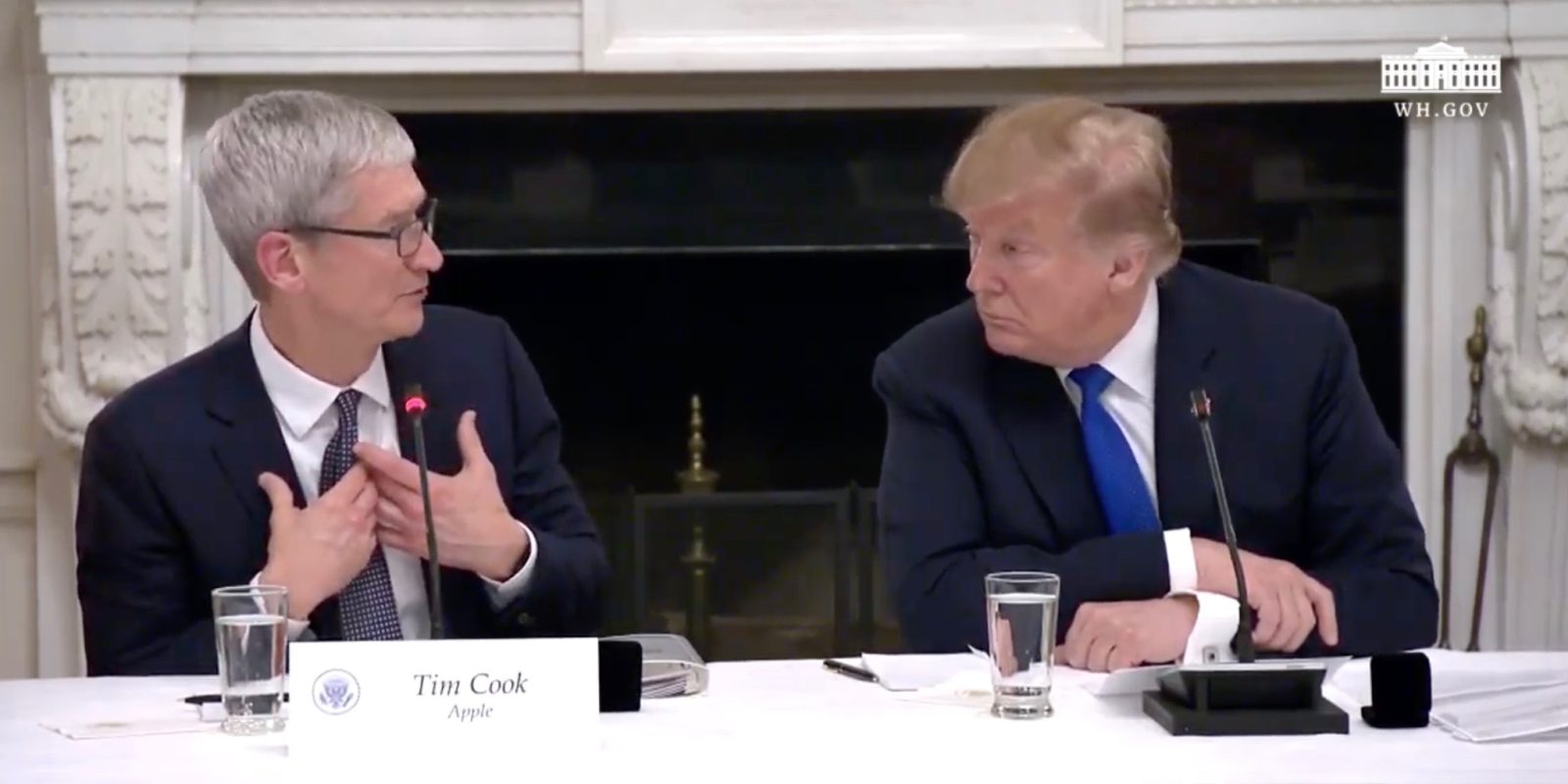
Tim Cook’s diplomacy in dealing with both the White House and China has reportedly been key to investor confidence, playing a significant role in the current share price.

Cook has had to tread a careful path in trying to calm the Trump administration while also aiming to persuade the Chinese government not to exact revenge on Apple for US government policies…


Expand
Expanding
Close

Apple under fire from AOC and Ted Cruz for censoring App Store in China

Apple faces antitrust worries

Apple’s relationship with China has become trickier than ever this month as it banned an app that was used by protesters in Hong Kong, then allowed it again, only to ban it the next week. Now US lawmakers from both sides of the aisle have sent a letter to Apple CEO Tim Cook criticizing the company of censorship and asking it to put “values above market access.”


Expand
Expanding
Close

Another China controversy for Apple: sending user browsing data to Tencent

Apple sending user browsing data to Tencent

Apple has found itself embroiled in yet another China-related controversy, as it appears to be sending user browsing data to Tencent, a Chinese company. That data includes the website visited and the IP address of the iOS user.

Apple has the best of intentions here – the data sharing is done to help protect users from fraudulent websites – but the fact that the company now uses a Chinese conglomerate to do so is raising eyebrows…


Expand
Expanding
Close

Hong Kong app: Lawmaker asks Tim Cook to prioritize ‘values over profits’

Hong Kong app is for safety, says council member

The controversy continues over the Hong Kong app which identifies protest hotspots. A lawmaker and tech entrepreneur has now accused Apple of being ‘an accomplice for Chinese censorship and oppression.’

Apple first banned, then allowed, then again banned the HKmap app, which shows map locations with a heavy police presence…


Expand
Expanding
Close

Guarded optimism in US-China trade talks, next tariff hike may be ‘delayed’

US-China trade talks see guarded optimism about a small agreement

Guarded optimism has been expressed regarding the progress of US-China trade talks designed to ease tensions and perhaps reach some ‘low level’ agreements in the ongoing trade war.

Apple has already been hit by import tariffs on many of its products, faces an increase next week, followed by a planned escalation which will see almost all products subjected to import charges from December…


Expand
Expanding
Close

Opinion: Apple’s relationship with China is turning into a massive liability

Apple's relationship with China is a liability

Apple’s relationship with China has never been an easy one. Indeed, I wrote a piece a couple of years ago arguing that the company was in a no-win position in the country.

Apple’s only option of taking the moral high ground would be to pull out of the country altogether – as Google did for a time, after refusing to allow its search results to be censored by the government.

But Apple is in a very different position today than was Google in 2010. While Google had big ambitions within the country, it was not dependent on the market. Apple very much is. Not just because China is the largest smartphone market in the world – and as important to Apple as the whole of Europe – but because it is the iPhone maker’s key manufacturing base. Without China, it literally couldn’t make its products.

Things today are even worse…


Expand
Expanding
Close

Apple again bans Hong Kong protest app after threats from China

Protest app again banned by Apple in Hong Kong

Apple has made a second U-turn on a Hong Kong protest app. The company initially banned it from the App Store, then changed its mind and allowed it, and has now reversed course again, banning it once more.

We yesterday reported that Apple has also removed the Quartz news app, which has been reporting extensively on the protests. Quartz says Apple took this action at the request of the government.

Both moves follow vague threats about “consequences” from Chinese state media…


Expand
Expanding
Close

Controversy as Apple removes Hong Kong protest app, saying it is ‘illegal’ [U]

Hong Kong protest app pulled by Apple

There is controversy today after Apple removed a Hong Kong protest app from the App Store. The developers claim that the app helps people avoid trouble spots and comply with the law, while Apple says that it’s intended to circumvent the law.

It’s currently unclear whether Apple made its own decision to remove the HKmap Live app, or whether it acted at the request of the Chinese government…


Expand
Expanding
Close

Apple’s China Clean Energy Fund invests in three wind farms, hits 10% of goal

China clean energy fund

The $300M China Clean Energy Fund – an environmental partnership between Apple and ten of its Chinese suppliers – has invested in three wind farms. The initiative is designed to help suppliers power their Apple production from 100% renewable energy.

Apple says that the fund is aiming to generate one gigawatt of renewable energy by 2022 and that these three farms will hit 10% of that goal…


Expand
Expanding
Close

Chinese tariffs could cost you $1,000/year, but Apple helping out for now

Chinese tariffs to hit Americans in their wallets

As the tariff on many products imported from China kicked in yesterday, JPMorgan has estimated that Chinese tariffs could cost the average American $1,000 a year. Gadget lovers could be worst hit, with most tech products manufactured in China.

The tariff applies to a huge range of products from milk to sports equipment, with many Apple products hit…


Expand
Expanding
Close

iPhone faces 15% tariffs from December as Trump carries out tweeted threat

15% tariffs official after Trump's tweeted threat

iPhones, iPads, and MacBooks will now face a 15% tariff from December, up from the 10% previously announced. Additionally, the 25% tariff set to hit desktop Macs, AirPods, Watch, and more on September 1 will now be increased to 30%.

Trump made the threats in a recent tweet, after China responded in kind to earlier tariffs imposed by the US government, and this has now been made official…


Expand
Expanding
Close

Trump’s tariffs will still hit desktop Macs, AirPods, Watch, and more on Sept 1

Trump's tariffs will hit AirPods, Apple Watch and more

We learned yesterday that this year’s iPhones will escape the latest of US president Donald Trump’s tariffs on Chinese imports for the first two months or so of sales. The US government announced that the new tariff has been deferred until December for certain product categories, including cellphones.

However, while iPads and MacBooks also benefited from the delayed introduction, the 10% tariff will still kick in for a number of other Apple products on September 1…


Expand
Expanding
Close

AAPL plunges $53B as tech giants hit by latest escalation of the trade war

Escalation of the trade war hits AAPL hard

The latest escalation of the trade war between the US and China has seen tech giants hit hard, with a combined $150B wiped off their market valuations. Apple was worst hit, plunging 5% to lose $53B in value in the course of one day.

The trigger was China devaluing its currency to below 7 yuan to the dollar, its lowest level in more than a decade …


Expand
Expanding
Close

Latest Trump tariffs could cut AAPL earnings by 4%, or slash iPhone sales

Latest Trump tariffs could hit Apple hard

Analysts Wedbush have run the numbers on the latest Trump tariff announcement, and said that it’s bad news no matter how Apple responds.

Trump yesterday announced that the US is imposing a 10% tariff on another $300 billion worth of goods imported from China in his latest escalation of the trade war. While we’re awaiting details, the prevailing assumption is that most Apple products would be hit by this, with AAPL stock falling 2% on the news …


Expand
Expanding
Close