AAPL Company

See All Stories

Breaking news from Cupertino. We’ll give you the latest from Apple headquarters and decipher fact from fiction from the rumor mill.
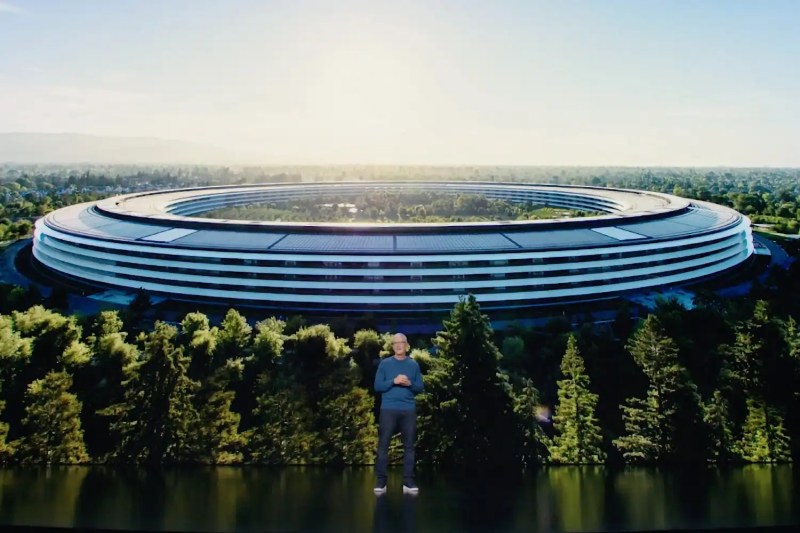
Apple Park Tim Cook AAPL

AAPL is a California-based computer company that became the most successful smartphone company in the world.

AAPL defined by Apple

Here’s how Apple defines itself:

Apple revolutionized personal technology with the introduction of the Macintosh in 1984. Today, Apple leads the world in innovation with iPhone, iPad, Mac, Apple Watch, and Apple TV. Apple’s five software platforms — iOS, iPadOS, macOS, watchOS, and tvOS — provide seamless experiences across all Apple devices and empower people with breakthrough services including the App Store, Apple Music, Apple Pay, and iCloud. Apple’s more than 100,000 employees are dedicated to making the best products on earth, and to leaving the world better than we found it.

Key AAPL history

From Apple I to iMac

Apple was founded in 1976 by Steve Jobs (Steve), Steve Wozniak (Woz), and (briefly) Ronald Wayne as a business partnership: Apple Computer Company. The following year it became Apple Computer, Inc. The company’s first product was the Apple I, a personal computer hand-built by Woz and sold in part-completed kit form. The Apple II and Apple III followed.

The modern Apple as we know it today began in 1983, with the launch of the first personal computer with a graphical user interface, the Lisa. Way too expensive to succeed, it was replaced by the Macintosh in 1984, launched with the single showing of a Ridley Scott commercial during the Super Bowl. The Macintosh transformed the world’s understanding of what a computer was, and would eventually lead to Microsoft adopting the GUI approach.

Steve Jobs and then Apple-CEO John Scully fell out in 1985, when Steve wanted to focus on the Macintosh while Scully wanted to put more attention on the Apple II, which was still selling well. That led to Steve being forced out of the company and going off to form NeXT.

Apple focused on selling Macintosh models at the highest possible margins, but would eventually fall foul of a mix of unsustainable pricing in the face of competition from Windows machines, and an overly complex product lineup. By 1996, the company was in trouble, and in 1997 Steve was brought back, along with the NeXT operating system, which would eventually form the basis of Mac OS X.

Steve simplified the Mac lineup and had industrial designer Jony Ive work on a whole new look for a consumer desktop Mac, the colorful iMac. The iMac, like the original Macintosh, again changed the world’s understanding of what a computer was, and who should want one.

From Apple Computer, Inc. to Apple, Inc.

In 2001, Apple launched the iPod. Although this wasn’t the first mp3 player, it was massively better than anything on the market at the time, and succeeded in turning a geeky piece of technology into a consumer electronics product with mass-market appeal.

The success of the iPod paved the way into other mobile devices. Apple was working on what would eventually become the iPad, when Steve realized that this was the basis of a smartphone. He diverted the team’s work into this, to launch the iPhone in 2007. The iPad launched later, in 2010.

The iPhone was yet another transformational product. While most other smartphones of the time were clunky devices with a keyboard and stylus, the iPhone was a sleek-looking device operated with a finger, and so simple that no user guide was needed. It was with the launch of the iPhone that Apple Computer, Inc. was renamed to Apple, Inc.

From Intel to Apple Silicon

While the iPhone, iPad, Apple Watch, and more are made with Apple-designed processors, the Mac lineup has historically relied on third-party companies for its CPUs. Over the years, Macs progressed from Motorola 680000 series chips through PowerPC to Intel.

In 2020, Apple began a two-year transition to the final stage in that journey, with Macs too finally getting Apple-designed chips. The first such is the M1 chip, used in the latest Mac mini, MacBook Air, and 13-inch MacBook Pro. Other Apple Silicon Macs followed.

AAPL today

Apple is one of the largest companies in the world. It was the first publicly traded company to hit a trillion-dollar valuation in 2018, $2 trillion in 2020, and $3T in 2022.

The company’s product lineup includes five different Mac families (MacBook Air, MacBook Pro, iMac, Mac Pro, and Mac mini); four iPad ranges (iPad mini, iPad, iPad Air, iPad Pro); four iPhone 12 models (12, 12 mini, 12 Pro, 12 Pro Max); three main Apple Watch models (SE, Series 3, Series 6); as well as other products, including Apple TV, AirPods, and HomePod mini.

In addition to hardware sales, Apple derives a growing proportion of its income from Services, including the App Store, iCloud, Apple Music, and Apple Pay.

Apple pulls Google’s enterprise certificate, breaking internal betas & employee apps

Update #2: Google’s access to enterprise certificates has been restored.

Update: Apple says it is working with Google to “reinstate their enterprise certificates very quickly.”

Following its decision to block Facebook from using enterprise certificates yesterday, Apple today has taken similar action against Google. This comes after Google, like Facebook, was found to be using Apple’s enterprise certificates to distribute its data collection app Screenwise.


Expand
Expanding
Close

Apple’s China problem may require new type of iPhone, say former company execs

Apple's China problem

Apple’s China problem may require a new type of iPhone designed specifically for the country, say some former Apple execs.

Apple has already taken one small step in this direction, with a physical dual-SIM model of the iPhone XS/Max available only in mainland China. It’s also widely believed that Apple’s decision to offer gold-colored phones was driven by China and the Middle East.  But it’s being suggested the company may need to do much more …


Expand
Expanding
Close

The four reasons AAPL stock is up despite weak guidance for Q2

why AAPL stock is up

Analysts have been outlining four reasons why AAPL stock is up on yesterday’s close despite its warning of dramatically lower revenue in Q1 being borne out in yesterday’s earnings announcement – and weak guidance for Q2.

Apple yesterday reported revenue of $84.3B, down almost $4B year-on-year, and offered Q2 guidance of $55-59B, compared to $61.1B in the same quarter last year. Despite this, however, AAPL stock opened 6% up on yesterday’s close …


Expand
Expanding
Close

Tim Cook admits that higher iPhone prices are a ‘factor’ in declining upgrade rates

Qualcomm patents

After announcing that iPhone revenue was down 15 percent year-over-year in Q1 2019, Tim Cook was asked during Apple’s earnings call about iPhone pricing. Analyst Steve Milunovich asked Cook whether Apple might have pushed the “envelope a little bit too far” and might have to bring prices back down in the future.


Expand
Expanding
Close

Apple touts Services growth with 85M monthly active Apple News users, 50M paid Apple Music subscribers, 1.4 billion active devices, more

During Apple’s Q1 2019 earnings call today, Tim Cook shared updates on how some of the company’s Services have been growing including details on Apple News, Apple Pay, Apple Music, and more. This comes as Apple reported 19% Services growth YoY for a new record of $10.9B in revenue.


Expand
Expanding
Close

Apple announces Q1 2019 revenue of $84.3b following revision down from $89-93b

AAPL Jony Ive Tim Cook

Apple’s earnings day has arrived, and despite massive revenue and profit in the billions, it’s a bit of a different quarter for Apple for a few reasons. For starters, today’s earnings results mark the first time Apple is choosing not to break down revenue by iPhone, iPad, and Mac categories. And Apple already issued a rare guidance revision, lowering revenue guidance from between $89 billion and $93 billion to $84 billion.

With final results out, Apple has reported $84.3 billion in revenue and $19.97 billion in profit during the holiday quarter. During the same quarter a year ago, Apple reported $88.3 billion in revenue and $20.1 billion in profit. The two-year compare gives more perspective, when Apple reported $78.4 billion in revenue and $17.89 billion in profit.

Apple forecasts revenue between $55 billion and $59 billion over the next quarter — one in which it will be up against a $61.1 billion revenue compare year over year and $52.9 billion two years ago. Read on for the full report:


Expand
Expanding
Close

As Apple aims to stop mining the earth, electronics are now ‘the fastest-growing waste stream’

Electronics waste Apple

A new report today from Motherboard takes a look at the quickly escalating problem of electronics waste. It has now become the fastest-growing stream of waste in the world, with discarded devices’ raw materials currently being valued at $62.5 billion. While Apple has admirable goals like finding a way to stop mining the earth, does it have a responsibility to take more action now?

Announced at the World Economic Forum in Davos, the World Business Council for Sustainable Development has some ideas on accelerating progress.


Expand
Expanding
Close

Woman claims she alerted Apple about FaceTime eavesdropping bug days ago, shares video evidence

Group FaceTime

More details surrounding the major FaceTime eavesdropping bug that 9to5Mac exclusively reported on yesterday are emerging. A woman has claimed that her teenage son discovered the flaw and warned Apple about it last week. Now a video has surfaced as evidence for the teenager’s discovery dated January 23rd.


Expand
Expanding
Close

Here’s what analysts expect to hear in the AAPL Q1 earnings call later today

AAPL Q1 earnings

With the AAPL Q1 earnings call scheduled for later today, the majority of analysts expect Apple to slightly beat the $84B fiscal Q1 revenue the company forecast in its revised guidance.

The most pessimistic analyst roundup has Apple coming in at exactly $84B, while others expect more, with the highest average expectation at $85.33B …


Expand
Expanding
Close

Comment: Apple’s own privacy standards make FaceTime bug massively damaging

The revelation that a major FaceTime bug can effectively turn your Apple devices into a hot mic, allowing a caller to hear or even see you before you pick up, would be a massive embarrassment no matter which company was involved. It’s an absolutely crazy security fail.

But when that company is Apple – which has been ceaselessly pushing privacy of late – it becomes so cringeworthy we’re going to have to invent a whole new scale just to measure it …


Expand
Expanding
Close

Apple reportedly plans ‘Netflix for games’ subscription service

Apple is said to be planning to launch a subscription service for games. A report from Cheddar cites five anonymous sources that suggest Apple is talking to game developers to be part of a new subscription service.

Similar to Netflix, users would pay a set fee for unlimited access to a selection of titles. Further details like pricing or availability were not stated.


Expand
Expanding
Close

Apple’s Services growth is going to dramatically slow, say analysts; accounting method changes

Apple's services growth

Apple’s Services growth is likely to slow during the current quarter, say two separate analyst surveys.

Services revenue is going to be increasingly important to Apple at a time of flat iPhone sales. But while the market does expect Services to continue to grow, the rate of growth is expected to be dramatically slower in the March quarter …


Expand
Expanding
Close

AAPL stock

AAPL recovers $75 billion, returning to company value last seen before iPhone revenue miss disclosure

A few weeks ago, Apple announced a rare revision that significantly lowered its earnings guidance for the 2018 holiday quarter. AAPL shares swiftly dropped 8% in after-hours trading on the news, and slid further the following day. However, today AAPL shares have officially bounced back to above the pre-announcement share price of $157.92, recovering over $75 billion of its market cap.


Expand
Expanding
Close

New ‘WeChat home screen’ could have serious ramifications for Apple, say analysts

WeChat home screen

Analysts say that an update to China’s WeChat platform could have ‘serious ramifications’ for both iPhone sales and Services income, further reducing the value of the Apple ecosystem in the country. One analyst said the update effectively creates a ‘WeChat home screen’ as an alternative to the iOS one.

Apple’s ecosystem is normally a key part of its appeal, but as we’ve discussed on more than one occasion, that’s a much weaker argument for buying an iPhone in China. The reason? The WeChat platform comes close to replacing the operating system on Chinese phones …


Expand
Expanding
Close