Mac

See All Stories

Apple’s Mac lineup consists of MacBook, MacBook Air, MacBook Pro, iMac, Mac Pro, and Mac Mini. The Mac runs macOS for its operating system.
Mac lineup

History

The Mac is Apple’s lineup of computers, and it can be considered the company’s oldest product. The name “Mac” comes from the original Macintosh, which was introduced in 1984 and is also considered the first personal computer for the masses to have a graphical user interface. The first Macintosh hit the stores on January 24, 1984, costing $2,945.

Among all these years, Apple has introduced many different Mac models, ranging from desktops to laptops to professional tower machines. The current lineup consists of the MacBook Air, MacBook Pro, Mac mini, iMac, and Mac Pro. However, there have been other Mac models were discontinued, such as the eMac, MacBook, and iMac Pro.

The history of modern Macs began in 1998, a year after Steve Jobs returned to Apple. Apple had dozens of Macintosh computers at that time, but Steve decided to rethink the entire lineup. In 1998, Apple announced the iMac G3, which ditched the floppy disk and serial ports in favor of USB connectors.
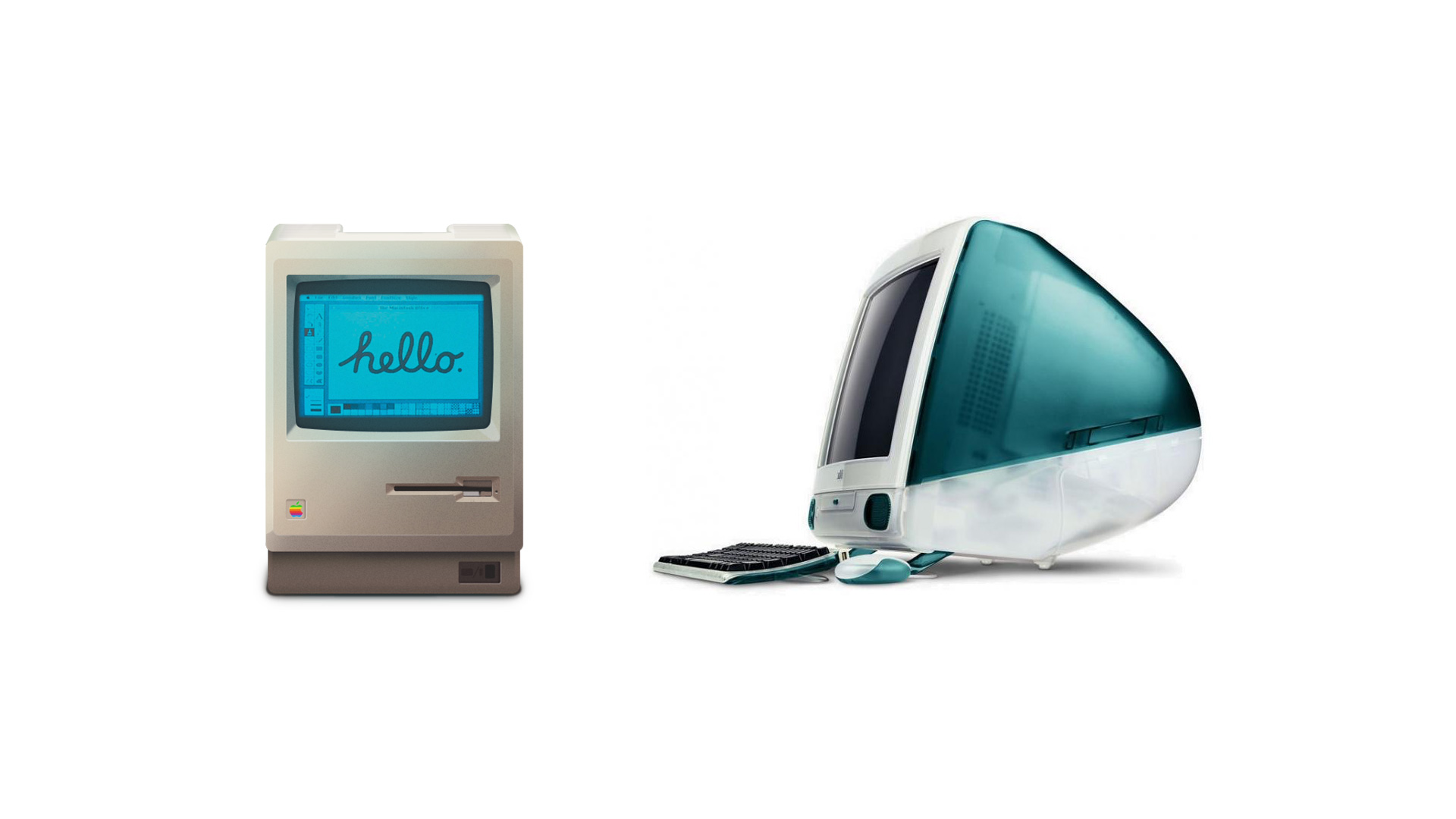
Macintosh and iMac G3.

Unlike the Macintosh, the first iMac was considered a huge success — not only for its technology, but also for its unique design with colorful translucent plastic. Apple quickly expanded the Mac lineup with other models, which included the iBook and PowerBook (which became the MacBook and MacBook Pro) and the PowerMac, which is now the Mac Pro.

macOS

What makes a Mac the Mac is the macOS operating system, which has also had a long history since the introduction of the first Macintosh. Initially called Mac OS, the operating system was rebuilt when Steve Jobs returned to Apple.

The first version of Mac OS X was released on March 24, 2001 with a new interface that is still present in some ways in current versions of macOS. Apple’s desktop operating system comes with many free applications such as Pages, Keynote, Numbers, iMovie, and GarageBand.

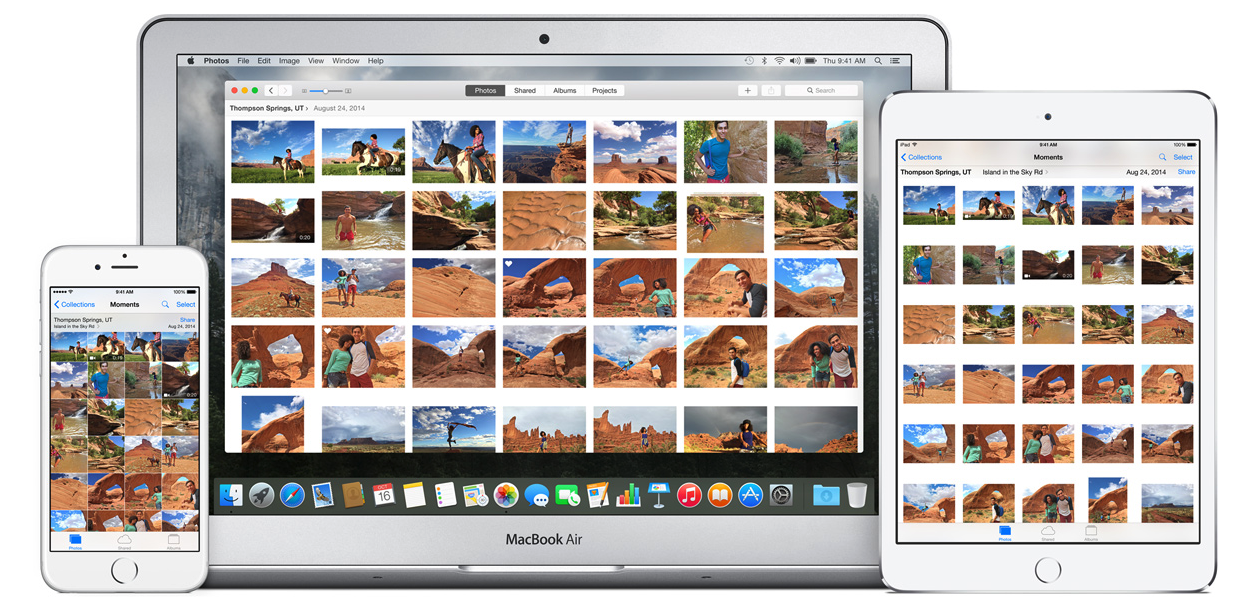
With macOS, users also have access to deep integrations with other Apple devices. For instance, you can answer calls and send SMS from your iPhone using your Mac. Handoff lets you switch from one device to the other and pick up where you left off. Apple Watch users can unlock their computer without entering a password, and you can even copy and paste between devices.
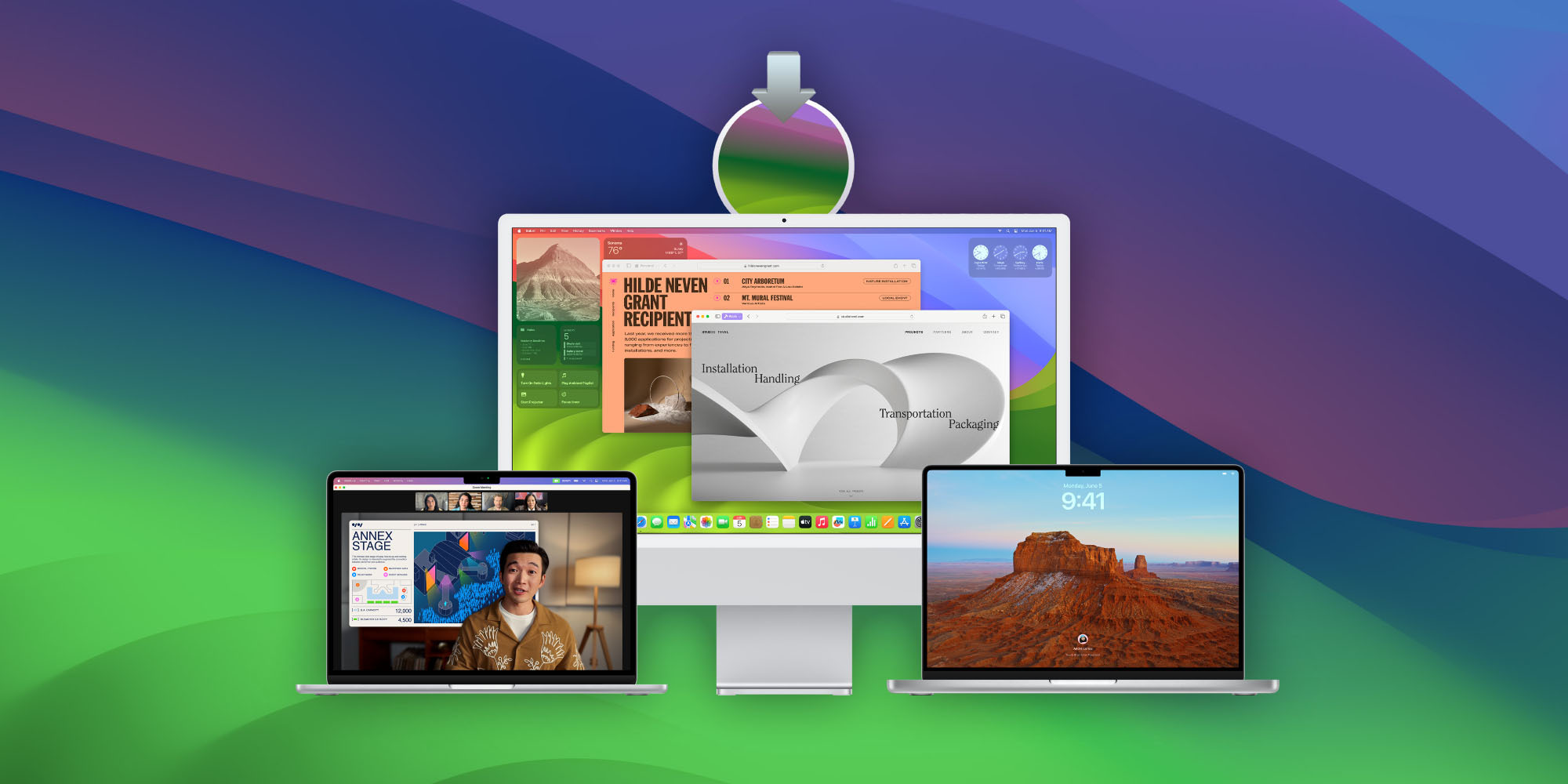
macOS Sonoma

Apple’s desktop operating system is also integrated with services offered by the company, such as iCloud, Apple Music, and Apple TV+.

The current version of macOS is Sonoma (version 14), which features new slow-motion screen savers, widgets on desktop, camera effects on FaceTime and other apps, web apps, passkey sharing, improved PDF support, and Game Mode. The update also comes with a new API that lets developers easily port Windows games to macOS.

Architecture Transitions

The Mac has had three major architecture transitions in its history. Apple’s first computers ran on Motorola processors, but the company decided to migrate to the new PowerPC platform in 1994. While this brought benefits at the time, the PowerPC processors were not delivering what Apple expected.

It was in 2005 that Apple confirmed the transition from PowerPC to Intel. Intel processors had become faster and more efficient than PowerPC, which enabled the development of new Mac computers that were more powerful and also more compact. Developers have been given access to a Developer Transition Kit running Mac OS X Tiger with Intel Pentium 4 to update their apps before the transition begins.
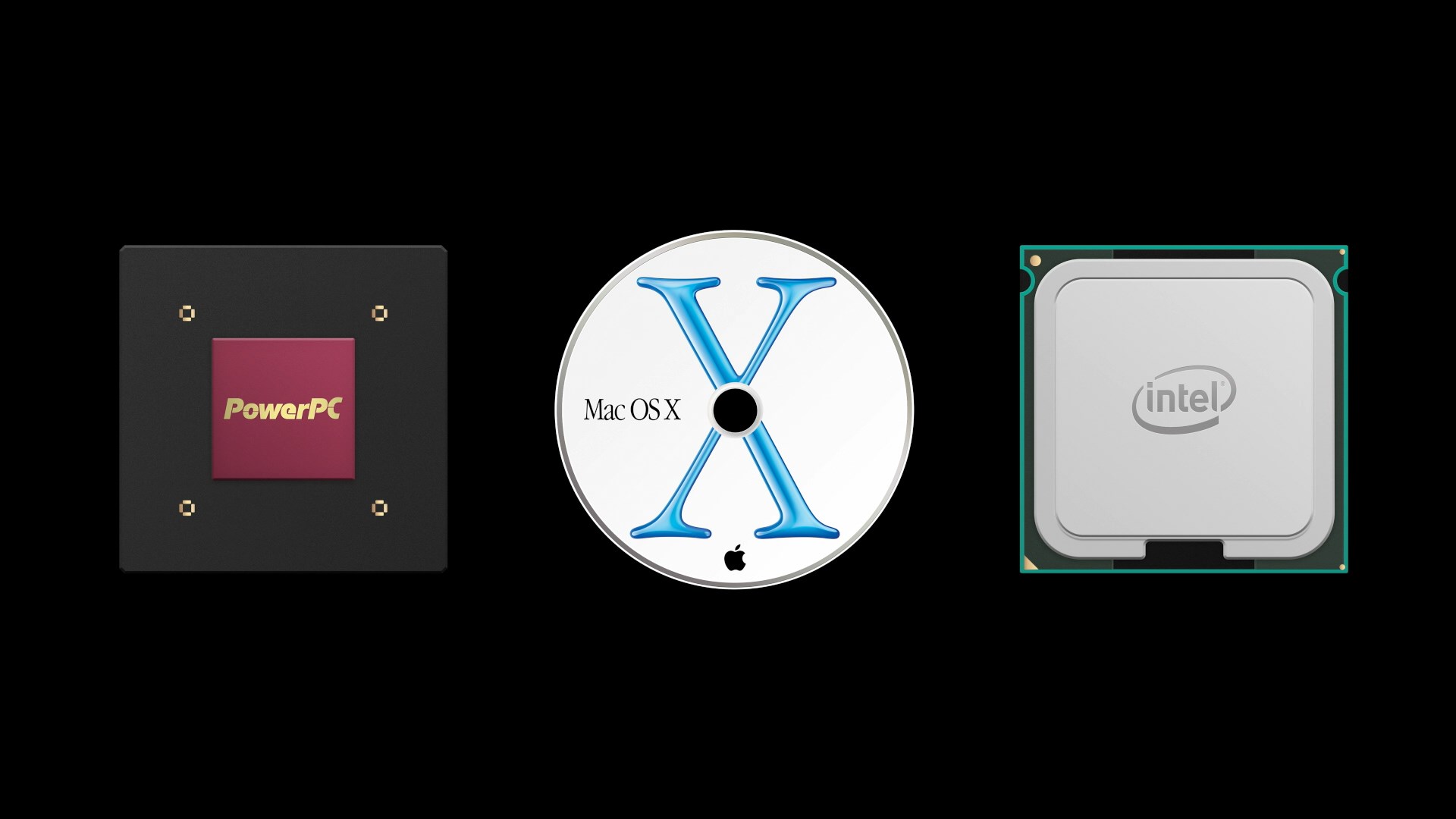
Power PC, Mac OS X, and Intel processor.

Apple said that the transition would begin in June 2006 and be finished by the end of 2007. However, the transition to Intel was fully completed in August 2006 when the company replaced the PowerMac with the new Intel Mac Pro.

As the years went by, Apple once again felt the need to have more powerful and efficient processors for its computers. This time, the company was already working on its own chips for the iPhone and iPad. In June 2020, Apple confirmed that it was changing the architecture of the Mac, now from Intel to ARM chips, which are called Apple Silicon.

Apple offered a Mac mini DTK running on the same A12Z Bionic chip as the 2020 iPad Pro. This way developers could once again update their apps ahead of the transition. In addition to being more powerful and energy efficient, the ARM architecture of Apple Silicon chips has enabled Macs to run iOS apps for the first time.
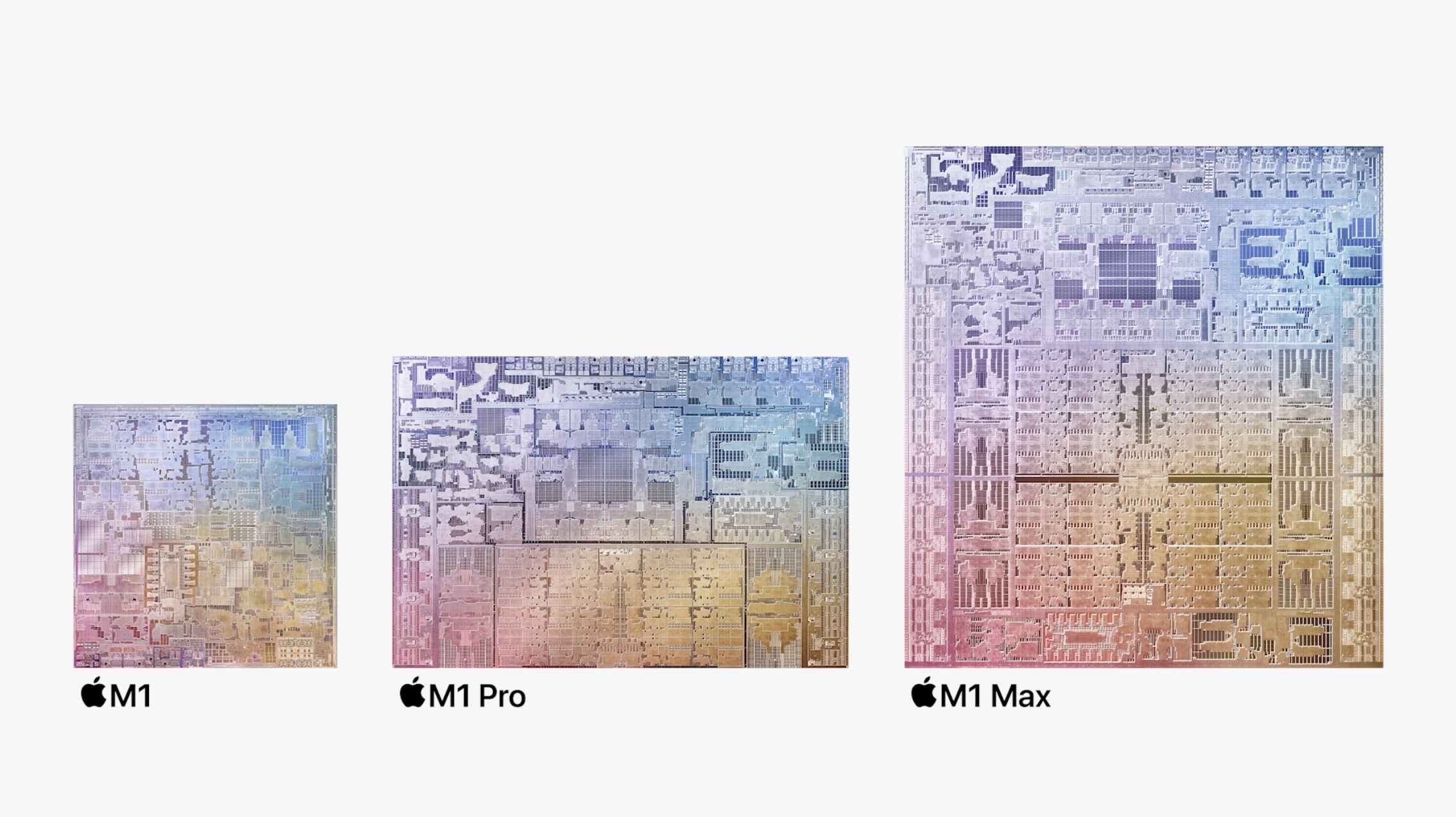
Apple M1 chip | Mac

The first Apple Silicon Macs were released in November 2020 with the M1 chip. The company later introduced more powerful variants of the M1 chip, called M1 Pro, M1 Max, and M1 Ultra. Macs with Apple Silicon have become known for being more powerful while consuming much less power, which has resulted in MacBooks with extended battery life.

In June 2022, Apple introduced the M2 chip, which is around 20% faster than the M1 and also supports more RAM. M2 also has more powerful variants: M2 Pro, M2 Max, and M2 Ultra.

Apple unveiled the M3, M3 Pro, and M3 Max chips in October 2023. The main highlight of this generation is the 3 nanometer technology, the same as the A17 Pro chip. The M3 family also features better GPUs with support for hardware-accelerated ray-tracing.

Current Mac lineup

Apple currently sells a variety of Mac computers, which includes MacBooks, Mac mini, iMac, and Mac Pro. While some of the Macs have already been updated with an Apple Silicon chip, others remain with Intel processors.

MacBook Air

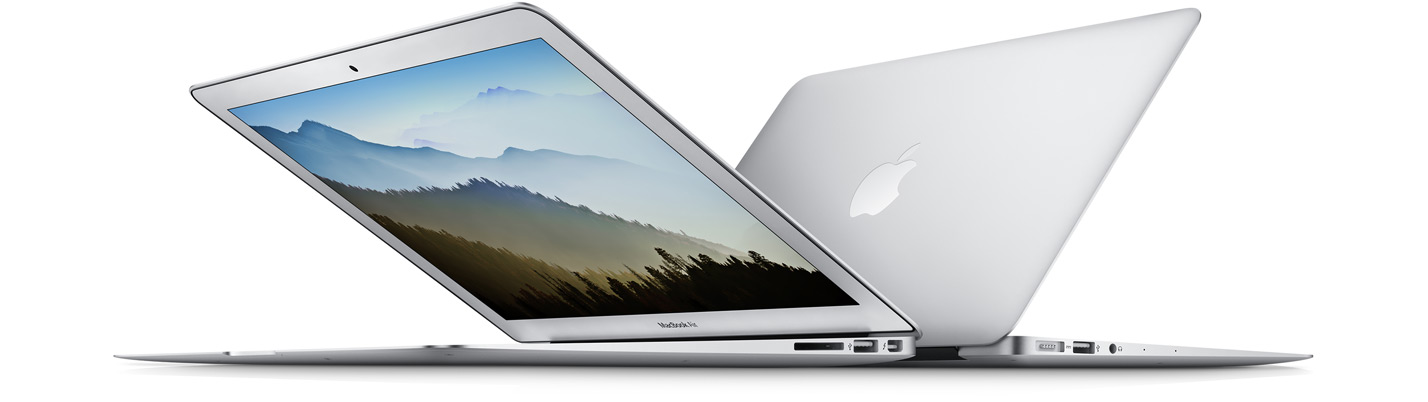
The MacBook Air is Apple’s most affordable laptop and it has become popular for its light, compact design. The 2022 version is powered by the M2 chip and is offered with 8GB, 16GB, or 24GB of RAM. Plus, it has a new, edge-to edge 13.6-inch Retina display.

The laptop features Touch ID and has two Thunderbolt 3 compatible USB-C ports, a MagSafe connector for charging, and a headphone jack. Prices start at $1099 in the US. It’s offered in silver, space gray, starlight, and midnight.
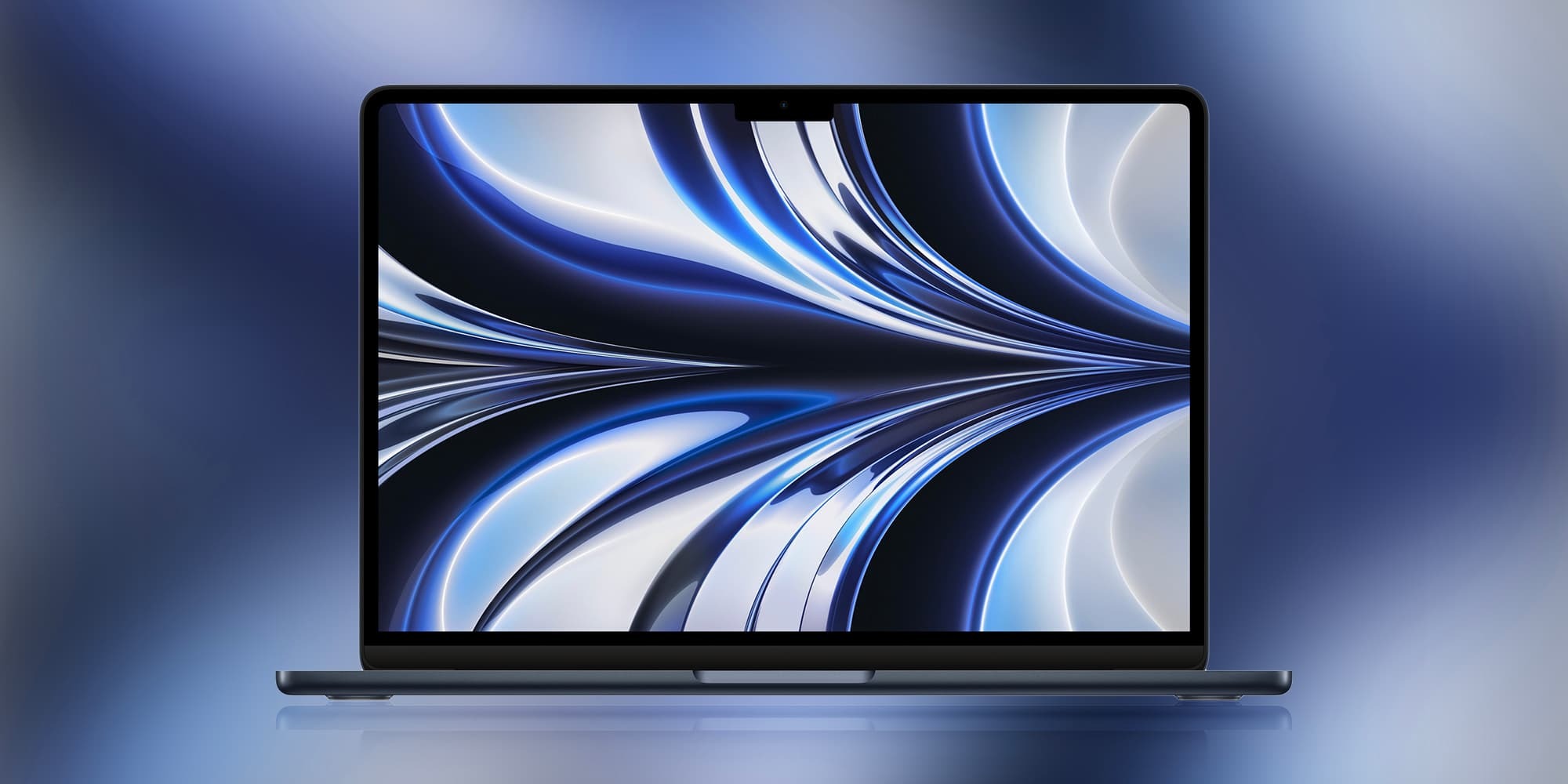
M2 MacBook Air.

A year later, Apple introduced the first 15-inch MacBook Air. It has essentially the same hardware as the smaller version with a similar design, but with a larger display. Prices start at $1299 in the US.Apple is still selling the M1 MacBook Air for prices starting at $999.

MacBook Pro

The 2023 MacBook Pro is available in multiple versions, and customers can choose between 14-inch and 16-inch screen sizes. For the first time, Apple has introduced a less expensive version of the 14-inch MacBook Pro with the base M3 chip. This version has the same design and display as the high-end versions, except that it only has two USB-C ports instead of three.
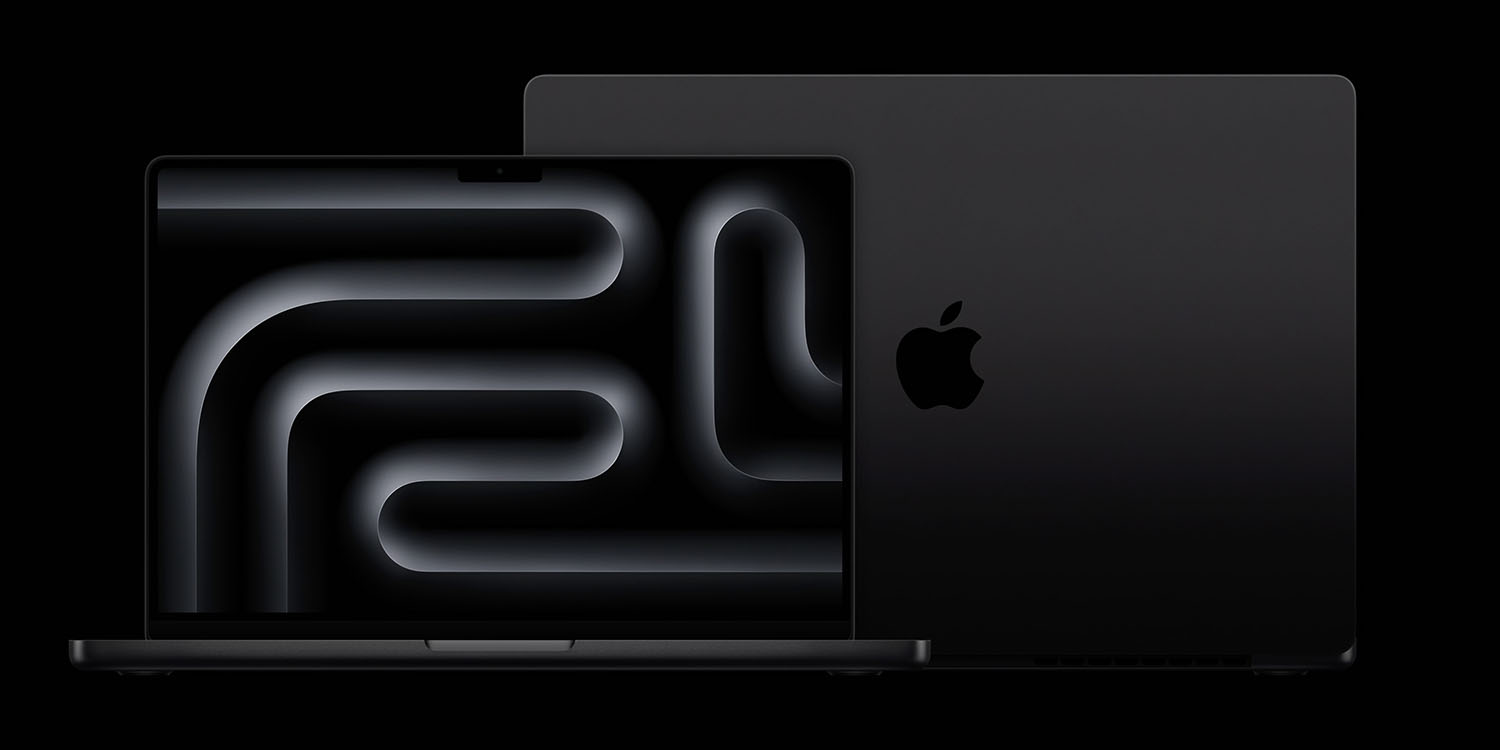
M3 MacBook Pro

The most expensive versions of the MacBook Pro are equipped with the more powerful M3 Pro and M3 Max chips. The laptop can be configured with up to 128GB of RAM and 8TB SSD. These versions also come in a new Space Black color.

Unlike the MacBook Air, the MacBook Pro comes with an HDMI port and an SD card reader. It also features MagSafe and Touch ID on the keyboard. Apple no longer sells MacBooks with the Touch Bar. Prices start at $1,599 in the US.

Mac mini

Mac mini is the cheapest Mac currently available since it’s basically a desktop without a built-in display or other peripherals. The base model with the M2 chip features one Ethernet port, two USB-C/Thunderbolt 4 ports, HDMI 2.0, two USB-A ports, and a headphone jack.

Apple sells a more powerful version of the Mac mini with the M2 Pro chip, which also comes with four USB-C ports instead of two. Mac mini can be configured with up to 32GB of RAM and up to 8TB of storage. Customers can also opt for a 10 Gigabit Ethernet port. The Apple Silicon Mac mini is only available in silver, while the now discontinued Intel model was available in space gray.
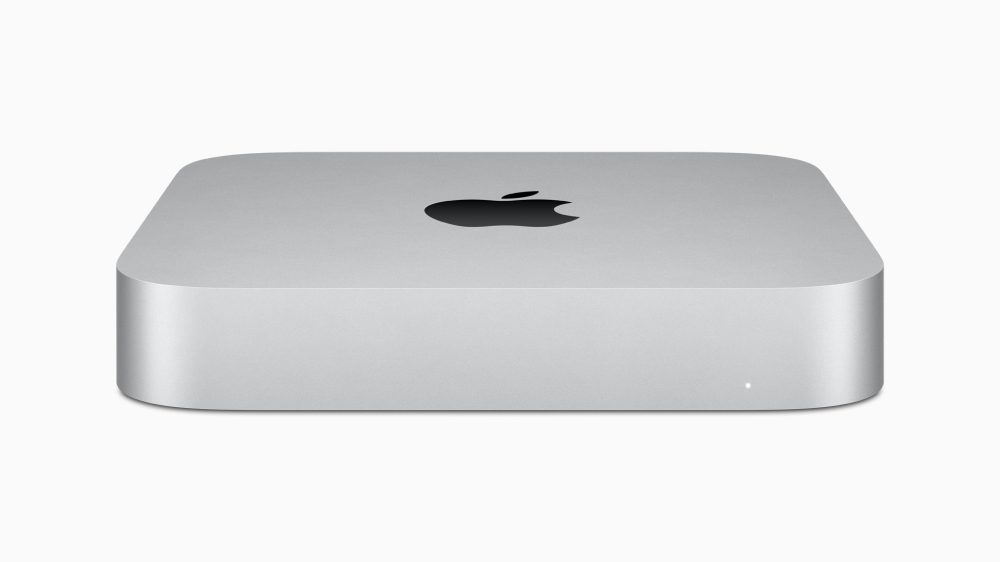
Apple Silicon Mac mini.

Prices for the Mac mini start at $599 in the US. Again, it’s worth noting that it doesn’t come with a keyboard or mouse in the box – you need to buy them separately or use your current ones.

Mac Studio

Mac Studio represents a new category between Mac mini and Mac Pro. It features a design based on the Mac mini, but with a taller body to support the more powerful hardware and also a better cooling system.

The new Mac Studio is targeted at professional users who work with demanding tasks such as video editing, 3D rendering, and machine learning. 

Embraced by creative pros everywhere, Mac Studio now delivers next-generation power in the form of the lightning-fast M2 Max and the boundary-breaking M2 Ultra. It packs outrageous performance and extensive connectivity in an unbelievably compact form, putting everything you need within easy reach and transforming any space into a studio.

By default, Mac Studio already comes with the M2 Max chip, 32GB of RAM, and 512GB SSD storage. A more expensive option lets users customize Mac Studio with M2 Ultra. While M2 Max has a 12-core CPU and a 30-core GPU, M2 Ultra doubles all of those specs. The new chip has a 24-core CPU and a 60-core GPU.

Mac Studio can also be configured with up to 192GB of RAM and 8TB of SSD storage. The machine offers up to six Thunderbolt ports, 10 Gigabit Ethernet, headphone jack, two USB-A ports, and one HDMI port.
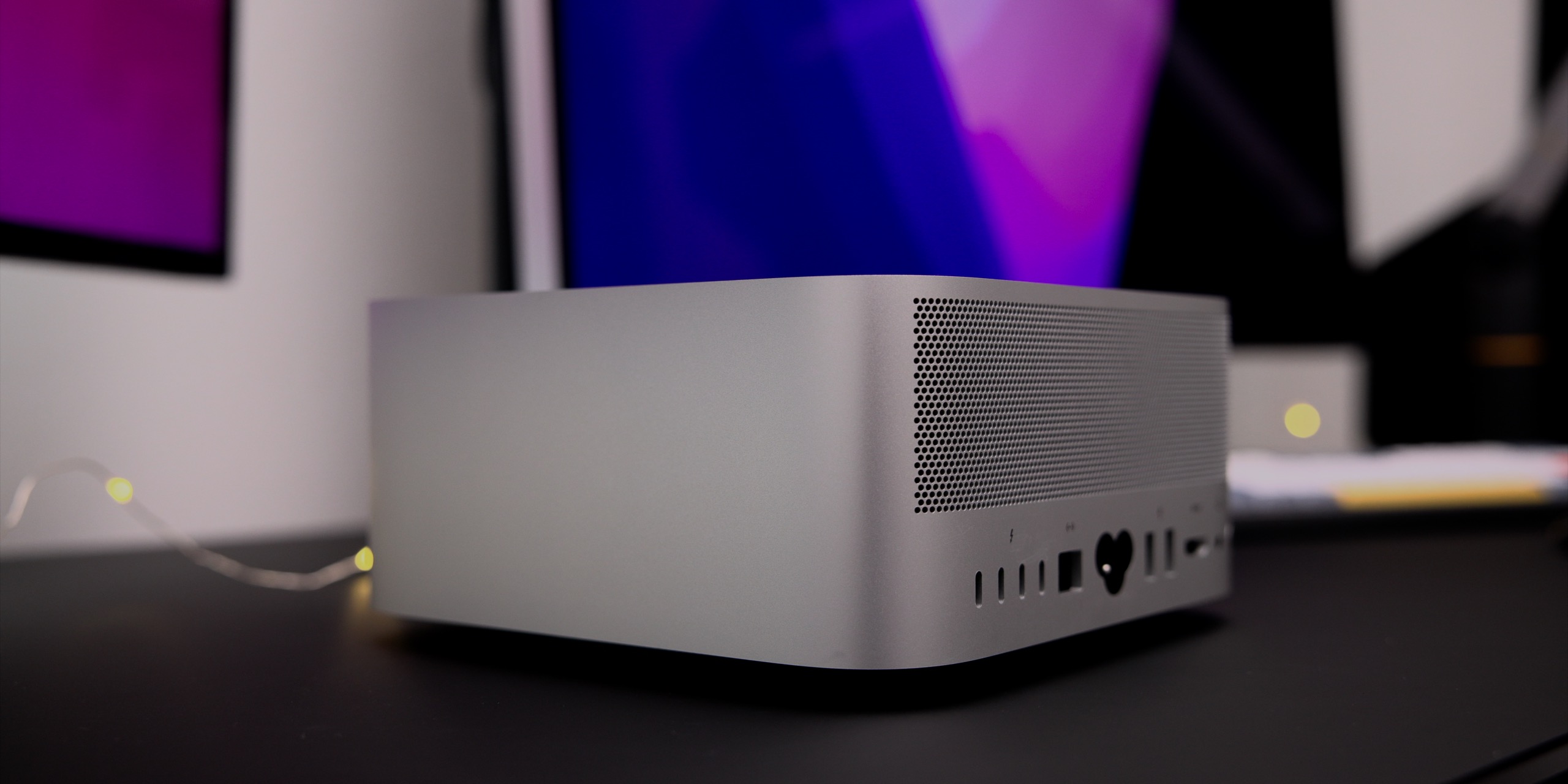
Mac Studio

Apple has been rumored to be working on new versions of this machine with the M3 Max and M3 Ultra chips. However, these versions may not be ready until 2025. Bloomberg’s Mark Gurman said in November last year that the M3 Ultra chip “hasn’t yet gone into broad testing” inside Apple.

In the US, prices for the Mac Studio with M2 Max chip start at $1999. The M2 Ultra chip version starts at $3999. Just like the Mac mini, Mac Studio doesn’t come with a keyboard and mouse in the box. You can find accessories for your Mac Studio here.

iMac

iMac is Apple’s most popular desktop computer with an all-in-one construction. It features a 4.5K display in its 24-inch version and a 5K display in the 27-inch version. At the same time, Apple still sells an entry-level iMac with a regular 1080p display.

The 24-inch iMac is the first to feature the M1 chip, the same as in the Mac mini, MacBook Air, and MacBook Pro. This allowed Apple to introduce a completely redesigned model with a slimmer design, which is also offered in seven new colors. Customers can customize the new 24-inch iMac with up to 16GB of RAM and 2TB of storage.
Site default logo image

The company ships the 24-inch iMac with Magic Mouse and Magic Keyboard, plus a Lightning cable for recharging accessories. Prices in the US start at $1299. Apple has discontinued its old 21.5-inch iMac and the 27-inch iMac 5K.

Mac Pro

Mac Pro is a computer built for professional users who depend on extremely powerful hardware. Available in tower and rack versions, it has a completely modular design. That means users can replace RAM, SSD, GPU, and other internal components.

By default, it features four USB-C/Thunderbolt 3 ports, two USB-A ports, and two 10Gb Ethernet ports. However, the ports can be expanded using the PCI Express slots. Apple also ships the computer with a Magic Mouse and Magic Keyboard, but it does not come with an external monitor included.

All models feature Intel Xeon W processors, which are the most powerful processors offered by Intel. Consumers can configure Mac Pro with up to 28-core processor, 1.5TB RAM, and 8TB of SSD storage. In addition to supporting multiple dedicated GPUs, Apple also offers the Afterburner card — which accelerates the decoding of ProRes videos.

The company recently updated the Mac Pro with new graphics card modules, which include Radeon Pro W6800X and Radeon Pro W6900X.

Site default logo image

Mac Pro prices start at $5999 in the US.

Rumors about upcoming Macs

Top stories about the Mac

LaCie’s new Porsche Design Mobile Drive USB-C will support 12″ Retina MacBook

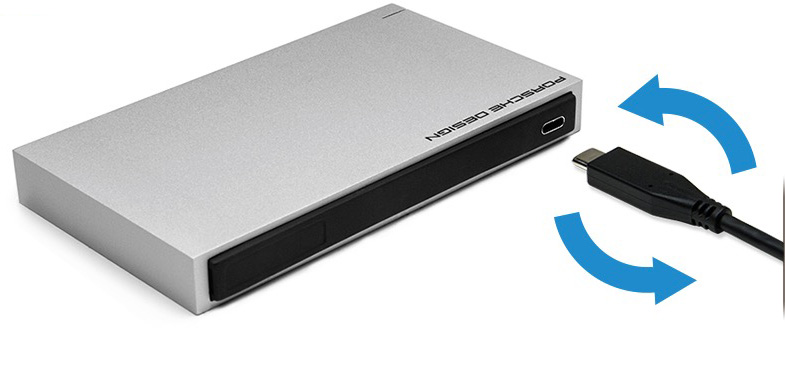
LaCie today announced that its upcoming Porsche Design Mobile Drive USB-C (USB 3.0) will be its first design with a “user-friendly USB-C connector,” compatible with Apple’s just-announced 12″ MacBook laptop. The USB-C connector will be built into the plastic edge of the distinctively boxy solid aluminum housing, with an included adapter cable for traditional USB 3.0 and USB 2.0 connector compatibility. Using USB-C or USB 3.0, the drive promises transfer speeds up to 100MB/second, with a speed reduction when using USB 2.0.

The drive will come in three capacities: a slim 500GB model (shown below) and regular-sized 1TB and 2TB units (shown above). LaCie has not yet announced pricing for the drives, but plans to release them in the second quarter of 2015. We would expect to see quite a few USB-C drives by then, as both Apple and its customers continue a transition away from Thunderbolt that seemed inevitable back in 2013.


Expand
Expanding
Close

Roundup: All the news from Apple’s Spring Forward event

Apple’s Spring Forward event on March 9 was packed with news, including everything from expected Apple Watch announcements to the debut of the Retina 12″ MacBook, a price drop for Apple TV, the announcement of ResearchKit, and the release of iOS 8.2. Here’s everything you need to know.

First, the Apple TV dropped in price from $99 to $69, and got a three-month exclusive window to launch HBO Now, a standalone $15/month to HBO TV content and on-demand library.

Second, Apple announced ResearchKit, enabling iPhone users to opt-in to large-scale medical research studies using all-new apps to track and provide health information. Five initial apps were released, including heart, glucose, breast cancer, asthma, and Parkinson’s research tools.

[youtube https://www.youtube.com/watch?v=_bhsG8k7GvI&ab_channel=TechnoBuffalo]

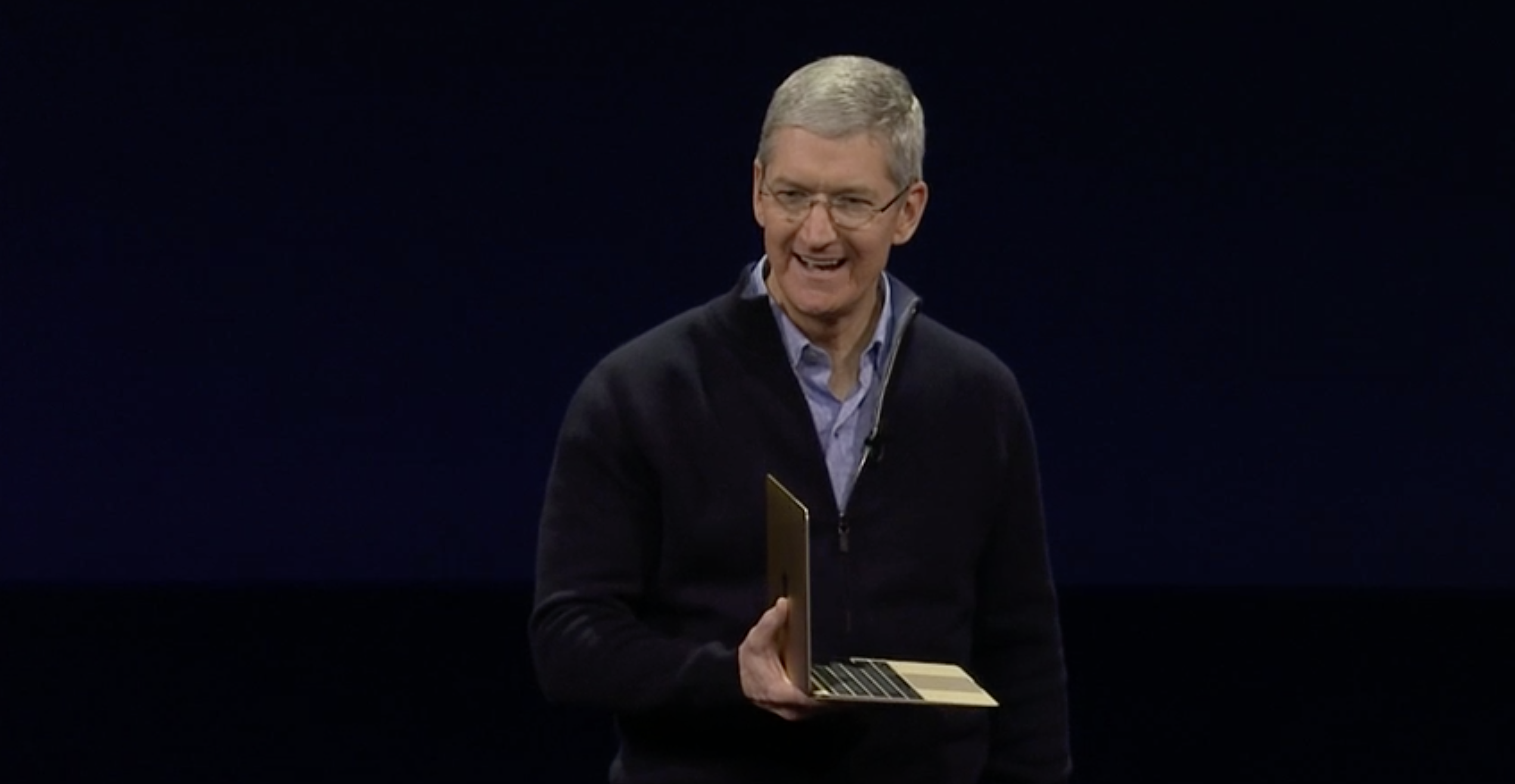
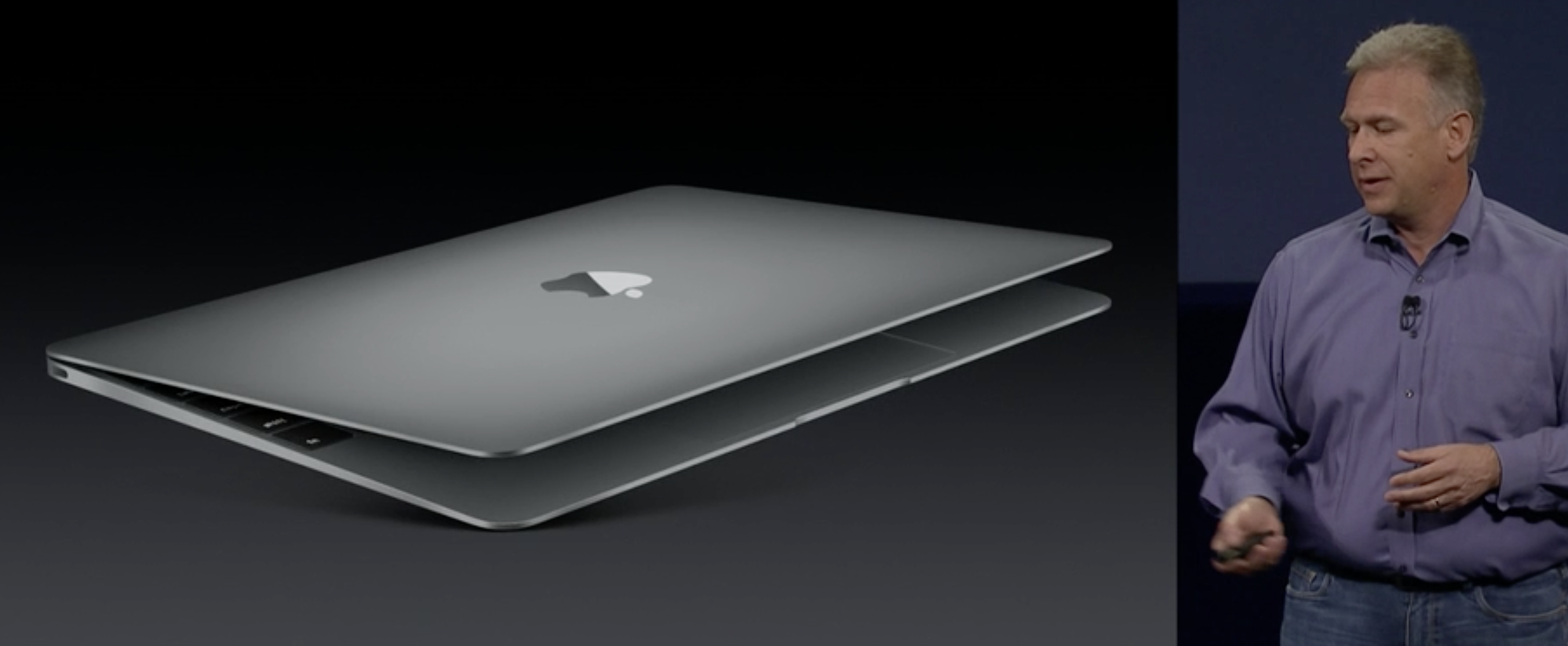
Third, Apple officially unveiled the all-new 12″ MacBook, its thinnest and lightest Mac laptop yet, with a Retina display, single USB-C port, and Force Touch trackpad, starting at $1,299. A collection of new USB-C adapters are required to connect the MacBook to traditional USB devices and wired displays. It also updated the older MacBook Air and 13″ Retina MacBook Pro with faster Intel Broadwell processors, faster SSDs, and battery improvements.

[youtube https://www.youtube.com/watch?v=wjiZv0WBR0o&ab_channel=TechnoBuffalo]

Fourth, the Apple Watch finally got its long-awaited battery life (18 hours) and pricing ($349/$549/$10,000/$17,000) details, plus preorder (April 10) and launch (April 24) dates. Additional details on real-world Apple Watch 38mm and 42mm battery life, as well as warranty details, were quietly released online. A small collection of Apple Watch apps were shown off, and accessories including bands and chargers also got priced ($29-$449). One of the accessories actually includes two separate bands in one package.

[youtube https://www.youtube.com/watch?v=dDAP9OWtQro&ab_channel=Apple]

After the event, Apple released iOS 8.2 with Apple Watch support and Health improvements. It also published the official event video, as well as separate Jony Ive-narrated videos showing the aluminum, steel, and gold manufacturing processes for the Apple Watches. To help customers plan their Watch band purchases, Apple released a new band size guide showing the wrist sizes that will fit each of the numerous types of bands (in millimeters).

Site default logo image

Apple pushes security updates to iOS and OS X, ending FREAK vulnerability

Apple has pushed security updates to both iOS and OS X, ending their vulnerability to the FREAK exploit which allowed hackers access to personal data during encrypted sessions on a number of major websites. Android and Windows devices were also vulnerable.

At the time the exploit was discovered, affected websites included American Express, Airtel, Bloomberg, Business Insider, Groupon, Marriott and, ironically, the FBI, NSA and White House sites. Hackers could force the sites to use a less-secure form of encryption that could be relatively easily cracked. Apple’s fix prevents iOS and OS X from using the lower level of encryption even if the site requests it.

The fix is included in iOS 8.2, released yesterday. iOS 8.2 added support for the Apple Watch, improved the Health app and fixed a number of bugs, including an SMS reboot. It was also rolled into today’s Apple TV 7.1 update. The OS X fix is available as a standalone software update. From the Apple menu, select App Store then the Updates tab; a restart is required.

Snowden: The CIA has been working “for years” to break iPhone, iPad and Mac security

Site default logo image

Update: One of the approaches suggested – modifying Xcode to inject malware – has now been used, though we don’t at this stage know who was responsible.

The Central Intelligence Agency has conducted “a multi-year, sustained effort to break the security of Apple’s iPhones and iPads,” claims The Intercept, referencing new Snowden leaks of a document from the CIA’s internal wiki system.

A presentation on the attempts, focusing on breaking Apple’s encryption of iOS devices, was said to have been delivered at an annual CIA conference called the Jamboree.

Studying both “physical” and “non-invasive” techniques, U.S. government-sponsored research has been aimed at discovering ways to decrypt and ultimately penetrate Apple’s encrypted firmware. This could enable spies to plant malicious code on Apple devices and seek out potential vulnerabilities in other parts of the iPhone and iPad currently masked by encryption.

One route reportedly taken by the CIA was to create a modified version of Xcode, which would allow it to compromise apps at the point at which they are created … 
Expand
Expanding
Close

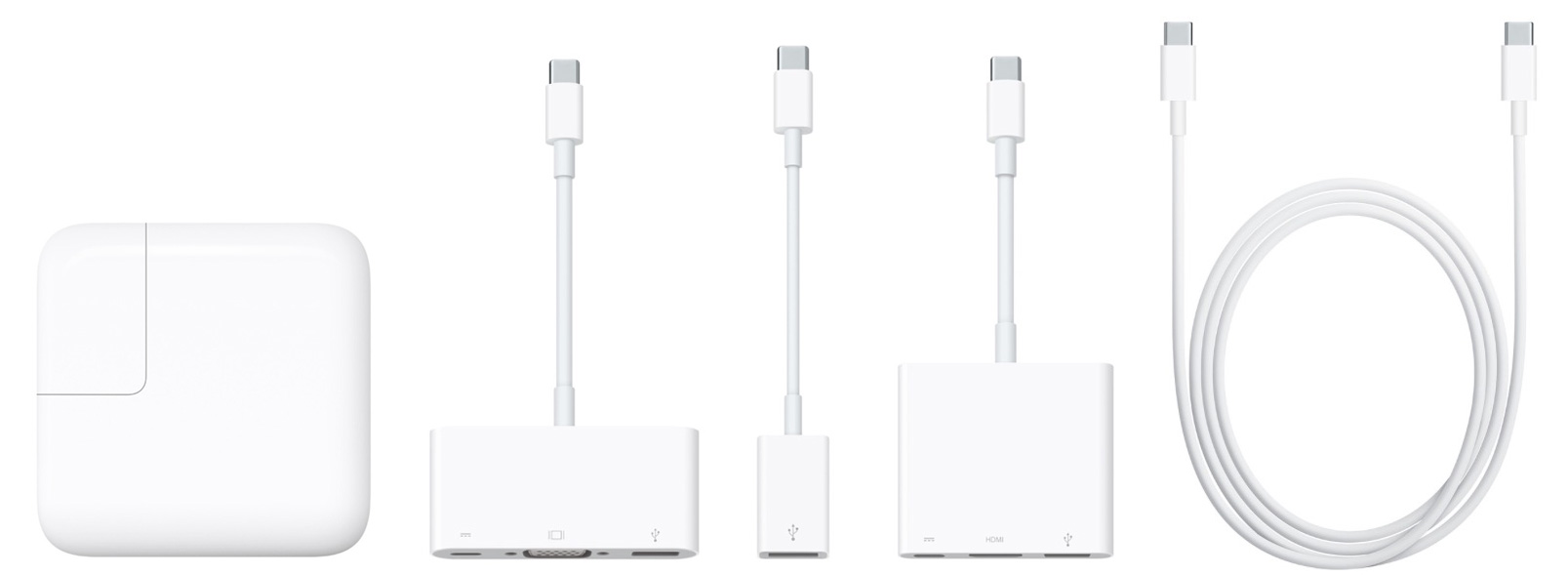
Apple’s 12″ MacBook gets new USB-C power, VGA, USB, and HDMI adapters

Alongside the newly-announced 12″ MacBook, Apple today announced its first collection of USB-C accessories designed to expand the abilities of the ultra-thin laptop’s single data and power port. The smallest is a USB-C to USB Adapter ($19), which converts the MacBook’s USB-C port to standard USB “to connect devices such as your flash drive or camera” or “a “USB cable for syncing and charging your iPhone, iPad, or iPod.” It supports USB 3.1 Gen 1 for data…
Expand
Expanding
Close

The Apple Store is back online with Apple Watch, the new MacBook, and more

Site default logo image

The Apple Online Store is back online after going down for Apple’s Spring Forward event today. The upcoming Apple Watch is now listed on the store, allowing users to create their own look and see how much it will cost them ahead of the pre-orders and live in-store previews start next month. Watch bands and accessories are also listed, though they won’t be available until April.

The new MacBook is also on the store, though custom configuration options don’t seem to be showing up just yet.


Expand
Expanding
Close

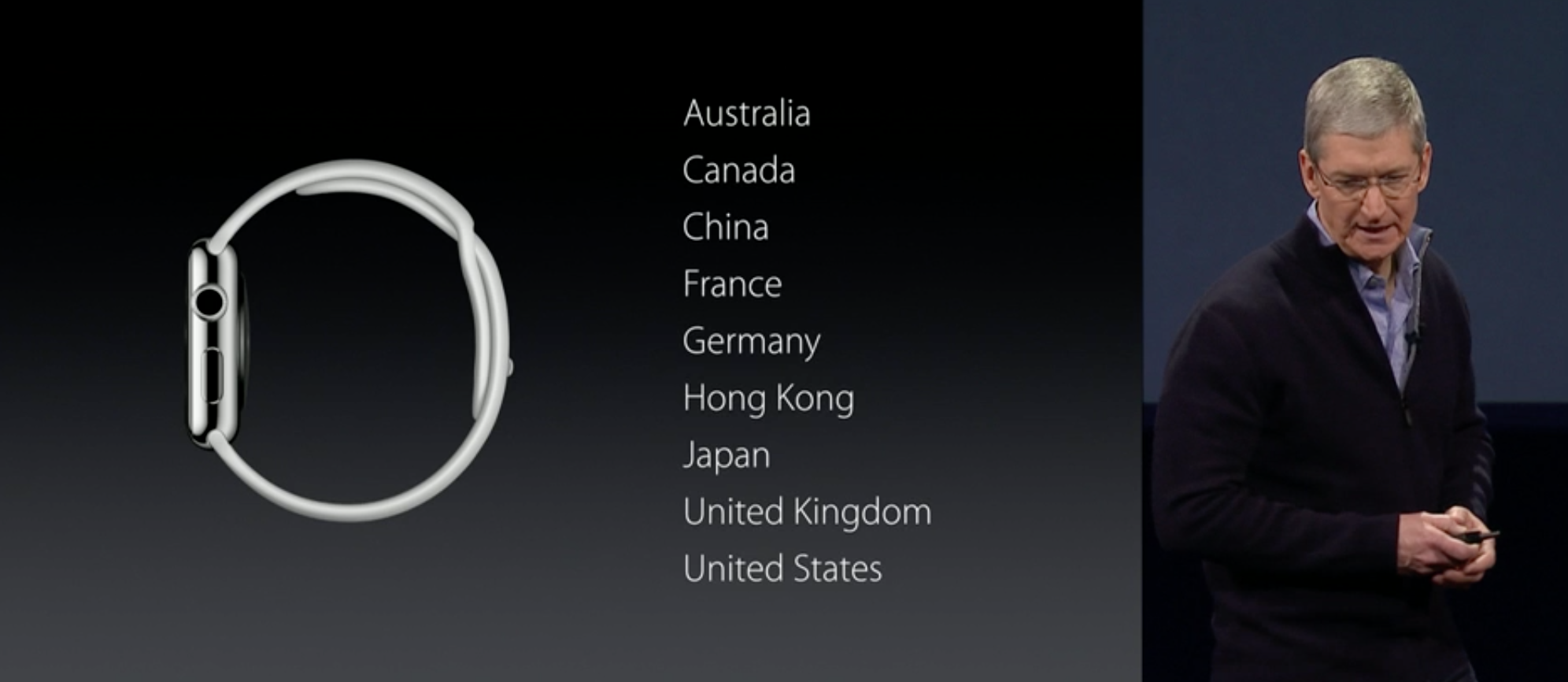
Apple Watch launches on April 24th in 9 countries, preorders start on April 10th

Site default logo image

At its event, Apple has finally announced availability information for the Apple Watch. All three models will be available in Apple Stores from the 10th of April. You can preorder any of the watch-band combinations in the collections from the 24th.

The Apple Watch will initially roll out to the United States, the United Kingdom, Australia, Canada, China, France, Germany, Hong Kong and Japan.

Apple Watch Sport will start from $349 for 38mm and $399 for 42mm, the mid-range stainless steel version will start from $549 for 38mm and $599 for 42mm, and the elusive solid gold Edition casing will run at least $10,000. The pricing of bands varies dramatically, so note that these are base prices only.


Expand
Expanding
Close

Apple updates MacBook Air, MacBook Pro with Intel Broadwell CPUs, improved graphics

Site default logo image

As expected, Apple today brought Intel’s latest Broadwell Core i5 and Core i7 processors to the MacBook Air and Retina MacBook Pro families, beefing up both laptops with additional CPU and graphics power.

Apple’s updated 11″ and 13″ MacBook Airs are shipping today with up to 2.2GHz CPUs, plus Intel’s HD Graphics 6000 GPUs, which are smaller, markedly faster, and capable of superior shading/texturing than the 5000-series GPUs they replace. They have Thunderbolt 2 ports, doubling the bandwidth of prior-generation Thunderbolt. The 13″ MacBook Air also has new flash storage that’s up to twice as fast as the prior Air’s. Apple is pricing the 11″ Air at $899 for 1.6GHz/4GB RAM/128GB SSD, or $1,099 for 256GB of SSD storage. The 13″ Air is $999 for 1.6GHz/4GB RAM/128GB SSD or $1,199 for 256GB of SSD storage, with faster processors, more memory, and more SSD space at premiums.

Also shipping today is the updated 13″ MacBook Pro with Retina Display. This machine will have fifth-generation Intel Core processors with speeds of 2.7 to 3.1GHz, and Intel Iris Graphics 6100 GPUs. Additionally, the Retina MacBook will get the new Force Touch trackpad introduced in the all-new 12″ MacBook today – including Taptic Engine feedback – as well as 1.6GBps flash memory, and 10-12 hour battery life (shorter for regular use, longer for iTunes movie playback). Pricing starts at $1,299 for a 2.7GHz/8GB RAM/128GB SSD model, with double the SSD storage for $1,499, a 2.9GHz/8GB RAM/512GB SSD model at $1,799, and further customizations at premiums.

Prior to the official announcements, a seemingly authentic spec leak showed a new version of the 13″ MacBook Air with an updated Intel Core i5-5250U 1.6GHz CPU, Intel HD Graphics 6000 GPU, and roughly 4% larger 7422mAh battery.

Apple Watch pricing, availability, surprises & more, here’s what to expect at Apple’s event

Site default logo image

Apple’s “Spring Forward” event is scheduled for Monday, March 9th and we’re already getting prepared to bring you live coverage and last minute leaks leading up to the event. What can you expect at the event? Below we’ve put together our list of likely announcements including some unannounced Apple Watch features and possible surprises…


Expand
Expanding
Close

Apple plans relaunched Beats streaming music service for WWDC, skipping March event; Apple TV still coming

Site default logo image

Apple won’t take the wraps off of its upcoming Beats-based music streaming service at its March 9 “Spring Forward” event, according to music industry sources briefed on the launch timeline. Instead, Apple currently plans to introduce the service, at least in beta form, at its Worldwide Developers Conference (WWDC) in early June. The WWDC keynote likely takes place on Monday, June 8th, and that’s the event where the debut will occur. The new iTunes music streaming service is based on technology acquired from Beats Music, including curated playlists, cloud-based libraries, and offerings customized to the musical tastes of individual users. The service will be priced as high as $7.99 per month, which is less expensive than current $9.99 pricing for Beats Music, Spotify, and Rdio…


Expand
Expanding
Close

Back to the Mac: Microsoft releases redesigned Office for Mac 2016 Preview w/ Retina support, collaboration, more

Site default logo image

Before today, the latest versions of Word, PowerPoint, and Excel for OS X came with Office for Mac 2011, a suite of productivity apps which you can tell from the name included dated software without many modern features Mac users expect. Office for Mac 2011 was actually first released in October 2010. A lot has changed since then.

Microsoft moved Office from a paid upgrade approach to a cloud subscription model, saw its CEO Steve Ballmer retire and buy a basketball team, appointed Satya Nadella as head of the company, and even released Office for iPad and iPhone.

For the Mac, though, the most capable versions of Word, PowerPoint, and Excel have only been available as Web apps—not native—until now. As promised, Microsoft is today releasing the public beta of Office for Mac 2016 including all new versions of the company’s go-to productivity apps.
Expand
Expanding
Close

WSJ footnote suggests 12-inch MacBook Air could be announced by Apple as early as Monday

Site default logo image

Render: Martin Hajek (based on<a href="http://9to5mac.com/2015/01/06/macbook-air-12-inch-redesign/"> our reporting</a>)

Tucked away at the bottom of the WSJ’s report on the often-postponed iPad Pro was a single sentence that, if correct, suggests that Apple could announce the 12-inch MacBook Air as early as Monday. Update: it did.

While suppliers are gearing up to ship the new 12-inch MacBook Air in large quantities in the second quarter, Apple’s launch schedule remains unclear, the people said.

WWDC traditionally has been the end of Q2, so unless Apple plans another event specifically for the new model (not impossible but I’d think not), the most likely time to announce it would be during Monday’s Spring Forward event, expected to major on the Apple Watch. Since this is a new product, not an upgrade of a current product, Apple could use some ramping time between the announcement and the actual launch.

We’d caution however that supply chain sources, which is apparently the kind the WSJ is using, often guess early when it comes to shipping times.

We exclusively revealed details of the radical new MacBook back in January. Sources described a markedly thinner and lighter machine squeezing a 12-inch higher resolution screen into a casing narrower than the current 11-inch MacBook Air. The machine is also said to take a minimalist approach to ports–likely even just a single USB C port for both power and data–and to be available in iOS device colors as well as plain anodized aluminum.
Expand
Expanding
Close

How-To: Boost your Mac’s speed and prolong its useful life with easy RAM upgrades

Site default logo image

As I’ve spotlighted over the past month, the best way to dramatically speed up an older Mac is to replace its old hard drive with a new solid state drive (SSD). The process is super-easy on MacBooks and Mac Pros, surprisingly manageable on iMacs, and challenging on Mac minis, yielding 3X to 5X speed boosts. But there’s another option that can speed things up with relatively little effort or expertise: upgrading your Mac’s RAM.

RAM upgrades are easy and cheap. You can expect to pay $90 or less for enough (Mac-safe) RAM to run OS X Yosemite without hiccups, or $180 for enough RAM to guarantee you won’t need more for years. Installing RAM generally doesn’t void your Mac’s warranty, and except for several models, the only tool you’ll need is a small screwdriver. Below, I’ll walk you through your best options.


Expand
Expanding
Close

Security flaw places Mac, iOS & Android users at risk from hacking on some major websites

Site default logo image

Cryptographers have discovered that a security flaw dating back to the ’90s is placing OS X, iOS and Android users at risk from hacking attacks when visiting some major websites, including American Express, Airtel, Bloomberg, Business Insider, Groupon, Marriott and many more.

The FREAK exploit allows an attacker to force a website to use lower-grade encryption for HTTPS connections, which can be cracked within a few hours when using a small botnet of just 75 computers. Once cracked, attackers would be able to hack the website as well as steal personal data from those visiting the site … 
Expand
Expanding
Close

Apple releases first OS X 10.10.3 Public Beta with new Photos app

Site default logo image

Apple today released the first Public Beta of the upcoming OS X Yosemite 10.10.3. The new release includes the iCloud-based Photos application for the Mac, new Emojis across the system, and simpler login to Google accounts for profiles with two-factor authentication enabled. This beta is labeled as build 14D87, which is the same as the second 10.10.3 beta for developers, which was released a week ago. The Public Beta is available in the Mac App Store Software Update tab for registered beta users. Apple plans to release the first Public Beta of iOS 8.3 in mid-March, according to sources. Thanks, DJ!


Expand
Expanding
Close

Site default logo image

Skype 7.5 for Mac adds 14 new languages, several performance improvements

Microsoft is releasing the latest version of Skype for Mac today adding support for over a dozen additional languages and performance improvements for users. Beginning with Skype 7.5 for Mac, the communication app will now feature localization for the following languages: Hindi, Turkish, Czech, Ukrainian, Greek, Hungarian, Romanian, Indonesian, Catalan, Croatian, Slovak, Vietnamese, Thai and Malay. 
Expand
Expanding
Close

Opinion: Does the Apple Watch Edition signal future luxury-model iPhones, iPads and Macs?

Site default logo image

Back in April of last year, when a luxury model of the Apple Watch was still a vague rumor, I wrote an opinion piece in which I expressed the view that Apple could indeed pull this off. I went further, and suggested that it could even create an entire range of luxury versions of its existing products, from iPhones to Macs.

Ten months on, with the Apple Watch Edition now real, and the general expectation that it’s going to cost several thousand dollars at least, I thought it was time to revisit that idea. Is a luxury model of the Apple Watch a one-off, or does Apple see this as the first step toward Edition models of its complete product range … ? 
Expand
Expanding
Close

How-To: Upgrade the SSD in your MacBook Air or Retina MacBook Pro, boosting size & speed

Over the past two weeks, I’ve written about the (surprisingly easy) process of adding solid state drives (SSDs) to radically speed up older iMacs, and the varied challenge levels of adding SSDs to older Mac Pros, Mac minis, and non-Retina MacBooks. Today’s guide looks at the easiest SSD installations of all: the MacBook Air and Retina MacBook Pro. A new SSD in one of these machines could have two, four, eight, or sixteen times the original storage, plus two to four times faster speeds.

Apple shipped most MacBook Airs and all Retina MacBook Pros with solid state storage, so upgrading these machines for extra capacity and speed is generally as simple as picking a new drive, then using two special screwdrivers during the installation process. Assuming your MacBook is old enough to be out of warranty — except for a few specific models — you’ll find that pretty much anyone can handle this swap with the right tools. Below, I’m going to show those tools to you, as well as the MacBook-ready SSDs that are worth considering…


Expand
Expanding
Close

G-Technology announces high-performance twin-drive RAID storage geared to video work

Site default logo image

G-Technology has announced a new high-performance external G-RAID twin-drive storage system aimed at video professionals. Available in 8TB, 12TB and 16TB versions, the G-RAID with Thunderbolt 2 and USB 3.0 delivers transfer rates of up to 440MB/s, enough to handle multi-stream HD, 2K and compressed 4K video …
Expand
Expanding
Close

Apple releases second OS X 10.10.3 pre-release w/ latest Photos app version, new Emoji, more

Site default logo image

Earlier this month, Apple released the first OS X 10.10.3 pre-release update to testers with a beta version of the iPhoto replacement app called Photos. Today an updated build is rolling out to testers through the Mac App Store. Apple has also released a new beta of iOS 8.3 for testers. We’ll dig in.
Expand
Expanding
Close

Apple launches Repair Extension Program for 2011-2013 MacBook Pros with video problems

Site default logo image

Following a number of complaints from consumers regarding graphics issues with Apple’s 2011 MacBook Pro, the company today announced a replacement program to remedy the issue for customers still experiencing problems.

The affected models include 15- and 17-inch MacBook Pros built in 2011, as well as 15-inch Retina MacBook Pros built in 2012 and early 2013. MacBook owners who believe they may have one of these machines can check their warranty coverage on Apple’s website to determine whether they are eligible for a repair under this program.


Expand
Expanding
Close